An AI developer candidate is preparing for a certification exam and wants to optimize their study time by identifying specific topics where they have knowledge gaps. Which study strategy is most effective for this purpose?
Select an answer to reveal the explanation.
Short Explanation and Infographic
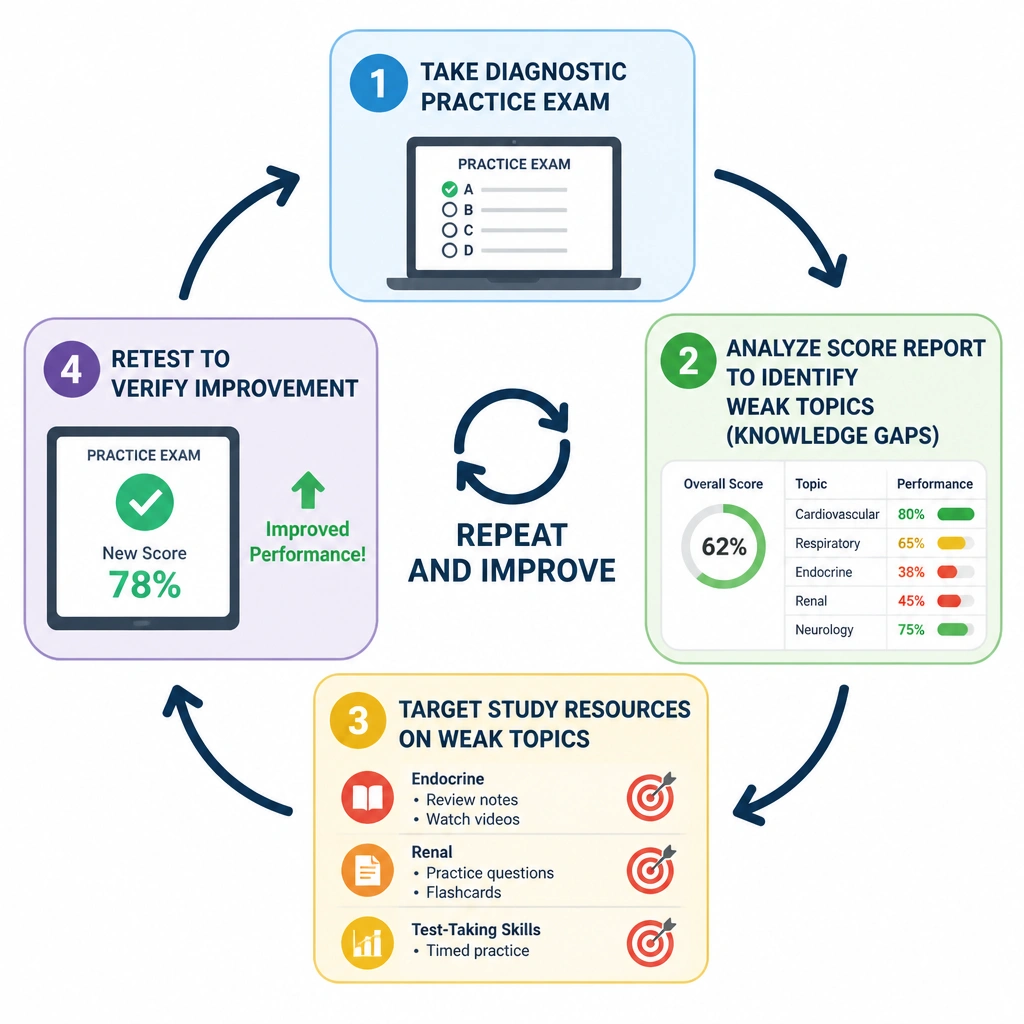
Alright, let's talk real-world strategy. When you're gearing up for a tough certification exam, you don't have time to waste. A lot of people make the mistake of studying what they already know because it makes them feel good. That's a trap! If you only review your favorite topics, you're going to get blindsided on exam day. Instead, you need to take diagnostic practice exams. Think of practice tests like a health checkup for your brain. They tell you exactly where you're strong and where you're struggling. Once you get those results, you can stop wasting time on things you've already mastered and focus 100% of your energy on fixing those weak spots. That's how you pass on the first try. Got it? Sweet.
Full explanation below image
Full Explanation
In preparing for professional certification exams, candidates often face a vast body of knowledge and limited study time. To optimize preparation, it is crucial to use evidence-based study strategies such as active recall and spaced repetition. Taking practice exams functions as a diagnostic tool. By attempting questions under simulated exam conditions, candidates can identify specific concepts or subdomains where they consistently make errors. This diagnostic feedback allows them to pinpoint exact knowledge gaps. Instead of wasting time reviewing familiar material, candidates can allocate their remaining study hours to targeted remediation—reading documentation, doing labs, or seeking explanations specifically for those weak areas. Reviewing only familiar topics leads to an illusion of competence and leaves weak areas unaddressed, increasing the risk of exam failure. Rote memorization of code syntax without understanding application principles is ineffective because professional exams typically test scenario-based problem-solving and conceptual application. Skipping preparation and taking the exam immediately is highly inefficient and costly, as it does not allow for structured learning or systematic error correction. Therefore, diagnostic practice testing combined with targeted study is the most effective strategy.