Under what circumstances may an organization grant a deviation or waiver from a policy established in its Code of Conduct?
Select an answer to reveal the explanation.
Short Explanation and Infographic
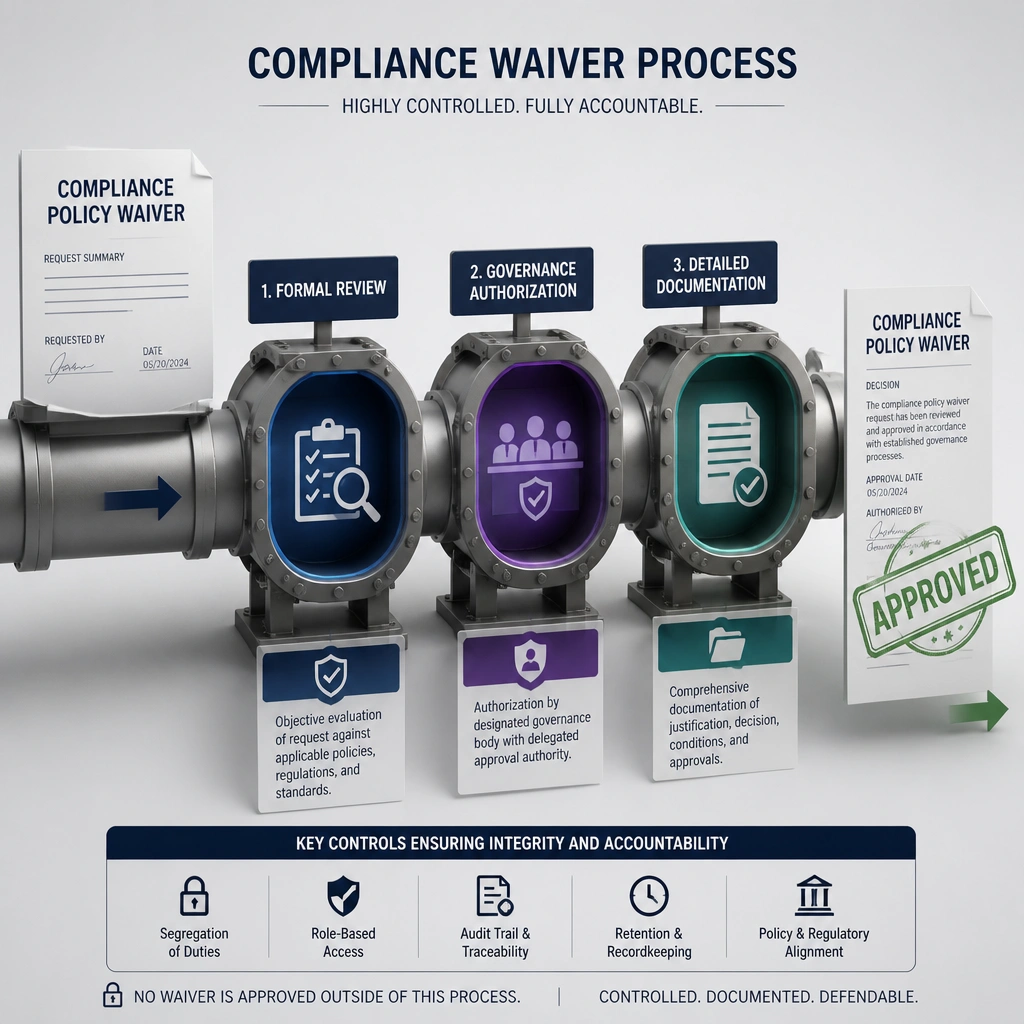
Trust me on this: the moment you start letting managers bypass rules just to hit numbers, your compliance program is dead in the water. If the rules don't apply to everyone, they apply to no one. That's why deviations from the Code of Conduct have to be extremely rare. If a waiver is ever granted, it has to go through a strict, formal review process with the right authorities and be fully documented. The correct answer is B. If you're handing out waivers like candy (Option C) or letting managers call the shots on the fly (Option A), regulators will look at your program and call it a paper tiger. Keep the bar high!
Full explanation below image
Full Explanation
The correct answer is B. A Code of Conduct must apply consistently across all levels of an organization. Frequent or arbitrary exceptions undermine the program's credibility and can lead to allegations of discrimination or systemic compliance failure. Therefore, deviations or waivers must be treated as extraordinary measures. They should only be granted after a formal risk assessment by designated authorities (such as the Board, the Audit Committee, or the Chief Compliance Officer) and must be meticulously documented to explain the business justification, mitigating controls, and duration of the waiver.
Let's look at why the other options are wrong: - Option A is incorrect because allowing individual managers to verbally approve deviations bypasses established controls and creates serious corruption and compliance risks. - Option C is incorrect because granting waivers simply due to operational inconvenience destroys the integrity of the compliance program. Policies are often designed as control gates that intentionally add steps to prevent misconduct. - Option D is incorrect because prioritizing short-term financial goals over compliance principles violates the core purpose of a compliance program and is a common driver of corporate scandals.
Consistent enforcement and transparent documentation of any rare waivers are critical to demonstrating to stakeholders and regulators that the compliance program operates with integrity. By ensuring waivers undergo independent scrutiny and formal logging, the company protects itself from claims that its compliance program is a mere sham.
Ultimately, a policy waiver represents a temporary increase in risk, and thus must be managed with strict oversight, compensating controls, and clear governance.