In the context of whistleblowing and compliance investigations, how is 'retaliation' formally defined?
Select an answer to reveal the explanation.
Short Explanation and Infographic
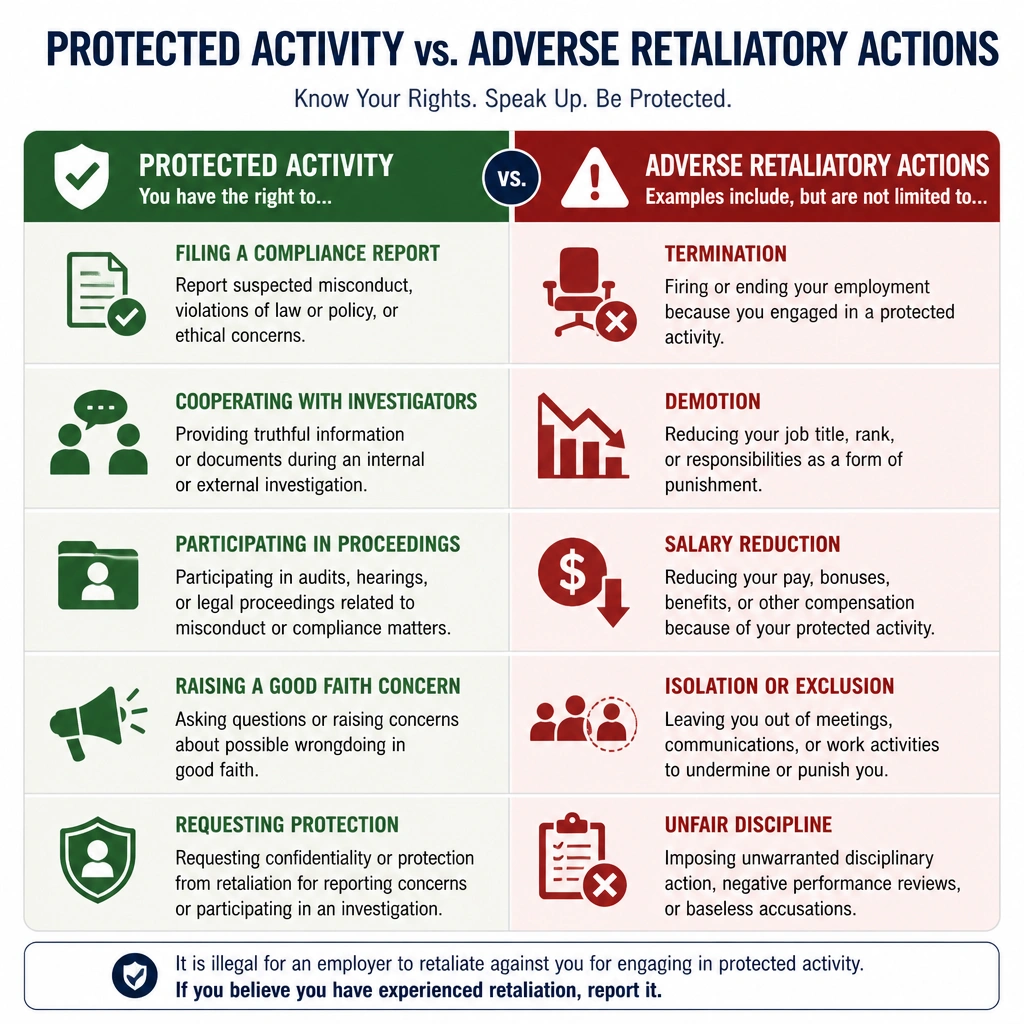
Here's the deal on retaliation: it's any bad reaction from the company or managers when someone blows the whistle. We're talking about demotions, cutting hours, transferring someone to a dead-end desk in the basement, or flat-out firing them because they spoke up. If you report a problem in good faith, and your boss suddenly starts writing you up for things they used to ignore, that's classic retaliation. It's toxic, it's illegal in many cases, and it absolutely destroys compliance culture. You have to shut that down fast.
Full explanation below image
Full Explanation
Retaliation occurs when an employer takes adverse action against an employee because they engaged in protected activity, such as reporting illegal conduct, participating in an investigation, or opposing unethical practices. Option B is correct because adverse actions include any negative changes in employment terms, such as discharge, demotion, suspension, harassment, blacklisting, or reduction of salary/hours. The legal standard for retaliation is whether the action would deter a reasonable worker from reporting misconduct or participating in an investigation. Protecting reporters is crucial for maintaining the credibility of the reporting system. Option A is incorrect because promotions are positive actions, which are the opposite of retaliation. A promotion is a form of advancement, not an adverse action. Option C is incorrect because corporate apologies are remedial or restorative actions, not retaliatory ones. While apologies and restitution may occur after an investigation, they do not constitute retaliation. Option D is incorrect because while testifying can be stressful, it is a procedural step in resolving a dispute or regulatory enforcement action. It is not an adverse employment action taken by the employer to punish the whistleblower for speaking up, unless the company intentionally structures the requirement to harass the employee. Understanding the threshold of 'adverse action' is essential for managers, as retaliation can sometimes be subtle, such as excluding an employee from key meetings, changing their shift hours to cause personal inconvenience, or giving them undeserved negative performance reviews. A compliance program must train supervisors to recognize and prevent these subtle forms of retaliation to avoid severe legal exposure under whistleblower protection statutes.