The anti-bribery provisions of the U.S. Foreign Corrupt Practices Act (FCPA) are primarily designed to prohibit which of the following activities?
Select an answer to reveal the explanation.
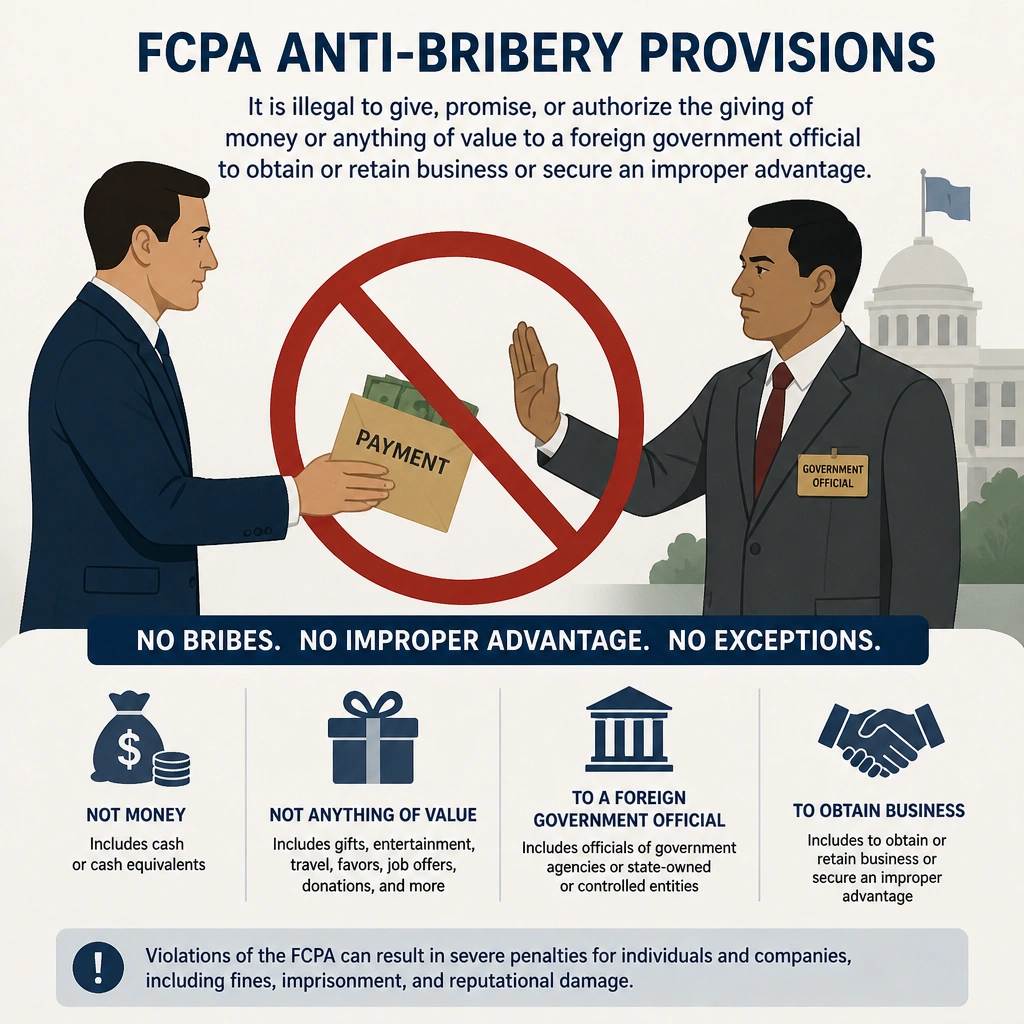
Short Explanation and Infographic
Here's the deal with the FCPA: it is a massive piece of legislation, and it does not mess around. At its core, the anti-bribery part is designed to stop companies from paying off foreign government officials to win business. Think of it as keeping the playing field level and clean. If you're offering cash, expensive gifts, or even a fancy internship to a foreign official's kid to land a government contract, you're violating the FCPA. It's that simple, and the penalties are brutal.
Full explanation below image
Full Explanation
The Foreign Corrupt Practices Act (FCPA) of 1977 contains two primary components: the anti-bribery provisions and the accounting (books and records) provisions. The anti-bribery provisions prohibit individuals and entities—including U.S. citizens, permanent residents, foreign entities trading on U.S. exchanges, and those acting within the U.S.—from offering, paying, promising to pay, or authorizing the payment of money or anything of value to a foreign official to influence any act or decision to secure an improper advantage or retain business.
Let's explore why D is the correct answer and the others are incorrect. D is correct because the core mandate of the FCPA's anti-bribery section is to criminalize the bribery of foreign officials for commercial gain.
Distractor A is incorrect because selling products at a loss refers to dumping, which is an international trade issue regulated by trade laws (such as the WTO and anti-dumping duties) rather than the FCPA.
Distractor B is incorrect because executing trades using material, non-public information describes insider trading, which falls under general securities fraud (e.g., Exchange Act Rule 10b-5) rather than the anti-bribery provisions of the FCPA.
Distractor C is incorrect because employing non-U.S. citizens without authorization is an immigration and labor compliance issue, regulated by agencies like USCIS and the Department of Labor, not the FCPA.