What is the primary objective of a corporate compliance team when initiating and conducting an internal investigation?
Select an answer to reveal the explanation.
Short Explanation and Infographic
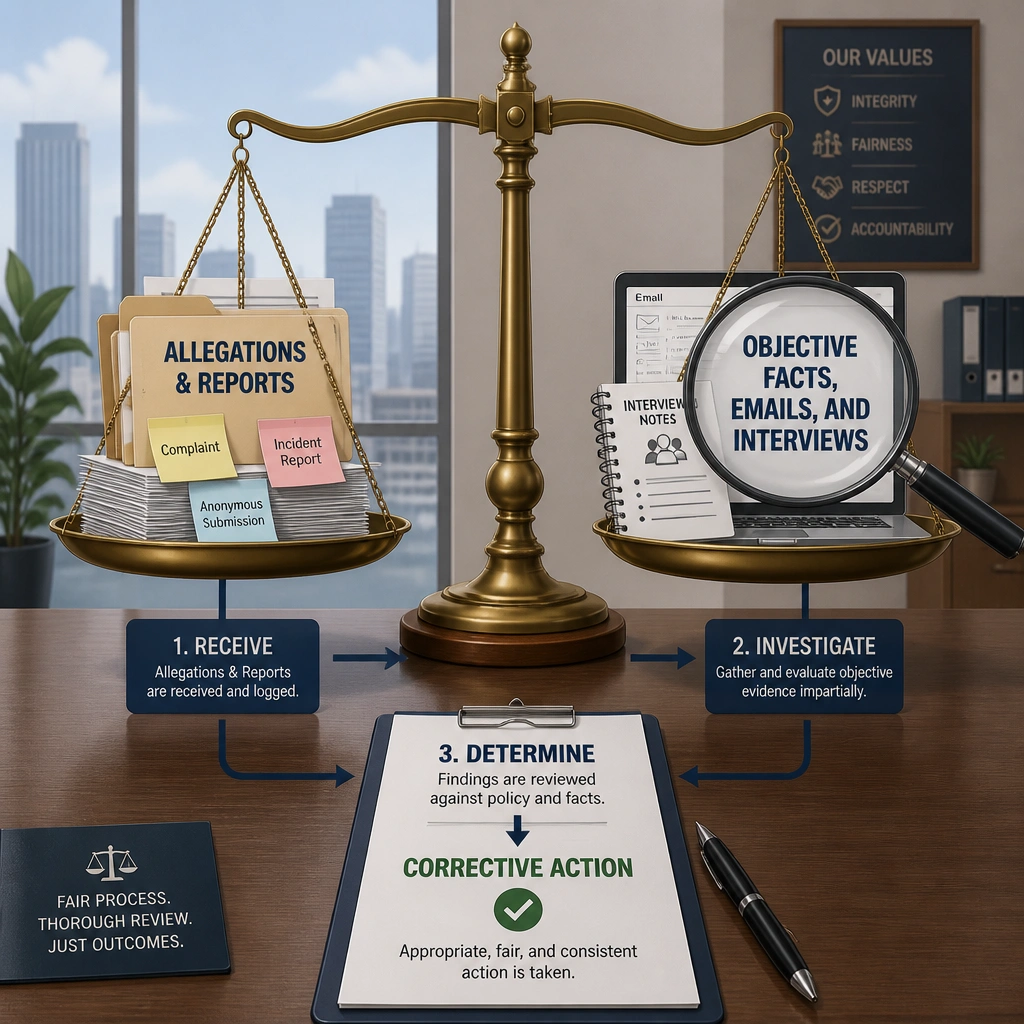
Here's the deal: when someone reports that something bad is happening in your company—like fraud, harassment, or bribery—you can't just react on emotion or ignore it. You have to get the facts! That's what an internal investigation is all about. Think of it like detective work. Your job isn't to prosecute anyone—leave that to the government. And it's definitely not to publicly shame people. Your goal is to gather all the emails, interview the witnesses, and find out exactly what happened. Once you have the facts, you can take the right corrective action to fix it. Trust me on this, a fair and thorough investigation is the only way to protect your business. Got it? Sweet. Let's keep rolling.
Full explanation below image
Full Explanation
The core purpose of an internal investigation is to serve as an objective, fact-finding process. When an allegation of misconduct or policy violation is made, the organization must determine what actually occurred. The compliance and legal teams must gather physical evidence, review digital footprints (such as emails and chats), and conduct interviews to establish a clear timeline and factual record. Based on these findings, the organization can decide on appropriate disciplinary action, report to regulators if necessary, and implement control improvements.
Let's analyze the options to understand why the correct answer is correct and the distractors are incorrect: - Option D is correct because an internal investigation is fundamentally about objective fact-finding and taking appropriate, measured corrective actions based on those facts. - Option A is incorrect because preparing for an IPO involves financial audits, regulatory filings, and investment banking negotiations, which are completely unrelated to internal compliance investigations. - Option B is incorrect because corporate compliance programs require confidentiality and respect for all parties involved. Public shaming destroys trust, exposes the company to defamation lawsuits, and violates basic employee rights. - Option C is incorrect because private corporations do not have the legal authority to indict, prosecute, or criminally sentence individuals. Criminal prosecution is exclusively the domain of state and federal government authorities, though the company may choose to refer its investigative findings to law enforcement.