When designing a corporate compliance and ethics program, which factors must be analyzed to ensure the program is properly tailored to the organization?
Select an answer to reveal the explanation.
Short Explanation and Infographic
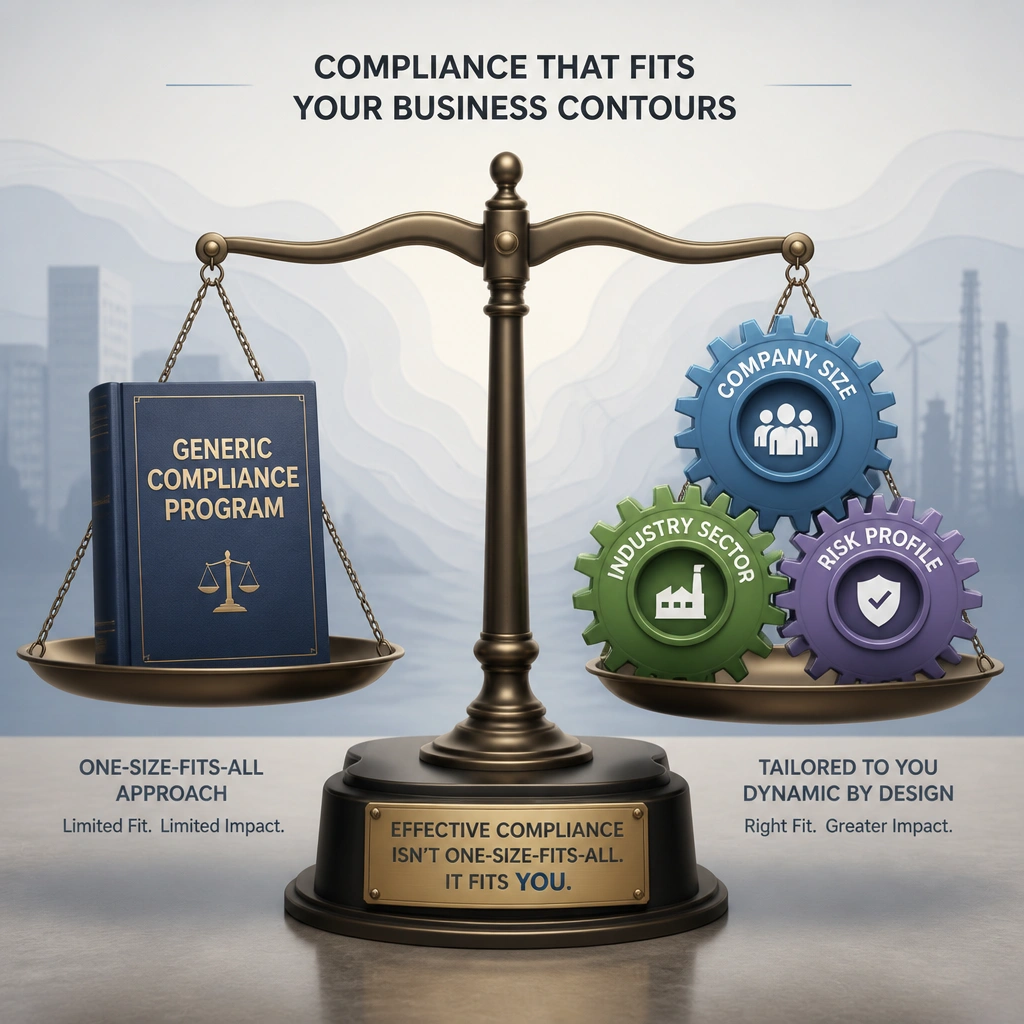
Check this out: you can't just download a generic compliance template off the internet and think you're protected. A compliance program is not a one-size-fits-all t-shirt! Think of it like buying a custom suit—it has to be tailored to fit your body. A small, local construction company does not need the same massive compliance framework as a global pharmaceutical corporation trading in fifty countries. You have to look at your size, your industry, and where your actual risks lie. If you don't tailor the program to your specific risk profile, you'll end up with a program that's either completely useless or so heavy it suffocates your business. Got it? Sweet. Let's keep rolling.
Full explanation below image
Full Explanation
Regulatory agencies, including the U.S. Department of Justice (DOJ) and the Sentencing Commission, emphasize that compliance programs must be tailored to the specific risks and circumstances of each organization. A 'cookie-cutter' compliance manual copied from another company is generally deemed ineffective. The design of the program must reflect the organization's scale (size and resources), its industry sector (e.g., healthcare, finance, aerospace, which have distinct regulations), and its unique risk profile (e.g., geographic footprint, customer base, reliance on third parties).
Let's examine why the correct answer is correct and the other choices are distractors: - Option D is correct because an effective compliance program must be customized based on the size of the organization, the sector in which it operates, and the specific legal and operational risks it faces. - Option A is incorrect because a compliance program is designed around roles, responsibilities, and risks, not the individual names of employees. - Option B is incorrect because corporate branding (colors, logos) is an aesthetic marketing concern and has no impact on legal compliance or risk mitigation. - Option C is incorrect because employee benefits, such as vacation policies, are human resources administration issues and do not dictate the structure or focus of a compliance and ethics program.