Under the Federal Sentencing Guidelines for Organizations (FSGO), which of the following best describes when an organization's compliance and ethics program is legally considered "effective"?
Select an answer to reveal the explanation.
Short Explanation and Infographic
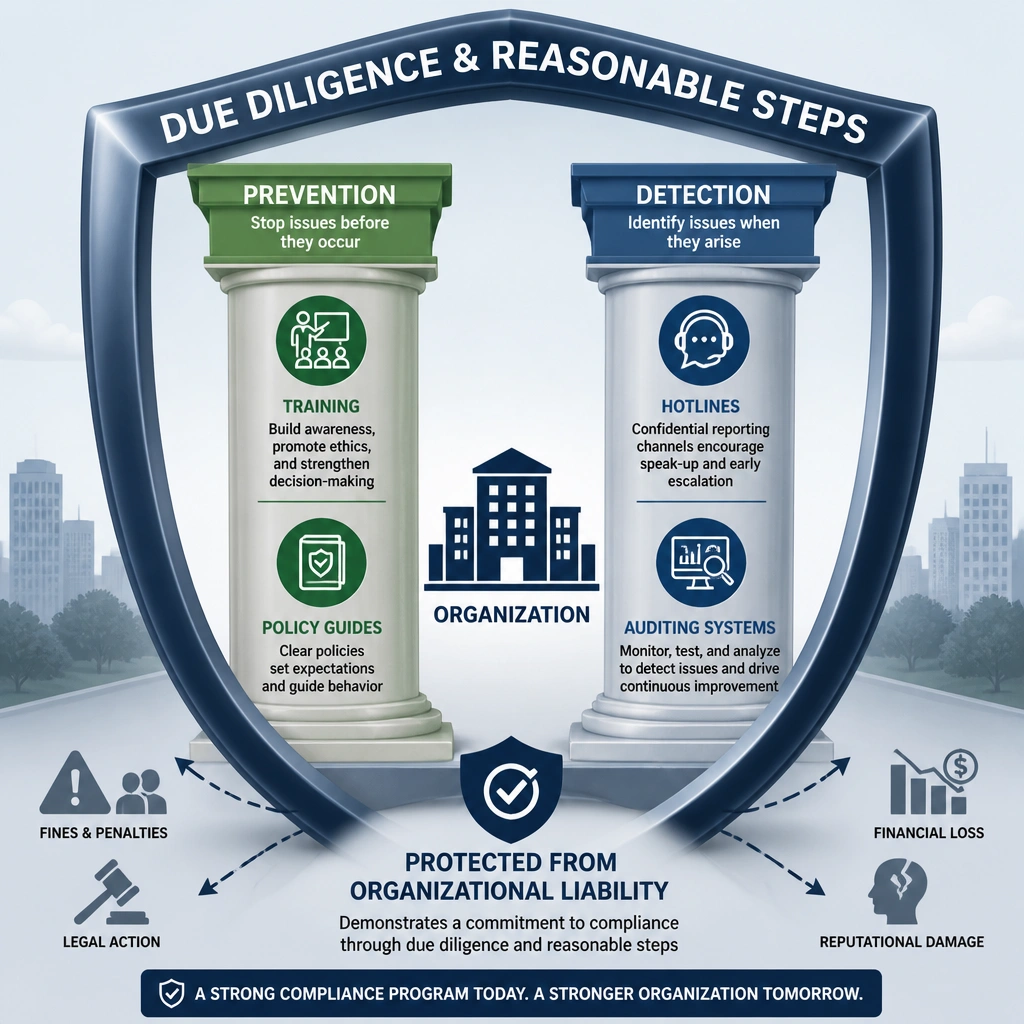
Let's dive into what the FSGO actually looks for when they talk about an "effective" program. Regulators aren't looking for a magic shield that guarantees nobody ever does anything wrong—humans make mistakes, and bad actors exist. What they want to see is that you've done your due diligence. You need to show that you've got solid systems in place to prevent and detect bad behavior, and that you've taken reasonable steps to keep things clean. If a rogue employee goes off the rails, but you can prove you did everything reasonable to stop it, that's what protects the company. Trust me on this, this distinction is huge on the exam!
Full explanation below image
Full Explanation
Under the Federal Sentencing Guidelines for Organizations (FSGO) §8B2.1, an effective compliance and ethics program must be reasonably designed, implemented, and enforced to prevent and detect criminal conduct. The guidelines do not demand a program that guarantees zero violations, as that is practically impossible. Instead, they require the organization to exercise due diligence and promote an organizational culture that encourages ethical conduct and a commitment to compliance with the law. Option D is correct because it directly reflects the core definition of an effective compliance program under FSGO: preventing and detecting misconduct while demonstrating that reasonable steps (due diligence) were taken to maintain compliance. Option A is incorrect because relying on external counsel is a defensive legal strategy, not an internal program designed to proactively prevent and detect employee misconduct. Option B is incorrect because having a violation-free history is not the standard of effectiveness; a program can still be effective even if a violation occurs, provided the company did everything reasonable to prevent and detect it. Option C is incorrect because the relative size or budget of the compliance department does not determine the qualitative effectiveness or the due diligence exercised by the organization.