Following an investigation that uncovered unauthorized expense reimbursements, the compliance department drafts a "corrective action plan." What is the primary purpose of this plan?
Select an answer to reveal the explanation.
Short Explanation and Infographic
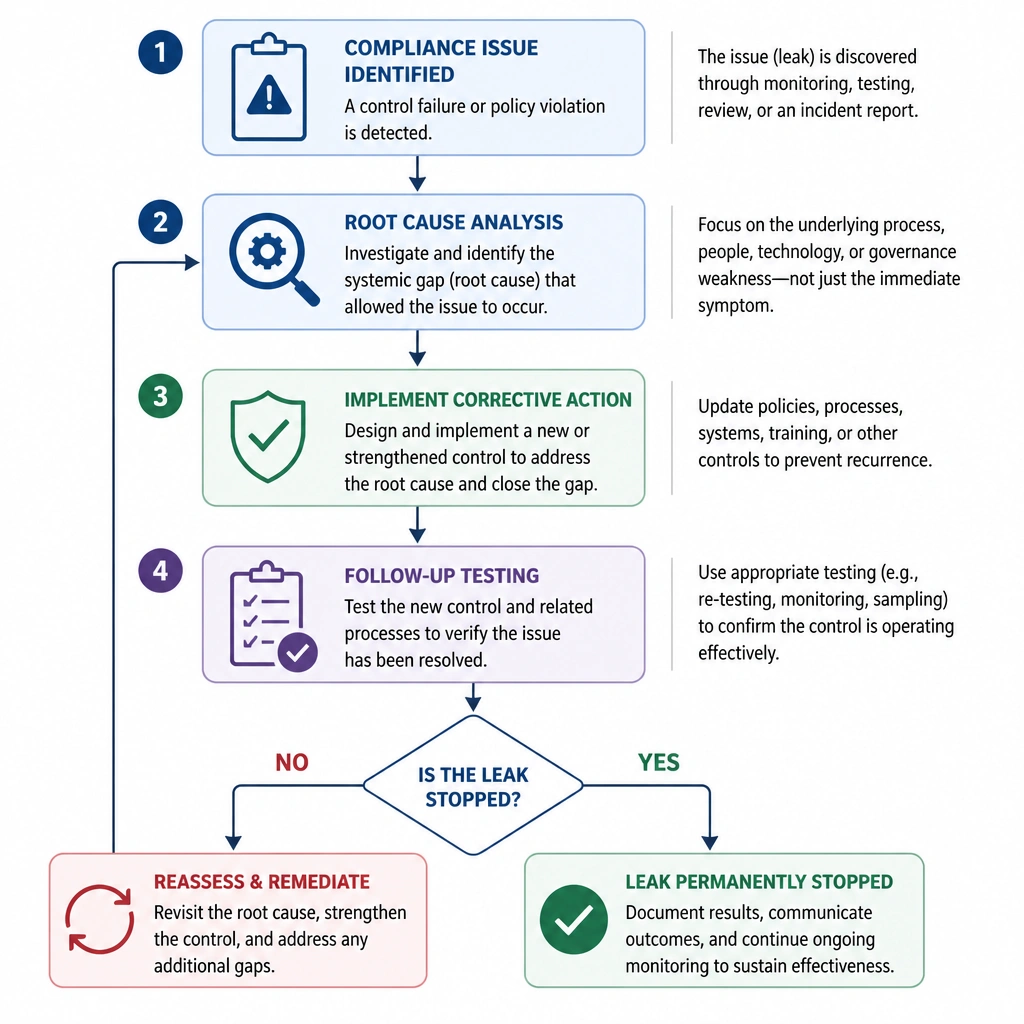
Imagine you find a pool of water on the floor of your server room. You can mop it up, but if you don't find out why it's leaking—maybe a pipe burst or the AC condensation line is clogged—guess what? It's going to leak again! Mop all you want, but the root cause is still there. In compliance, a corrective action plan is your way of fixing the pipe. We don't just punish people or pay fines and walk away. We dig deep to find the root cause, fix the broken control, and make sure it never happens again. The correct answer is B. Fining regulators (Option A) is something we want to avoid, firing everyone (Option C) is a nuclear option that doesn't fix a broken process, and public shaming (Option D) is just an HR disaster. You have to fix the system.
Full explanation below image
Full Explanation
The correct answer is B. The ultimate goal of a compliance investigation is not merely to discover what happened or who was at fault, but to prevent the issue from recurring. A corrective action plan (CAP) is a structured document that outlines the steps the organization will take to address the compliance failure. This begins with a 'root cause analysis' to determine why the control failed (e.g., was it a lack of training, a system loophole, or a deliberate bypass?). Once the root cause is identified, the CAP specifies systemic remediations—such as updating policies, implementing new technological controls, enhancing training, or adjusting supervisory oversight.
Let's analyze why the incorrect options are wrong: - Option A is incorrect because paying regulatory fines is a consequence of a compliance failure, not the objective of a corrective action plan. A successful CAP aims to demonstrate remediation to regulators, which can actually help reduce or avoid fines. - Option C is incorrect because firing everyone involved is a reactive disciplinary response that fails to address systemic process weaknesses. If a system allows unauthorized actions, new hires will eventually commit the same errors if the control gap is not closed. - Option D is incorrect because publicly naming employees violates privacy guidelines, damages morale, and discourages future reporting, rather than resolving the control failure.
An effective CAP assigns clear ownership, sets realistic deadlines for implementation, and establishes monitoring checkpoints to verify that the new controls are working.