What is the underlying compliance principle behind the Federal Sentencing Guidelines' mandate that an organization must regularly evaluate the effectiveness of its compliance and ethics program?
Select an answer to reveal the explanation.
Short Explanation and Infographic
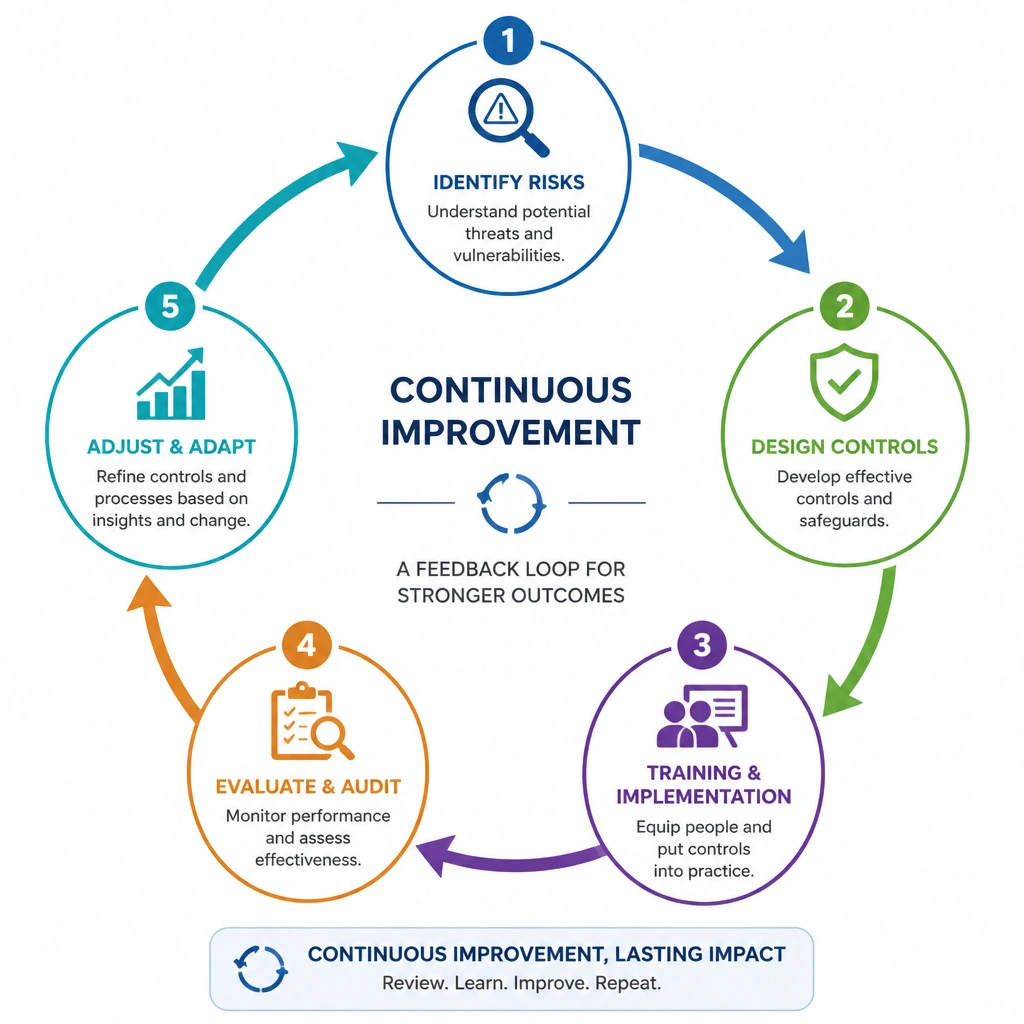
Check this out: in the networking world, we don't just configure a network security policy once and walk away. The threat landscape is always shifting—new malware is written, new exploits are found, and your network grows. If you don't audit and update your security, you will get hacked. It's the same with compliance. The FSGO wants you to regularly evaluate your program because it needs to be a living, breathing system. Your business risks change, the laws change, and your program must adapt. The correct answer is C. This isn't about tax breaks (Option A), old laws (Option B), or PR stunts (Option D). It's about keeping your defenses up-to-date and ready for the real world!
Full explanation below image
Full Explanation
The correct answer is C. The FSGO requires organizations to periodically evaluate the effectiveness of their compliance and ethics programs. The underlying principle is that a compliance program must be a dynamic, living system rather than a static document. Companies operate in changing regulatory, economic, and operational environments. Expanding into new lines of business, adopting new technologies, or entering new geographic regions creates new risk profiles. Regular evaluations (through internal audits, compliance surveys, and risk assessments) allow organizations to detect weaknesses and adapt their program to address new risk areas.
Let's evaluate the distractors: - Option A is incorrect because compliance programs are designed to prevent and detect criminal conduct and build ethical culture; they are not financial vehicles for reducing corporate tax burdens or gaining government subsidies. - Option B is incorrect because compliance is not static; regulations are constantly changing, and a program that does not adapt to new legal standards is ineffective. - Option D is incorrect because a program maintained only for public relations or superficial documentation is considered a "paper program" and does not meet the legal standard for an effective compliance program under the FSGO.