During the annual board of directors meeting, the Chief Compliance Officer (CCO) presents the compliance and ethics program's annual report. To ensure the board can perform its oversight role effectively, which of the following datasets or information sets is most critical to include in this report?
Select an answer to reveal the explanation.
Short Explanation and Infographic
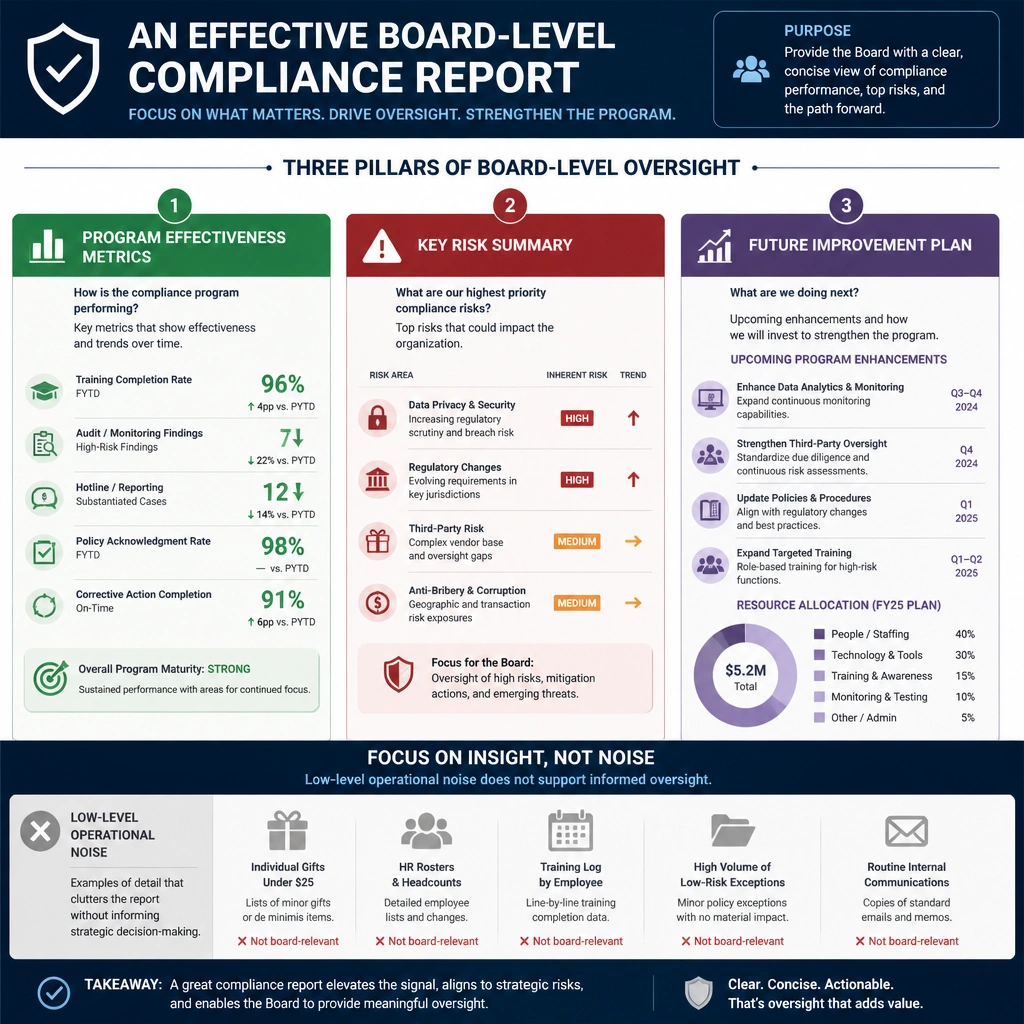
Here's the deal: the board of directors isn't there to micromanage daily details like who took a Friday off or who got a $20 coffee from a vendor. They operate at the 30,000-foot view. They need the big picture to make smart decisions and shield the company from major liability. That's why you want to hand them a report showing how well the program is actually working, what major risks are looming on the horizon, and the concrete plan to fix those gaps. Trust me, the board needs to see effectiveness, risk, and future direction, not granular logs. If you chose C, you nailed it!
Full explanation below image
Full Explanation
Board oversight of a compliance and ethics program is a critical component of corporate governance. Under guidelines such as the US Federal Sentencing Guidelines for Organizations (FSGO) and the Department of Justice's (DOJ) Evaluation of Corporate Compliance Programs, the board must exercise reasonable oversight regarding the implementation and effectiveness of the compliance program. To do this, the board needs high-level, strategic information rather than operational minutiae. Option C is correct because an assessment of program effectiveness, a summary of key risks, and a plan for future improvements provide the board with the necessary insights to evaluate whether the program is working in practice, where the organization remains vulnerable, and how the compliance team plans to address those vulnerabilities. This allows the board to allocate resources appropriately and fulfill their fiduciary duties of care and oversight. Option A is incorrect because presenting a granular ledger of all gifts and entertainment would overwhelm the board with low-level details, distracting them from strategic governance and risk management. While gifts and entertainment should be monitored by the compliance department, the board only needs to see high-level trends or significant policy exceptions. Option B is incorrect because a roster of new hires and promotions is a routine Human Resources function. While onboarding training metrics are relevant to compliance, a simple list of recruits does not assist the board in evaluating program effectiveness or risk. Option D is incorrect because employee vacation requests are strictly operational management issues and have no relevance to compliance program effectiveness or governance oversight. Boards focus on systematic risks, not day-to-day scheduling.