During an annual board meeting, the chairperson asks about the specific responsibilities of the Audit Committee regarding the corporate compliance program. Which of the following best defines their primary role?
Select an answer to reveal the explanation.
Short Explanation and Infographic
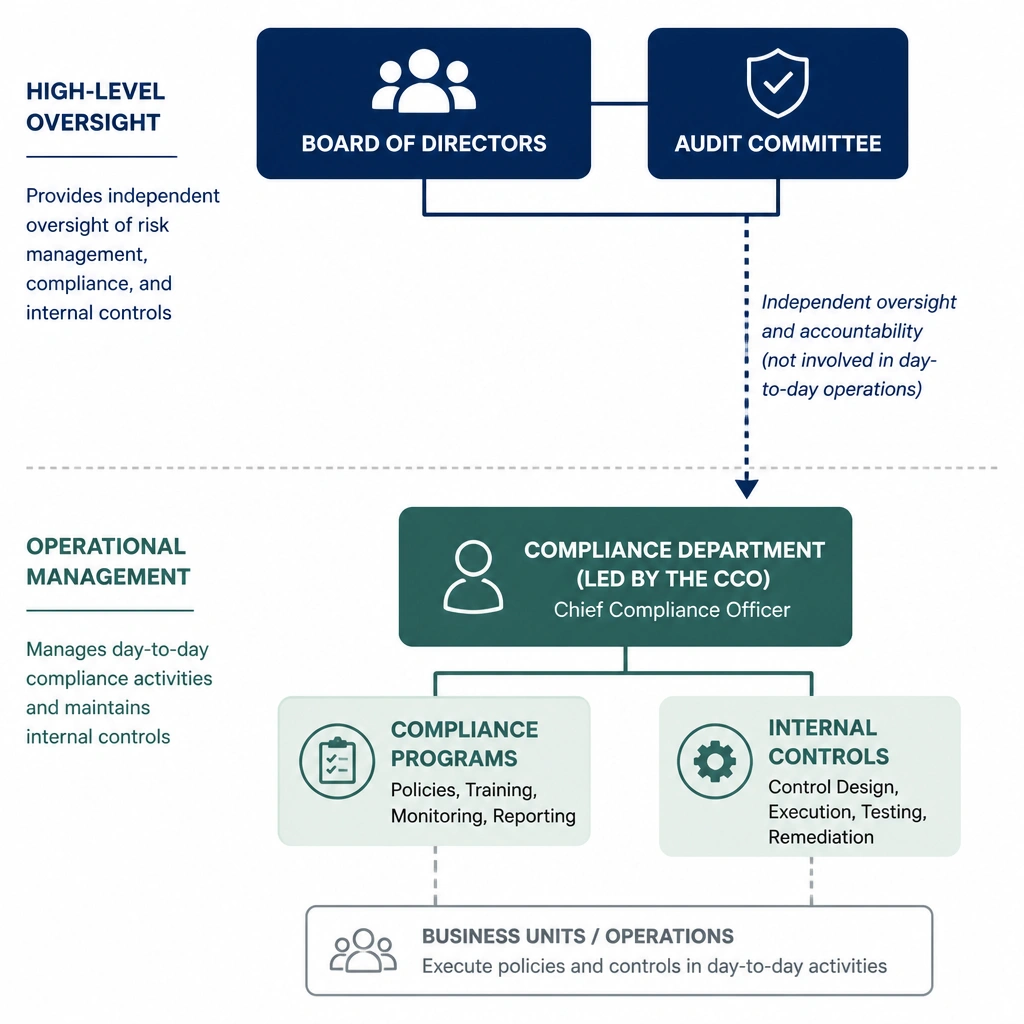
Here's the deal: the audit committee is part of the board of directors, which means they operate at the 30,000-foot view. They aren't in the trenches running the daily compliance drills—that's the Chief Compliance Officer's job. Instead, the audit committee acts as the independent eyes and ears of the board. They look at the controls, review the reports, and ask, "Is this program actually working, or are we just checking boxes?" Distractors like managing daily ops or running minor investigations get the hierarchy all wrong. Remember, they oversee and monitor; they don't micromanage. Let's keep rolling.
Full explanation below image
Full Explanation
The audit committee of the board of directors plays a vital oversight role in corporate governance. It does not manage the compliance program directly, but rather monitors the systems and controls that management has established. This separation of duties is critical to ensure independence and objectivity in evaluating the company's internal control environment and overall compliance efforts. Providing independent monitoring and reviewing the effectiveness of the compliance program allows the board to fulfill its fiduciary and legal duties. The committee verifies that internal controls are robust, risks are properly mitigated, and the compliance program is functioning as designed. This oversight provides critical assurance to stakeholders, regulators, and shareholders that compliance risks are being managed actively and objectively. In contrast, day-to-day management is the responsibility of the Chief Compliance Officer (CCO) and the compliance staff, not the board-level audit committee. The committee is not responsible for hiring or firing line employees or managing the compliance department's daily workload. Minor policy infractions are handled by line management, human resources, or the compliance department itself, rather than a high-level board committee. Finally, setting sales goals and business strategies is an executive and operational management function, which is outside the scope of compliance oversight and audit committee responsibilities. Together, these boundaries preserve the committee's independence, preventing conflicts of interest that arise when those who design controls also audit them.