A CEO frequently emphasizes the importance of ethical conduct in company-wide meetings and actively supports compliance initiatives. Why is this concept of "tone at the top" so critical to a compliance program's success?
Select an answer to reveal the explanation.
Short Explanation and Infographic
Trust me on this: leadership sets the pace for the entire team. If the executive suite ignores the rules or treats compliance like a nuisance, employees down the line will do the exact same thing. "Tone at the top" means leaders walk the walk. When the CEO stands up and backs compliance, it creates a culture where doing the right thing is the norm. It's not a magic shield that stops every single violation, and it's definitely not a replacement for real controls or audits. But without that strong signal from the top, your program won't stand a chance. Got it? Sweet.
Full explanation below image
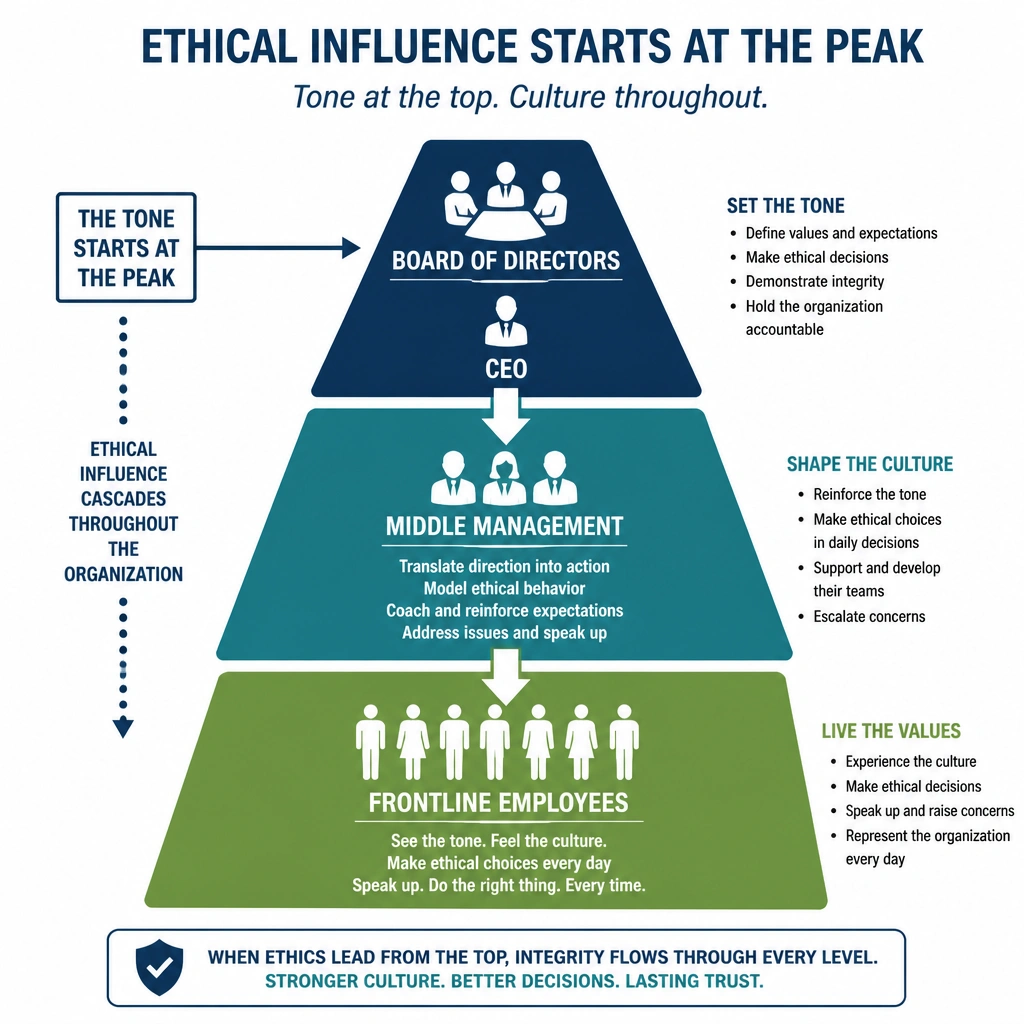
Full Explanation
"Tone at the top" refers to the ethical atmosphere created in the workplace by an organization's leadership. It is widely recognized by regulators, including the U.S. Department of Justice (DOJ) and international anti-corruption bodies, as a foundational element of any effective compliance program. Executive leadership and the board of directors set the standard for what is acceptable behavior in a company. When leaders consistently model ethical decision-making, allocate adequate budget to compliance, and support compliance staff, it establishes a culture of integrity. Employees are far more likely to follow policies and report misconduct when they observe that their leaders are genuinely committed to compliance. Even the strongest ethical leadership cannot guarantee that an individual employee will never violate a policy. Additionally, while regulators look for corporate leadership commitment, there is no universal law requiring executives to verbally endorse compliance in a specific manner. Crucially, "tone at the top" is a cultural driver; it cannot replace concrete compliance controls, monitoring, and auditing procedures, which are equally essential parts of a comprehensive program. It is the synergy between leadership support and technical controls that defines a successful program. Without both, the compliance program becomes a mere paper exercise that fails to prevent systemic misconduct, exposing the company to severe regulatory fines and reputational damage.