According to the Federal Sentencing Guidelines for Organizations (FSGO), what is the primary responsibility of an organization's senior personnel regarding the compliance program?
Select an answer to reveal the explanation.
Short Explanation and Infographic
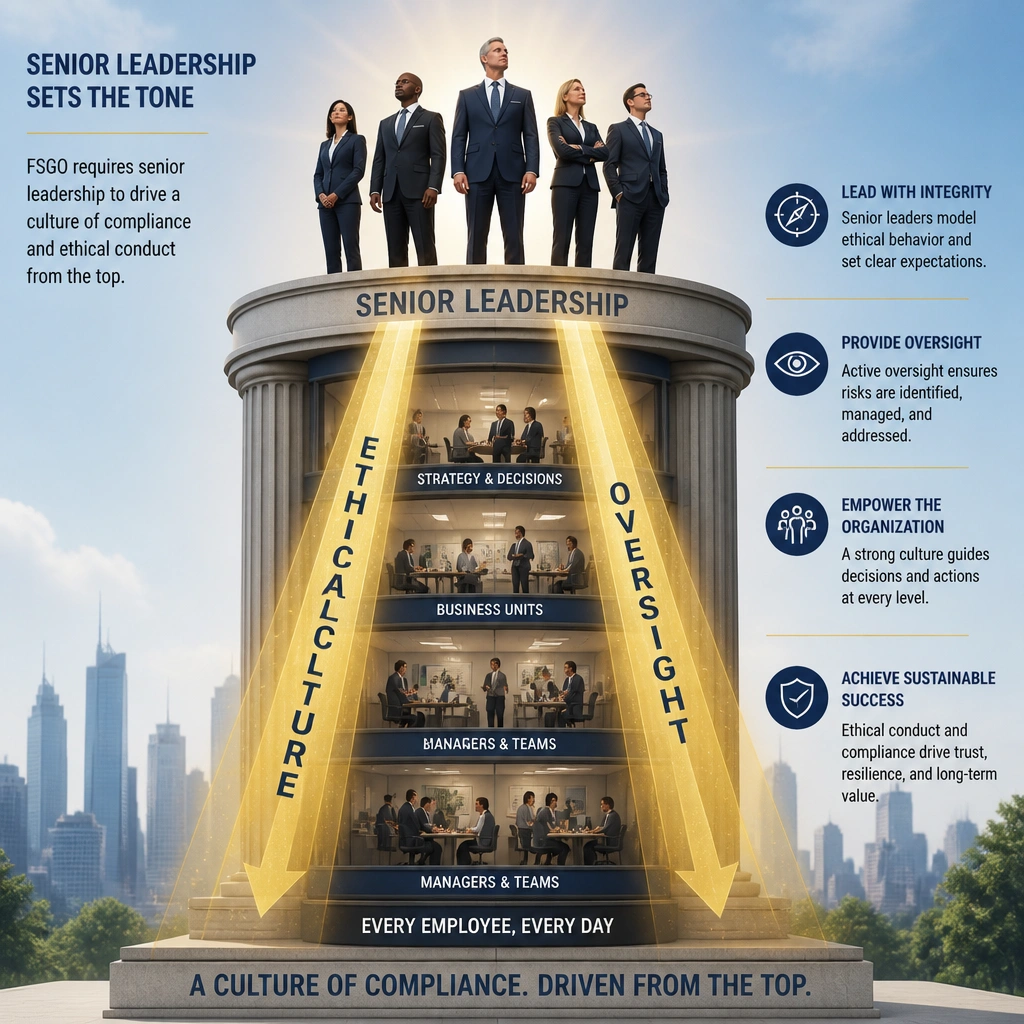
Let's dive into the FSGO rules here. The guidelines are very clear about who is in charge of the big picture. They don't expect the high-level executives to spend their days resetting user passwords on the training portal (Option A) or running every single slide deck presentation (Option D). That's administrative stuff. And they definitely aren't focused on sales goals (Option B). The FSGO puts the burden on senior personnel to steer the ship: they must ensure the company actually has an effective program in place and, crucial point here, actively promote a culture of ethics and compliance. The correct answer is C. The tone at the top starts with the bosses. If the leaders don't care about ethics, the employees won't either. Make sure you remember that connection between leadership and compliance culture for the exam!
Full explanation below image
Full Explanation
The correct answer is C. The Federal Sentencing Guidelines for Organizations (FSGO) outline specific governance expectations for senior management. Specifically, high-level personnel (such as executive officers and division heads) must ensure that the organization has an effective compliance and ethics program. Furthermore, the guidelines explicitly charge leadership with the responsibility to promote an organizational culture that encourages ethical conduct and a commitment to compliance with the law. This concept is commonly referred to as the "tone at the top" and is considered critical for preventing systemic misconduct.
Let's analyze the incorrect options: - Option A is incorrect because the daily administration and operations of the compliance program are typically delegated to a specific individual, such as the Chief Compliance Officer (CCO), who is given day-to-day operational responsibility. - Option B is incorrect because while commercial success is vital, financial and sales objectives are business goals that are separate from the regulatory duties defined by the FSGO. - Option D is incorrect because senior personnel are not required to personally deliver every training session. While their visible participation in key training events is beneficial, the actual delivery is managed by compliance staff or external trainers. Ultimately, the FSGO expects senior executives to provide active oversight, secure resources, and lead by example to cultivate a strong compliance culture throughout the enterprise.