Imagine your boss walks in and says, "Hey, we've outsourced all our new supplier due diligence to a third-party agency. Great, now we don't have to worry about supplier compliance anymore!" You immediately spot a major problem with this mindset. What is the primary compliance risk of fully outsourcing this due diligence process?
Select an answer to reveal the explanation.
Short Explanation and Infographic
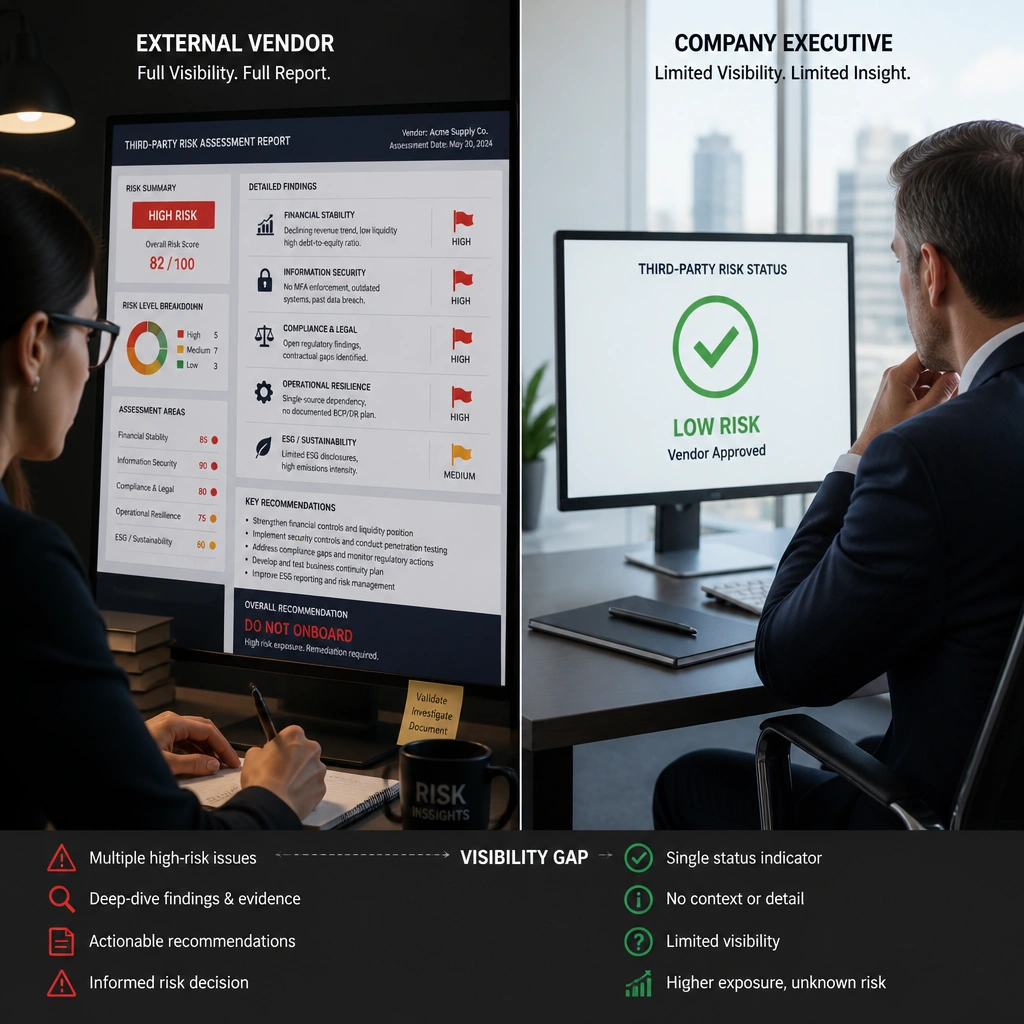
Check this out: you can outsource the work of due diligence, but you can never outsource the responsibility. I remember working on a project where a company thought they were safe because they paid a third party to screen all their vendors. But guess what? A vendor had a massive history of bribery, and the third party buried it on page 42 of a PDF. The company never read it, never managed the risk, and ended up facing huge penalties. If you don't have direct eyes on the results, you can't make smart risk decisions. The buck stops with you, not the vendor doing the screening! That's why the right answer is losing visibility and failing to manage the risk. Got it? Let's keep rolling.
Full explanation below image
Full Explanation
Outsourcing compliance tasks is a common industry practice, but organizations must remember that compliance accountability cannot be delegated. When a third party performs supplier due diligence, the hiring company often receives summarized reports or simple "pass/fail" ratings. The key risk of this arrangement is that the hiring organization lacks direct, granular visibility into the actual findings. Without this primary data, management cannot perform a nuanced risk-benefit analysis or establish appropriate mitigating controls.
Let's analyze the choices: - Option C is correct because the lack of direct knowledge prevents the company from owning and managing the risk. If a third-party vendor engages in corruption, regulatory bodies like the DOJ will hold the parent company accountable for failing to supervise and remediate the risk, regardless of whether a third party was hired to do the initial screening. - Option A is incorrect because while provider qualification is a valid procurement concern, it is a secondary operational risk rather than the fundamental systemic compliance risk of losing control over risk decision-making. - Option B is incorrect because speed (slowness) is an operational efficiency concern, not a core risk to compliance integrity. - Option D is incorrect because hiring a third party does not grant the company legal immunity or shift liability; under laws like the Foreign Corrupt Practices Act (FCPA), the primary company remains legally liable for the actions of its agents and partners.