Think of internal controls as the guardrails on a winding mountain road. They aren't there to stop you from driving, but to keep you from flying off the cliff. What is the fundamental objective of implementing these internal controls within a corporate compliance program?
Select an answer to reveal the explanation.
Short Explanation and Infographic
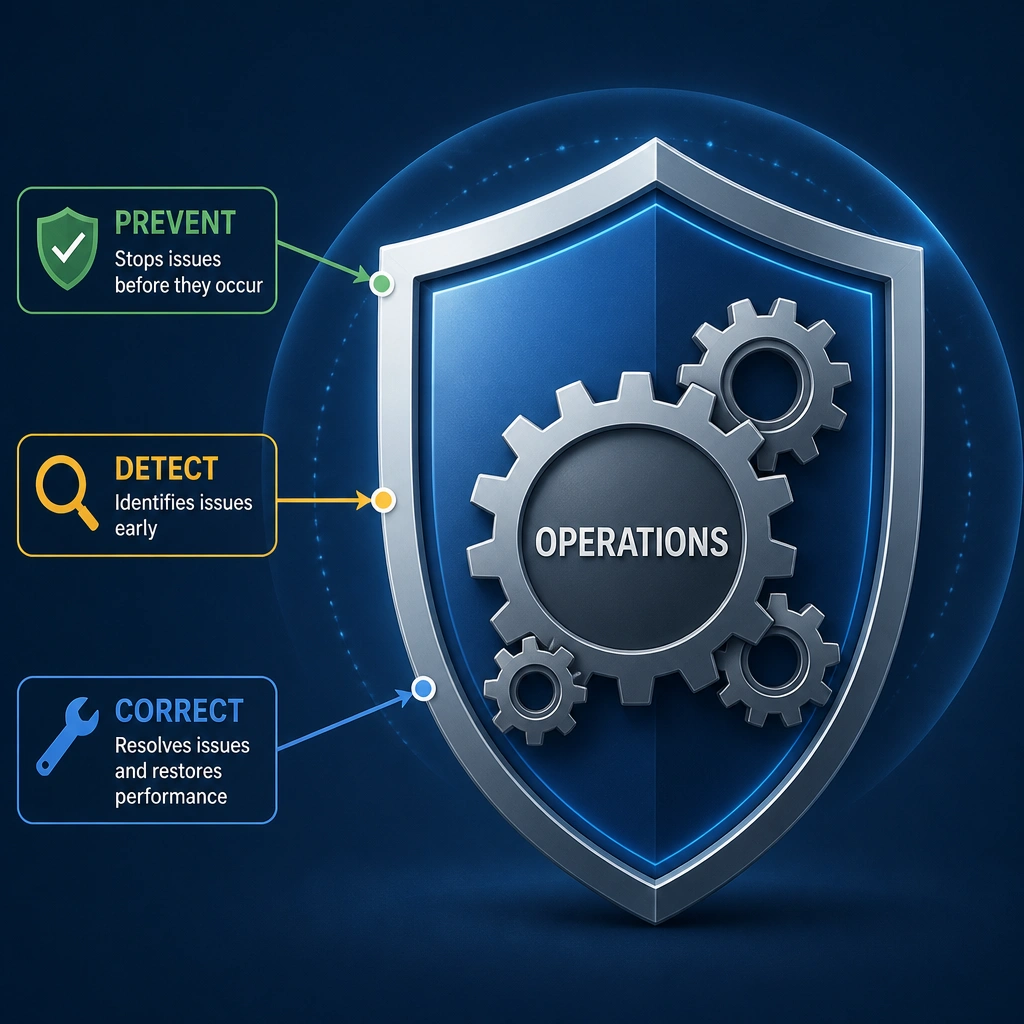
Let me tell you how this works: internal controls are your safety net. They are the procedures, checks, and balances that keep the business running smoothly and legally. Without them, you've got chaos. The main goal here isn't to slow things down or make people fill out paperwork for fun. It's to prevent mistakes before they happen, detect them quickly if they do slip through, and correct them so they don't happen again. It's that simple. If your controls are doing their job, they protect the company, the employees, and the shareholders. Got it? Sweet. Let's keep rolling.
Full explanation below image
Full Explanation
Internal controls are the policies, procedures, and practices established by management to safeguard assets, ensure financial statement integrity, promote operational efficiency, and encourage adherence to laws and regulations. According to standard frameworks such as COSO (Committee of Sponsoring Organizations of the Treadway Commission), internal controls operate continuously across all levels of an organization. Their core purpose is to mitigate risk by providing a structured system of checks and balances.
Let's analyze the choices: - Option C is correct because it encapsulates the primary functions of controls: prevention (avoiding errors or fraud), detection (identifying when they occur), and correction (remediating the issue and preventing recurrence). Together, these functions reduce the likelihood and impact of compliance failures. - Option A is incorrect because internal controls are not designed to maximize profits "at all costs," especially if doing so involves bypassing regulations. Indeed, controls can sometimes introduce deliberate operational friction to ensure compliance. - Option B is incorrect because controls should distribute responsibilities (segregation of duties) rather than centralizing all decisions within a single department like legal. - Option D is incorrect because the purpose of controls is to prevent the need for legal defense by ensuring compliance, not to assist in hiring expensive attorneys.