A corporate compliance department utilizes automated data analytics tools to scan historical travel and entertainment expenses, looking for recurring round-dollar amounts or weekend transactions. This monitoring technique is best classified as which type of control check?
Select an answer to reveal the explanation.
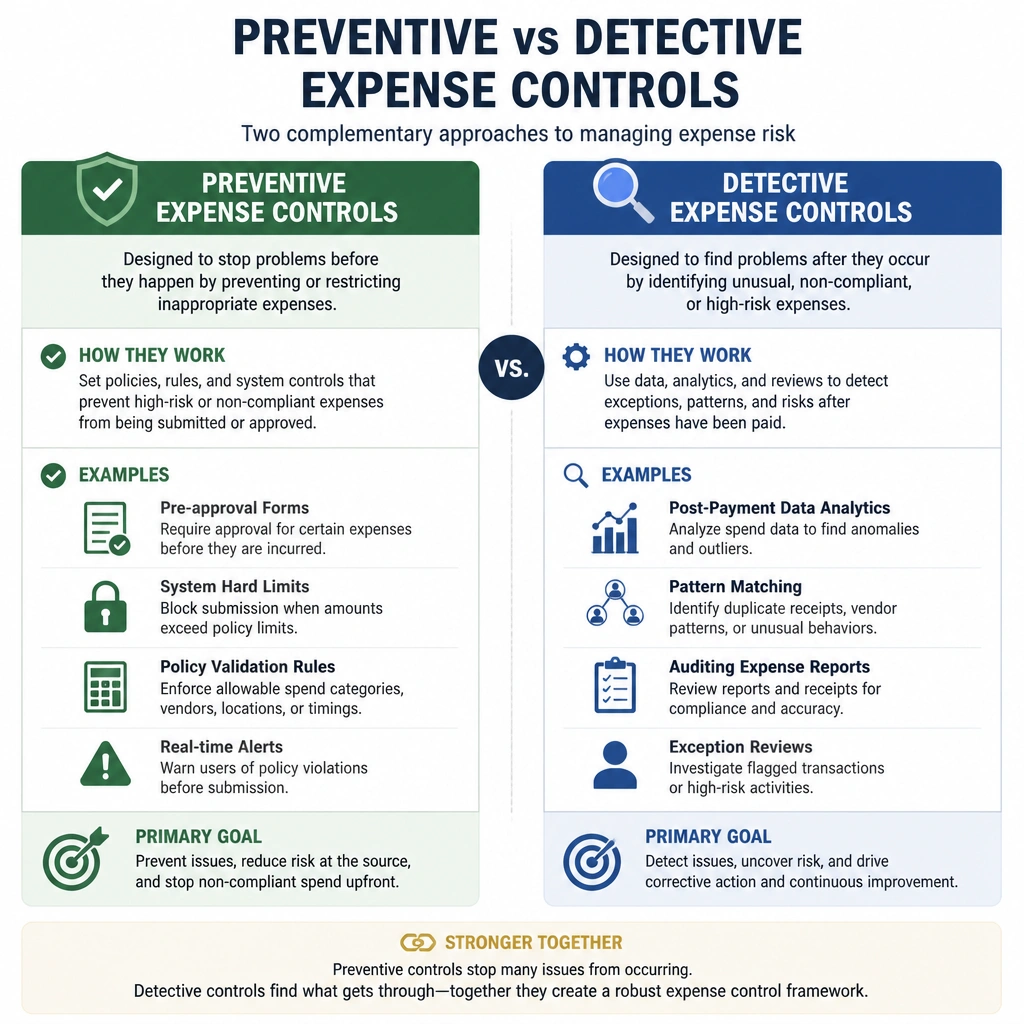
Short Explanation and Infographic
Pay close attention here: scanning expense reports after they've been submitted and paid is a classic detective move. The money has already left the building! You're using data analytics to look back and find patterns—like someone trying to hide bribes under the guise of fancy dinners. It's not preventive (choice B) because the software didn't stop the expense from being submitted or approved in the first place. It's not corrective (choice C) because you haven't disciplined anyone or clawed back the money yet. And it's definitely not manual (choice D) because you've got software crunching thousands of reports. It's detective, plain and simple.
Full explanation below image
Full Explanation
Using automated data analytics to review historical transaction records, such as travel and entertainment expense reports, is a detective control. Detective controls are designed to identify anomalies, errors, or fraudulent activities after they have occurred. In this scenario, the expenses have already been incurred and processed; the data analytics tool serves to identify patterns (such as round-dollar transactions, duplicate submissions, or weekend spend) that suggest policy violations or potential corruption. Option B (preventive control) is incorrect because a preventive control would block or reject non-compliant expenses prior to payment (e.g., system-enforced limits or pre-approval requirements). Option C (corrective action) is incorrect because corrective actions occur after an anomaly is detected to remediate the issue (e.g., recovering funds, disciplining employees, or updating policies). Option D (manual administrative check) is incorrect because the process described relies on automated data analytics rather than manual human inspection of individual receipts.