When expanding operations into a high-risk jurisdiction known for financial crime and money laundering, which preventive control should a compliance officer prioritize to mitigate legal and regulatory risks?
Select an answer to reveal the explanation.
Short Explanation and Infographic
Let me show you how this works in the real world. If you're doing business in a high-risk area for money laundering, you can't just cross your fingers and hope for the best. You've got to know exactly who you're dealing with. That's why Know Your Customer (KYC) and transaction tracking are your best friends. They're preventive controls because they stop bad actors at the door before they can use your business to clean dirty money. Trust me, ignoring KYC is a fast track to huge regulatory fines!
Full explanation below image
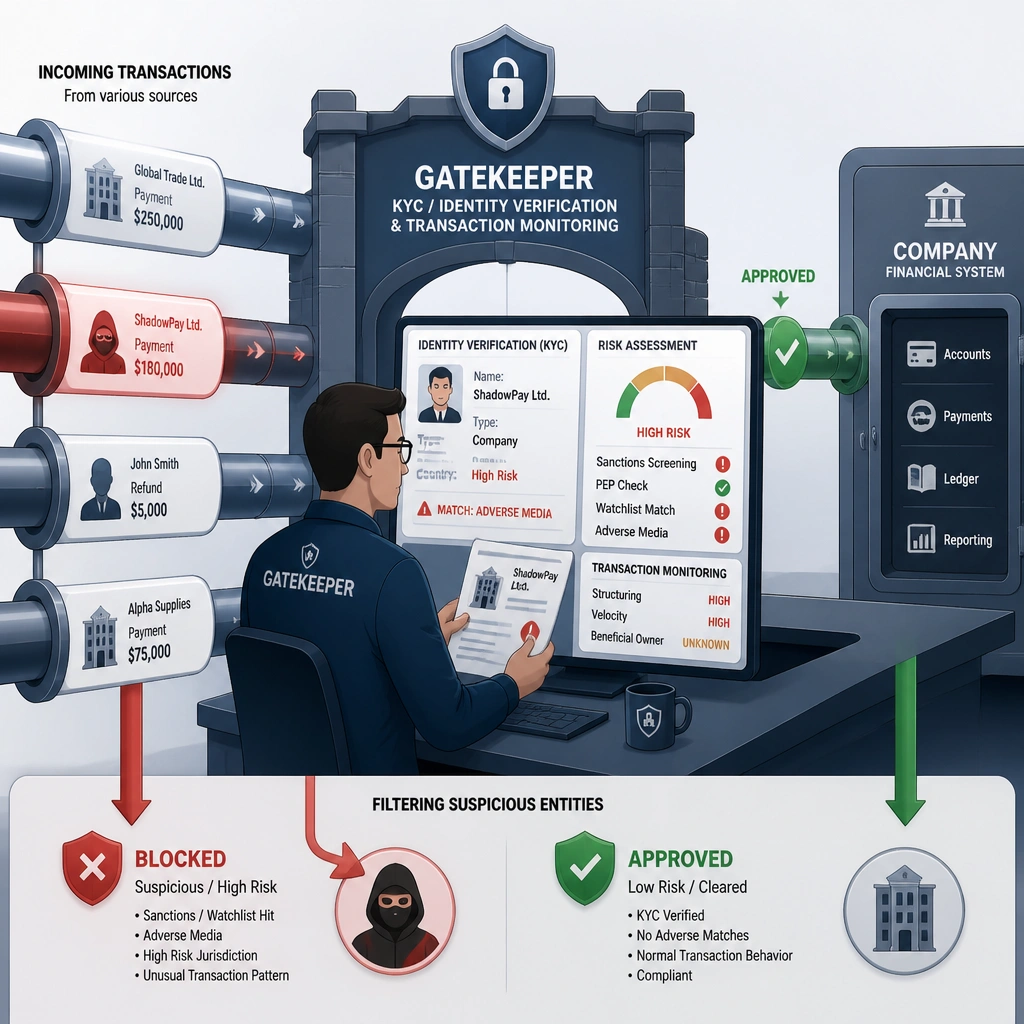
Full Explanation
In jurisdictions with a high risk of money laundering and terrorist financing, organizations must implement robust preventive controls to avoid facilitating illicit financial flows. The most critical preventive control is a comprehensive Know Your Customer (KYC) program combined with real-time transaction monitoring. KYC procedures involve verifying the identity of clients, understanding the nature of their business activities, and assessing the risk level they pose. By doing so, the company can block suspicious entities from onboarding and detect anomalous transactions before they are completed. Allowing cash-only transactions actually increases money laundering risk, as cash is difficult to trace. Centralizing all transactions under a single person removes segregation of duties, creating a significant fraud vulnerability rather than mitigating risk. While completely avoiding business in a high-risk country is a risk avoidance strategy, it is not a preventive compliance control designed to manage ongoing operations safely.