When establishing a compliance program for managing third-party vendors and agents, what is a frequent mistake that organizations make during the due diligence phase?
Select an answer to reveal the explanation.
Short Explanation and Infographic
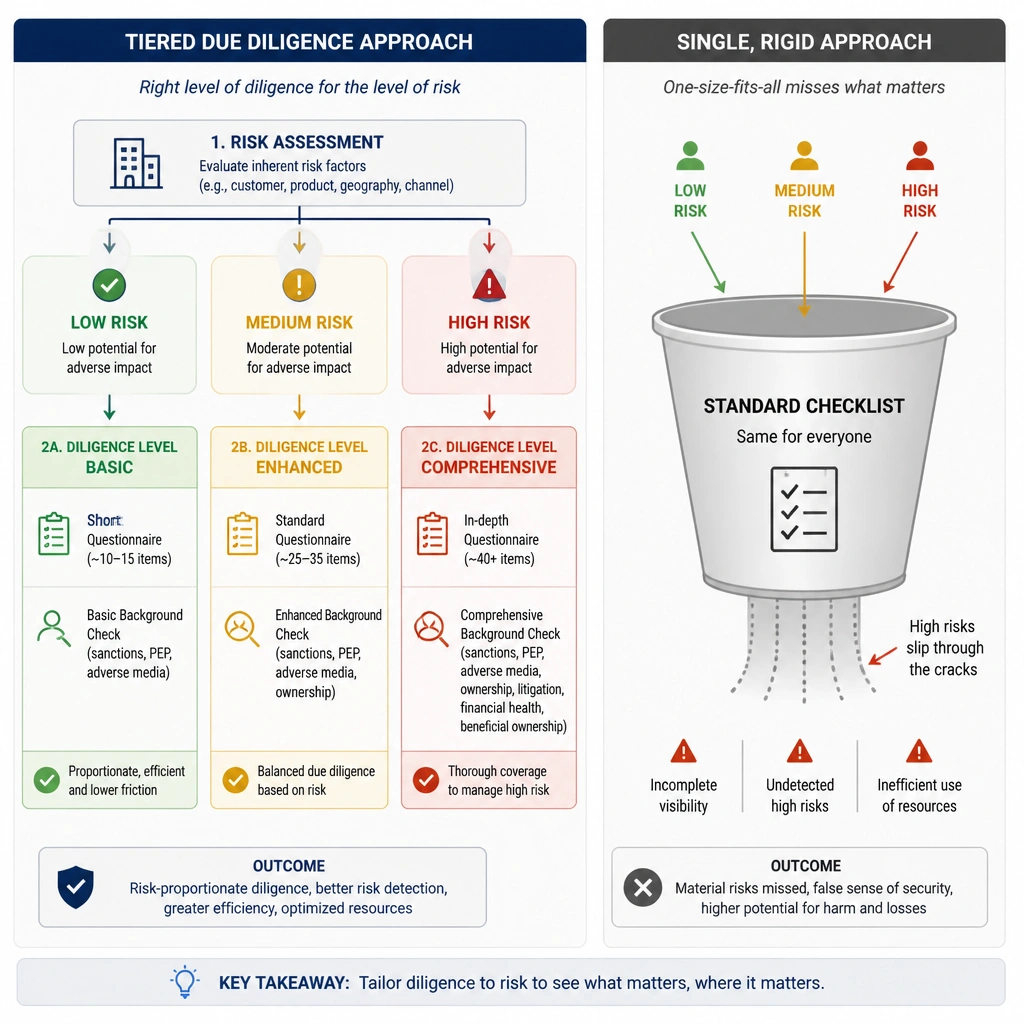
Here's the deal: you can't treat a local office supply vendor the same way you treat a foreign customs agent. If you use the exact same due diligence questionnaire for both, you're making a huge mistake. That 'one-size-fits-all' approach is a massive pitfall. It wastes time on low-risk suppliers while letting high-risk vendors slip through the cracks. Trust me, you need to customize your due diligence based on the risk, or you're just ticking boxes!
Full explanation below image
Full Explanation
Due diligence is a critical component of third-party risk management. A common pitfall in this process is adopting a 'one-size-fits-all' approach, where the same level of scrutiny is applied to all vendors, partners, or agents regardless of their geographic location, industry, transaction value, or relationship history. This approach leads to inefficiencies, wasting resources on low-risk third parties while failing to identify and mitigate severe risks associated with high-risk third parties (such as foreign agents interacting with government officials). To avoid this pitfall, organizations should implement a risk-based due diligence framework. Under this model, third parties are categorized into risk tiers (low, medium, high) based on preliminary risk assessments, and the depth of the due diligence inquiry is scaled accordingly. Best practices also dictate conducting due diligence before entering the relationship, and utilizing specialized expertise to evaluate the results, which are positive steps rather than pitfalls.