To establish an effective whistleblower protection program that encourages employees to report ethical violations, which element is most essential?
Select an answer to reveal the explanation.
Short Explanation and Infographic
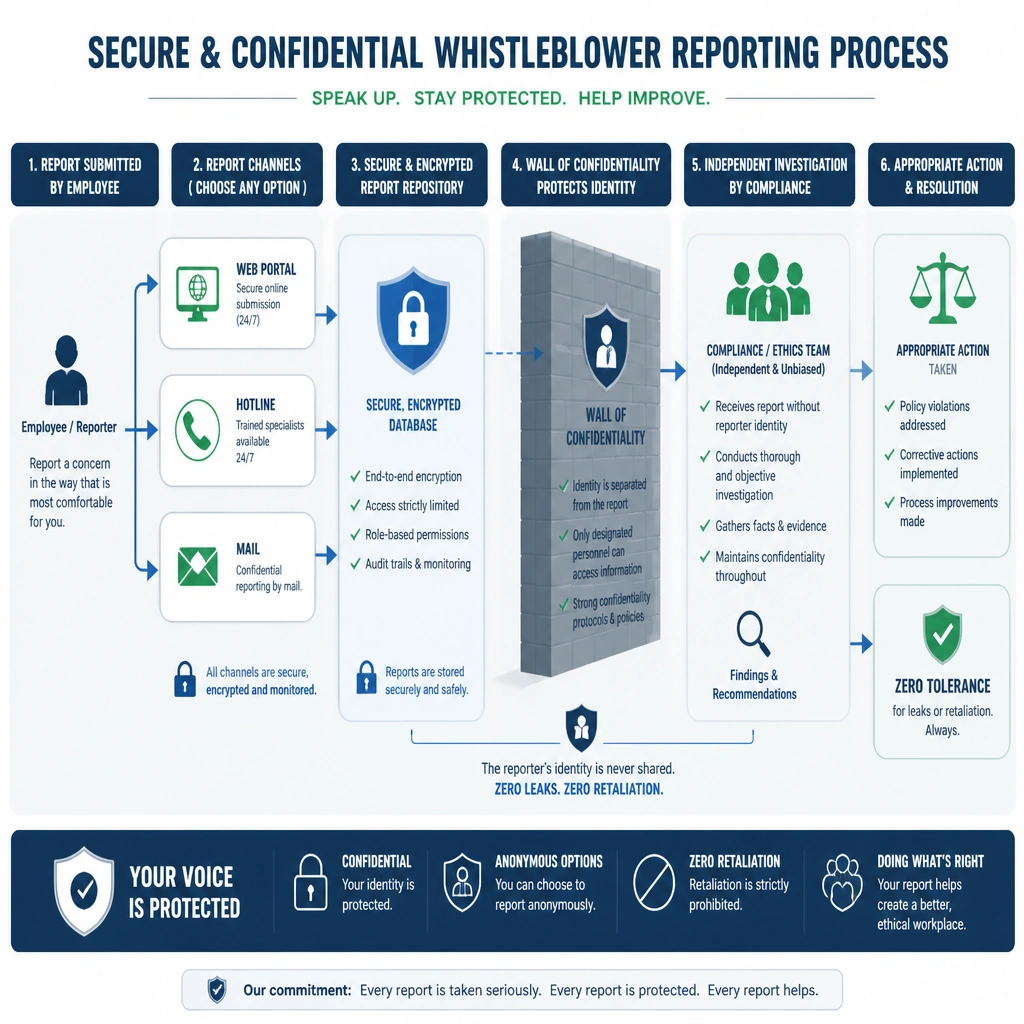
Think of it this way: if your company has a hotline, but everyone is terrified that using it will get them fired, how many reports do you think you're going to get? Exactly, zero. A whistleblower program is completely dead in the water if employees don't trust it. To make it work, you must give people a clear, secure, and confidential way to speak up. They need to know that if they spot something shady, they can report it without their name being broadcast to the whole department. If you hide the program in secret, or make people jump through hoops and reveal their personal details, they'll just keep quiet. And in my experience, silence is a company's biggest vulnerability. Give them a safe channel, protect their identity, and you'll find out about problems before they blow up in the news.
Full explanation below image
Full Explanation
The cornerstone of any successful whistleblower program is trust. If employees believe that reporting misconduct will lead to professional retaliation or personal exposure, they will choose to remain silent, leaving the organization vulnerable to ongoing legal, financial, and reputational damage. Therefore, the most essential element of a whistleblower protection program is the provision of clear, secure, and confidential reporting channels. These channels must allow employees to voice concerns—anonymously if they choose—with the absolute assurance that their identities will be protected and that the organization enforces a strict non-retaliation policy.
Let's examine why the alternative options do not support an effective program: - Option B is incorrect because restricting the program to external parties defeats its primary purpose. Internal employees are usually the first to witness operational misconduct, fraud, or safety violations. An effective program must be designed primarily for them. - Option C is incorrect because a whistleblower program cannot function if employees do not know it exists. Best practices require that reporting channels be widely publicized through training, code of conduct booklets, posters, and intranet portals. - Option D is incorrect because forcing employees to identify themselves creates a significant barrier to reporting. While anonymous reports are harder to investigate, requiring personal identification discourages whistleblowing entirely due to the fear of retaliation.
By ensuring confidentiality and ease of access, organizations create an environment where issues are surfaced internally, allowing the compliance team to investigate and remediate problems before they escalate to external regulatory intervention.