What is the primary benefit of developing and executing a comprehensive communications plan for an organization's compliance program?
Select an answer to reveal the explanation.
Short Explanation and Infographic
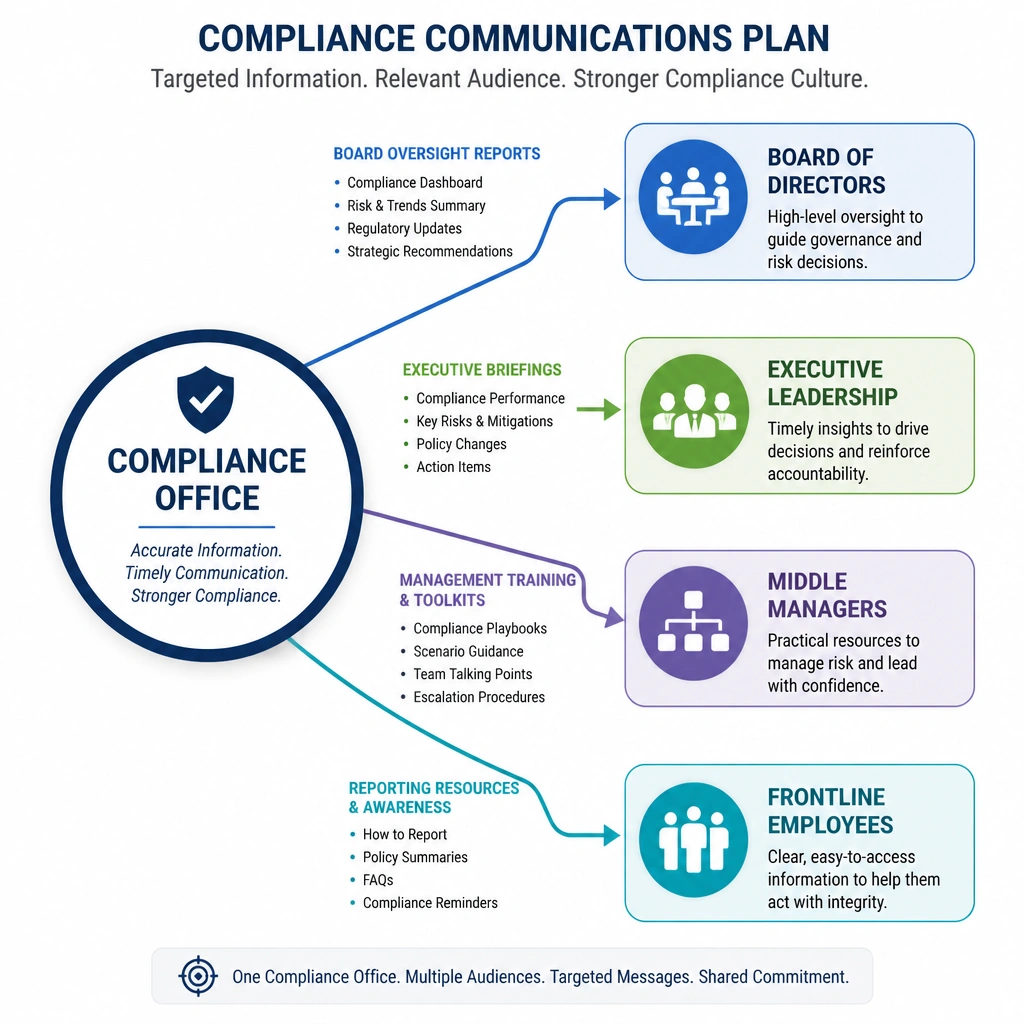
Here's the deal: a compliance program is only as good as the people who run it and follow it. If your board of directors doesn't know their oversight duties, and your frontline staff has no idea how to report a bribe, your program is going to fail. That's why you need a communications plan. Think of it as your routing table—it makes sure the right information gets to the right destination. It tells the board what they need to watch out for, teaches managers how to handle reports, and shows employees where to find help. When everyone is on the same page, the whole system runs smoothly. It's not about making empty promises or replacing the compliance officer; it's about making sure nobody can say, "Well, I didn't know that was my job."
Full explanation below image
Full Explanation
A compliance program cannot operate in a vacuum. A well-defined communications plan is critical because it ensures that information is structured, targeted, and distributed effectively to all organizational levels. The primary benefit of this plan is that it ensures all stakeholders—including entry-level employees, middle management, executives, and the board of directors—are fully aware of their specific compliance responsibilities and the resources available to support them. It establishes a shared language of integrity and ensures that no group is left uninformed about regulatory expectations or the channels for raising concerns.
Let's analyze why the other options are incorrect: - Option B is incorrect because disciplinary actions should be handled confidentially to protect employee privacy and avoid legal exposure. Furthermore, a communications plan is designed to educate and inform, not to mandate public punishment. - Option C is incorrect because no communication strategy or compliance control can guarantee a complete absence of misconduct. Compliance programs are designed to mitigate risk to an acceptable level, detect violations early, and remediate them, but eliminating all risk is impossible. - Option D is incorrect because a communications plan is a tool used by the compliance function, not a replacement for it. A Chief Compliance Officer is still required to manage the plan, interpret regulatory changes, and oversee investigations.
Ultimately, a structured communications plan transforms compliance from a static set of rules into an active, shared organizational commitment.