A multi-national consumer goods company launches a high-profile marketing campaign that exaggerates the health benefits of its new food product line without scientific substantiation. What represents the most critical risk this company faces due to this deceptive marketing practice?
Select an answer to reveal the explanation.
Short Explanation and Infographic
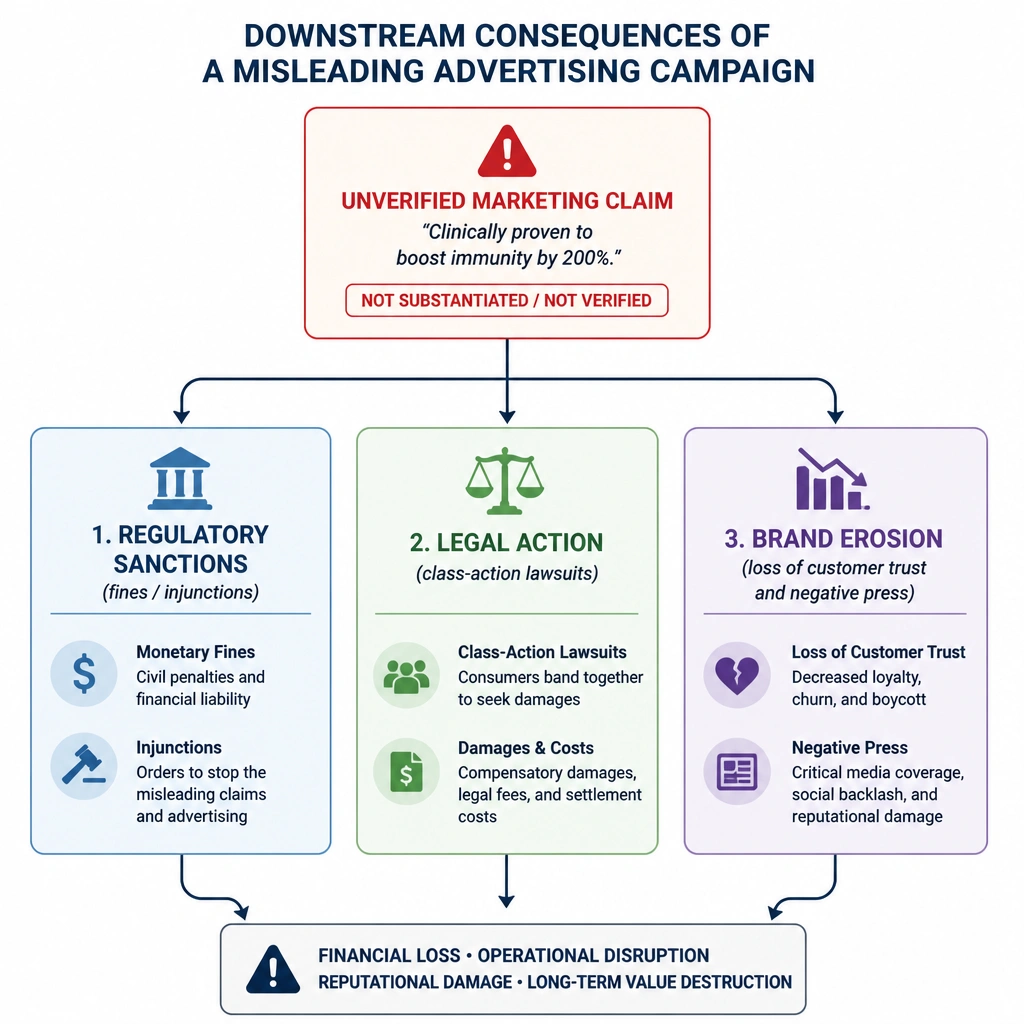
Check this out: marketing departments are paid to be creative and sell products, but sometimes they let their enthusiasm run wild right past the legal boundary. If they publish claims that aren't backed by solid facts, they're stepping right into a bear trap. We aren't just talking about a boring ad campaign that nobody watches. We're talking about class-action lawsuits, heavy-duty regulatory fines from agencies like the FTC or local international equivalents, and a massive hit to the company's reputation. Once consumers think you're lying to them, getting that trust back is like trying to put toothpaste back in the tube. So, compliance officers must work closely with marketing to ensure every single claim is fully vetted and substantiated.
Full explanation below image
Full Explanation
Marketing compliance is an essential component of a company's risk management strategy, particularly in consumer-facing industries. Advertising campaigns that make false, unsubstantiated, or misleading claims violate consumer protection laws in almost every jurisdiction (such as the Federal Trade Commission Act in the United States or equivalent consumer protection directives in the European Union). The consequences of these violations extend far beyond poor campaign performance.
Option A is correct because the primary and most severe risk of misleading advertising is legal and financial exposure. Regulatory bodies can impose significant civil penalties, mandate corrective advertising, and initiate administrative trials. Furthermore, competitor lawsuits and consumer class actions can lead to massive damages. Beyond legal penalties, the resulting public disclosure causes severe reputational damage, eroding customer trust and directly harming brand value.
Option B is incorrect because although a deceptive ad may fail to build positive brand engagement over the long term, the legal and reputational threats represent a much higher and more critical risk than simple unpopularity.
Option C is incorrect because while correcting or pulling an ad campaign is indeed costly, the financial impact of legal fines, lawsuits, and brand damage far outweighs the operational cost of modifying marketing materials.
Option D is incorrect because while media outlets may have guidelines, the primary threat is not the distribution channel's refusal to air the ad, but rather the legal and regulatory fallout after the ad is distributed.