A compliance officer notices that employees are completing the mandatory annual training by clicking through the slides as fast as possible without reading them. Which strategy would be most effective in improving retention and employee engagement?
Select an answer to reveal the explanation.
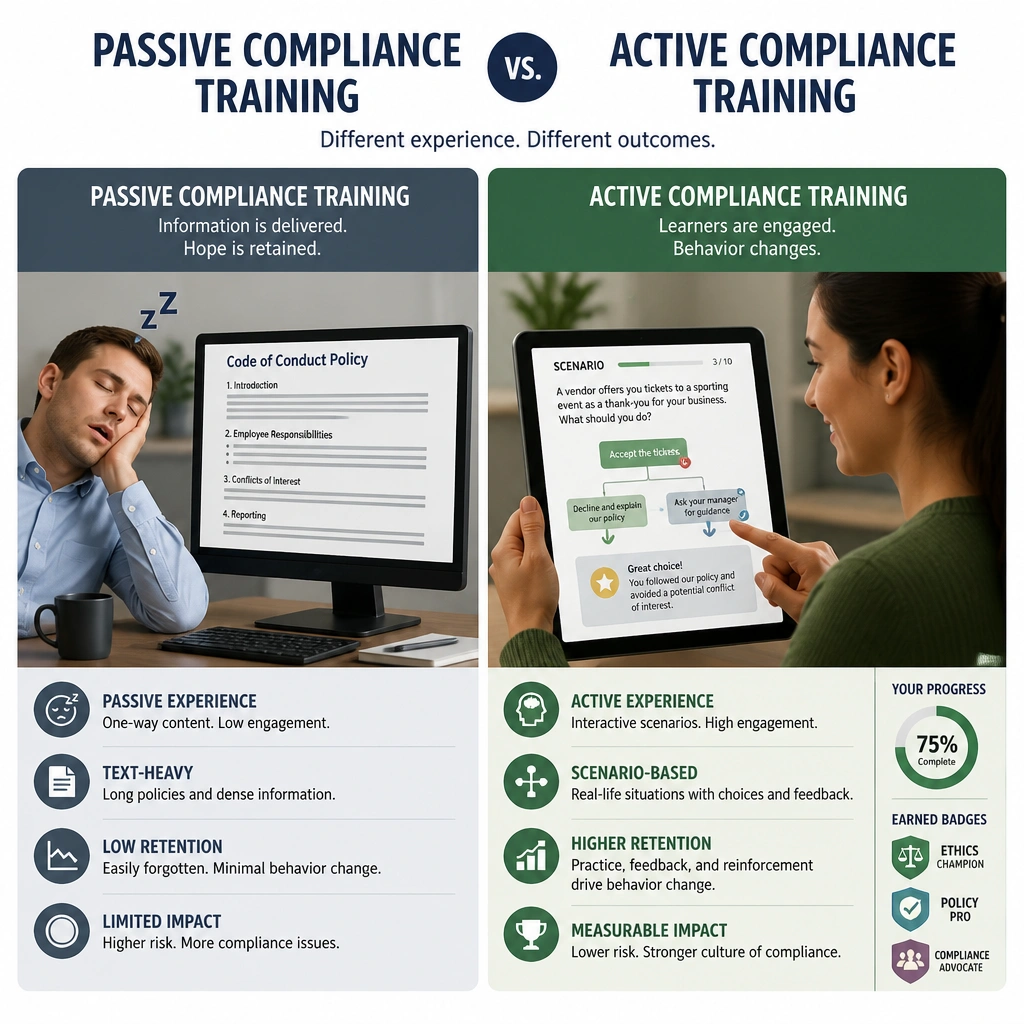
Short Explanation and Infographic
Let's be honest: nobody wants to sit through a three-hour slide deck where some lawyer reads a policy document line-by-line. That's a world-class sleep aid! If you want your team to actually remember what they're supposed to do when a real-world ethical dilemma pops up, you have to keep them awake and engaged. That means using short, interactive modules with scenarios they actually face in their daily jobs. Throw in a little gamification and quick quizzes to test their knowledge as they go. When training is interactive and relevant, it sticks. When it's just a text dump, it's a complete waste of time.
Full explanation below image
Full Explanation
Designing an effective compliance training program requires applying adult learning principles. The goal of compliance training is not merely to check a box for regulatory compliance, but to influence employee behavior and foster an ethical organizational culture. Research in instructional design shows that passive learning methods, such as reading static documents or listening to long, non-interactive lectures, yield low information retention and minimal behavior modification.
Option A is correct because interactive e-learning modules that incorporate real-world scenarios, gamification, and knowledge checks engage learners actively. Scenarios help employees apply abstract rules to practical dilemmas they might encounter in their specific roles. Gamification and interactive elements stimulate cognitive engagement, which enhances retention and makes the training far more impactful.
Option B is incorrect because having an attorney read policies aloud is a passive, tedious method that does not engage the audience and is highly ineffective for long-term retention.
Option C is incorrect because text-dense PDF modules encourage speed-clicking or skimming, failing to promote meaningful understanding of the material.
Option D is incorrect because simply requiring employees to read a policy document without any verification, interaction, or situational context does not constitute an effective or engaging training program.