The Board of Directors plays a vital role in establishing the "tone at the top" for corporate governance. What is the most effective way for a Board to demonstrate its active oversight and genuine commitment to the organization's compliance program?
Select an answer to reveal the explanation.
Short Explanation and Infographic
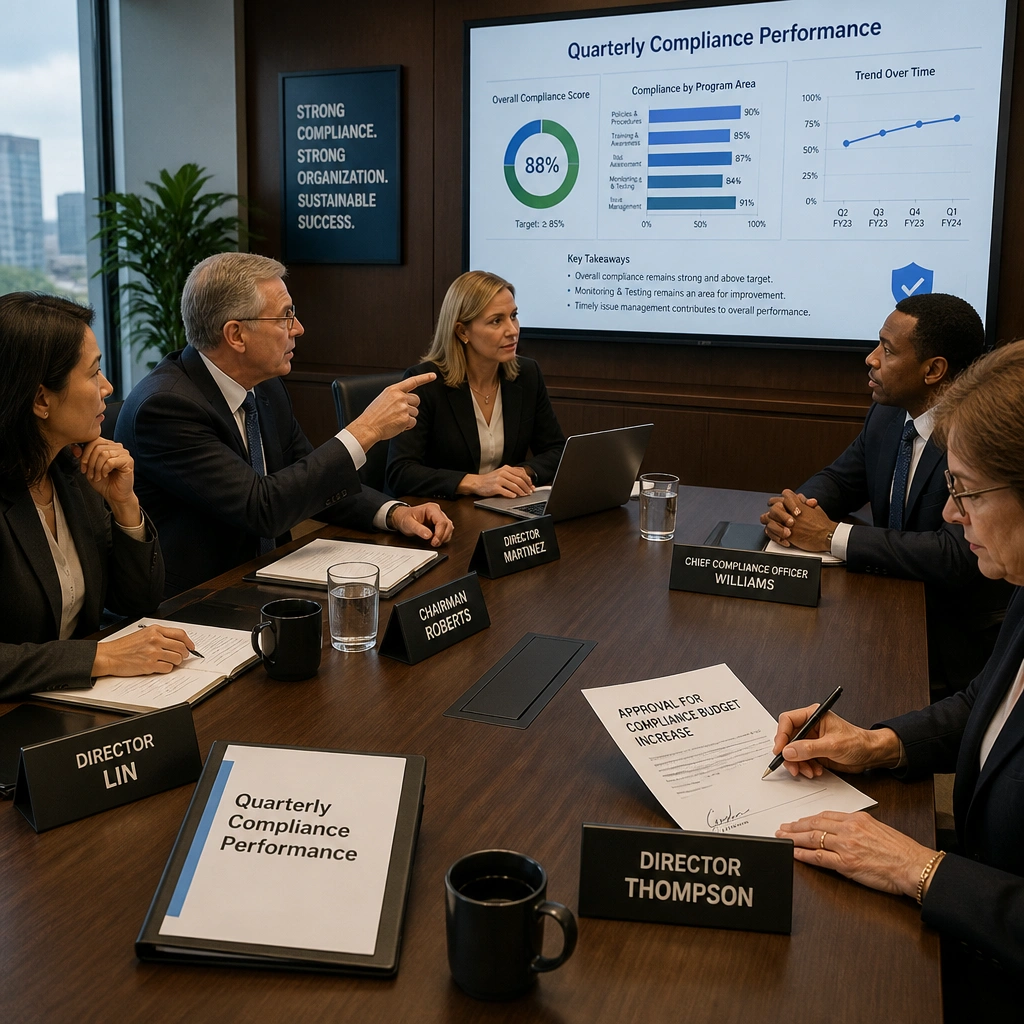
Okay, let's talk about the Board of Directors. Regulators aren't interested in a board that just nods and smiles. If a board only checks in once a year, or just wants a weekly email to delete, they're not doing their job. That's a 'paper' oversight board. To show real commitment—what we call 'tone at the top'—the board has to get their hands dirty. They need to ask the tough questions, dig into the compliance reports, and back the program up with real funding and support. If they aren't actively involved, the rest of the company won't take compliance seriously either. That's why D is the only answer that makes sense.
Full explanation below image
Full Explanation
The Board of Directors is ultimately responsible for the oversight of an organization's compliance and ethics program. To satisfy regulatory expectations, such as those detailed in the DOJ's Evaluation of Corporate Compliance Programs, the Board must demonstrate active engagement rather than passive receipt of information. This concept is often referred to as 'tone at the top' and 'conduct at the top.' The Board must ensure that the compliance program is adequately resourced, has sufficient authority, and is empowered to operate effectively. Active participation includes holding regular executive sessions with the Chief Compliance Officer (CCO), asking probing questions about systemic risks, reviewing audit findings, and approving strategic compliance resources.
Let's examine why the other options represent weak governance practices: - Option A is incorrect because receiving passive weekly updates without interactive dialogue or critical analysis represents a superficial check-the-box approach, not meaningful oversight. - Option B is incorrect because annual reviews are far too infrequent to address evolving regulatory landscapes and operational compliance risks. Risk management requires ongoing, periodic attention. - Option C is incorrect because the Board cannot delegate its fiduciary duty of oversight to external counsel or the legal department. While the board relies on advisors, it must retain active oversight and ultimate accountability.
By actively participating in compliance discussions, questioning management, and funding initiatives (Option D), the Board ensures the compliance program has the operational weight required to deter misconduct.