When a corporate compliance department receives an anonymous tip via its reporting hotline alleging that a regional manager is falsifying sales figures, what is the most critical first step the compliance officer must take?
Select an answer to reveal the explanation.
Short Explanation and Infographic
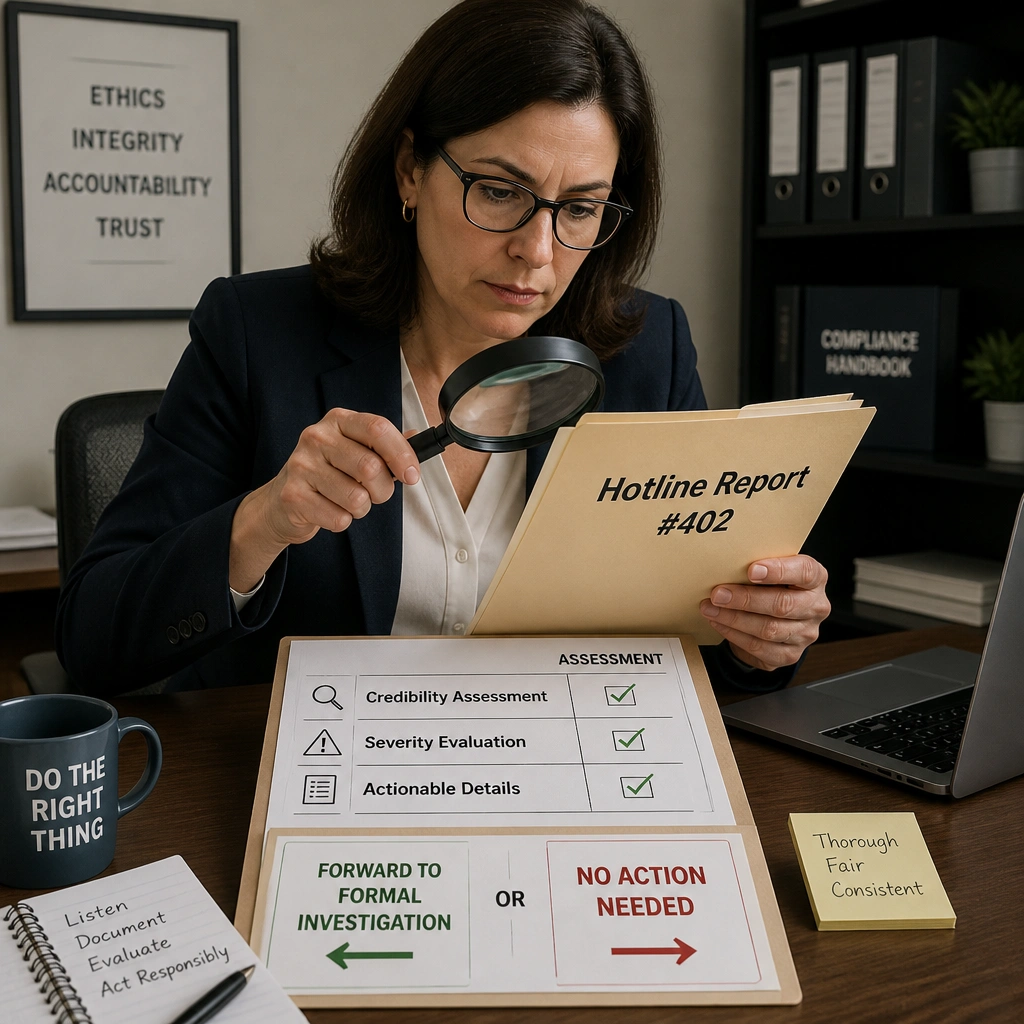
Let's say a report lands on your desk alleging that some serious fraud is going down in one of your offices. What do you do first? You don't just launch a full-scale raid, and you definitely don't ignore it or fire the whistleblower! You have to start by doing a preliminary assessment. You need to look at the details, see if the claim is credible, and figure out the risk level. Think of it like triage in an emergency room—you have to assess the situation first before you decide on the treatment. So, go with A on this one!
Full explanation below image
Full Explanation
Upon receiving a report of potential misconduct, the compliance department must follow a structured, objective investigation protocol. The immediate first step is to conduct a preliminary assessment (often called intake triage). The goal of this phase is to evaluate the credibility of the source (if known), the specificity of the allegations, and the potential severity of the compliance risk. This initial evaluation determines whether a formal investigation is warranted, what resources are required, and whether immediate interim measures (such as suspending access to certain systems or placing individuals on administrative leave) are necessary to protect the company and preserve evidence.
Let's analyze why the other options are unacceptable: - Option B is incorrect because ignoring a report creates severe liability for the company. If regulatory bodies discover that the company was alerted to fraud but failed to act, penalties and legal exposure can increase exponentially. - Option C is incorrect because retaliating against whistleblowers violates federal and international laws (such as Sarbanes-Oxley or the EU Whistleblower Directive). It destroys trust in the compliance program and exposes the organization to massive legal damages. - Option D is incorrect because confidentiality is critical during investigations. Publicizing unverified allegations damages reputations, violates privacy rights, destroys the integrity of the evidence, and compromises the investigation.
Conducting a preliminary assessment ensures that the compliance department allocates resources effectively and handles the issue in a professional, legal, and systematic manner.