A multinational corporation is rolling out its updated global anti-corruption policy. What characteristics must this policy possess to ensure it is actually understood and followed by employees worldwide?
Select an answer to reveal the explanation.
Short Explanation and Infographic
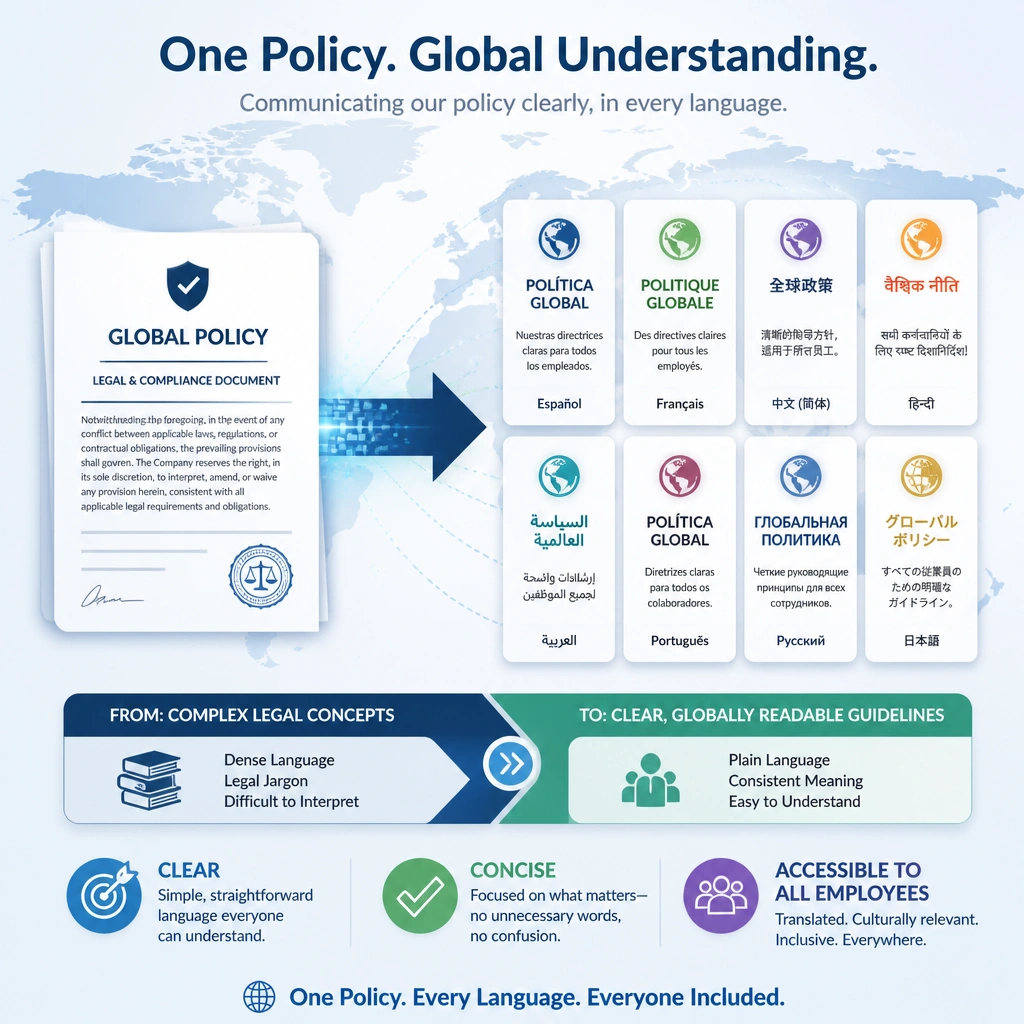
If you write a policy that reads like a tax code and keep it in English when half your team speaks Spanish or Japanese, guess what? Nobody is going to read it! And if they don't read it, they can't follow it. To make a policy actually work in the real world, it needs to be written in plain language that a normal human being can understand, and it has to be translated into the native languages of all the countries where you operate. Keep it simple, keep it accessible, and make sure everyone can actually read it.
Full explanation below image
Full Explanation
The correct answer is C, "Translated into local operational languages and written in clear, accessible prose." For compliance policies to be effective, they must be accessible and comprehensible to the employees who are expected to follow them. Regulatory bodies, such as the U.S. Department of Justice and the UK Ministry of Justice, emphasize that policies should not merely exist on paper but must be effectively communicated. This requires translating policies into the languages spoken in the countries of operation and ensuring they are written in clear, plain language rather than dense legalese. If employees cannot read or comprehend a policy due to language barriers or overly complex terminology, the organization cannot claim to have an effective compliance program in practice.
Let's look at the distractors to see why they are incorrect: - A (Written in dense, complex legal terminology to withstand regulatory scrutiny) is incorrect because overly complex legal jargon prevents everyday employees from understanding their obligations, which actually undermines the policy's effectiveness. Policies should be operational, not academic. - B (Restricted to high-level executives to avoid exposing corporate vulnerabilities) is incorrect because anti-corruption policies must apply to and be accessible by all employees, agents, and representatives, as anyone acting on behalf of the company can trigger liability under global anti-bribery standards. - D (Focused exclusively on direct cash bribes while excluding indirect benefits like hospitality) is incorrect because modern anti-corruption laws (such as the FCPA and UK Bribery Act) cover both direct and indirect bribes, including gifts, travel, entertainment, and charitable contributions. A policy that ignores these areas would leave major gaps in coverage.