What is the primary objective when a compliance team initiates a formal gap analysis of their organization's compliance program?
Select an answer to reveal the explanation.
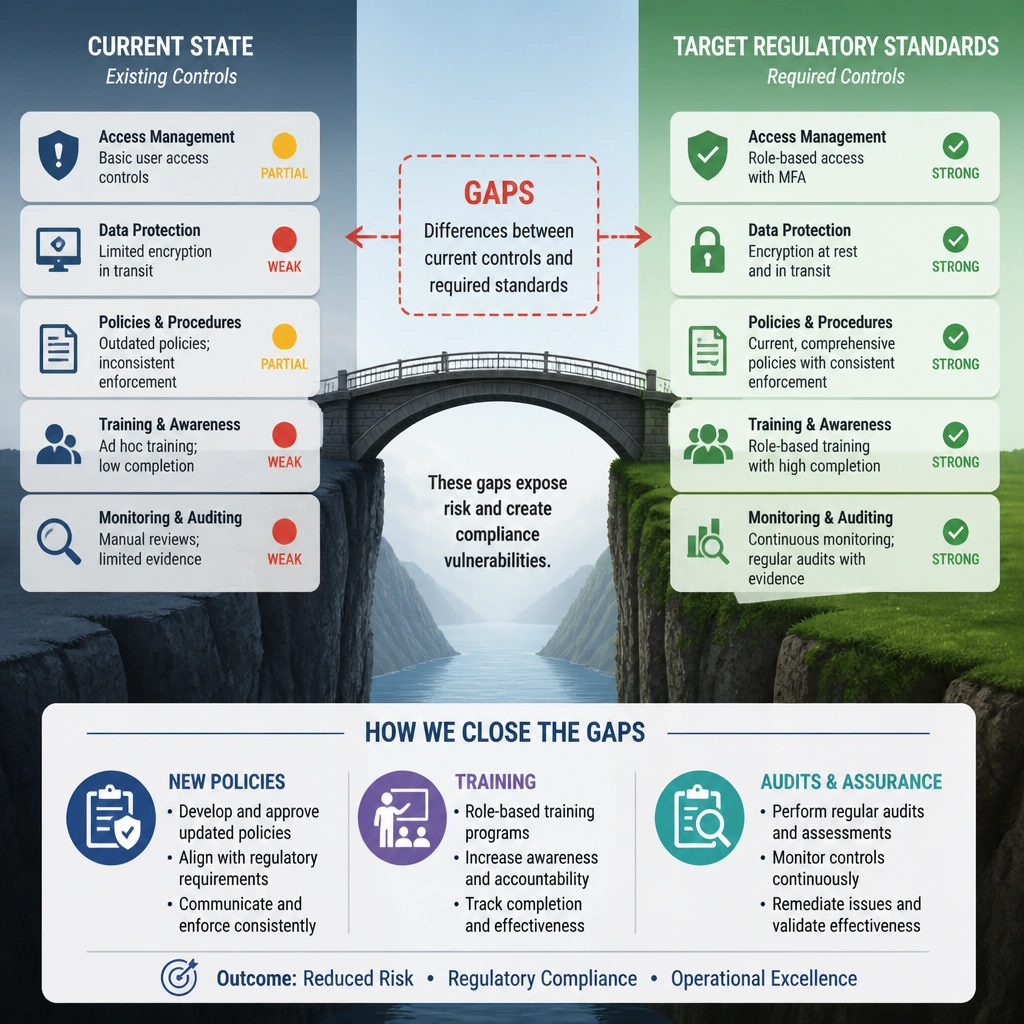
Short Explanation and Infographic
Think of a gap analysis like bringing your car to a mechanic for a multi-point inspection. You aren't doing it to prove the car is a flawless work of art; you're doing it to find out where the parts are wearing out or where you're missing oil. In the compliance world, a gap analysis compares what your program is actually doing against what the laws, regulations, and industry standards say you should be doing. Once you identify those 'gaps' or holes, you can patch them up before a regulator comes knocking. It's your roadmap for improvement.
Full explanation below image
Full Explanation
A gap analysis is a systematic compliance tool used to compare an organization's actual performance or program architecture with its potential, desired, or legally mandated state. The primary objective is to identify discrepancies—or gaps—between the current compliance controls and the requirements set forth by regulatory bodies (such as the Office of Inspector General or the Department of Justice) or established industry frameworks. By revealing where policies, training, auditing, or reporting mechanisms are weak or absent, the gap analysis allows compliance officers to build a prioritized remediation plan. Option A is incorrect because no compliance program can ever be guaranteed 'perfect' or completely risk-free; compliance is an ongoing, iterative process. Option C is incorrect because comparing financial performance and market share is the domain of corporate finance and business strategy, not a compliance gap analysis. Option D is incorrect because predicting employee attrition is an HR talent management function rather than a compliance program evaluation. Conducting periodic gap analyses is essential to ensure that compliance programs evolve alongside changing regulatory landscapes.