In compliance auditing, what is the primary goal of developing a risk-based audit plan?
Select an answer to reveal the explanation.
Short Explanation and Infographic
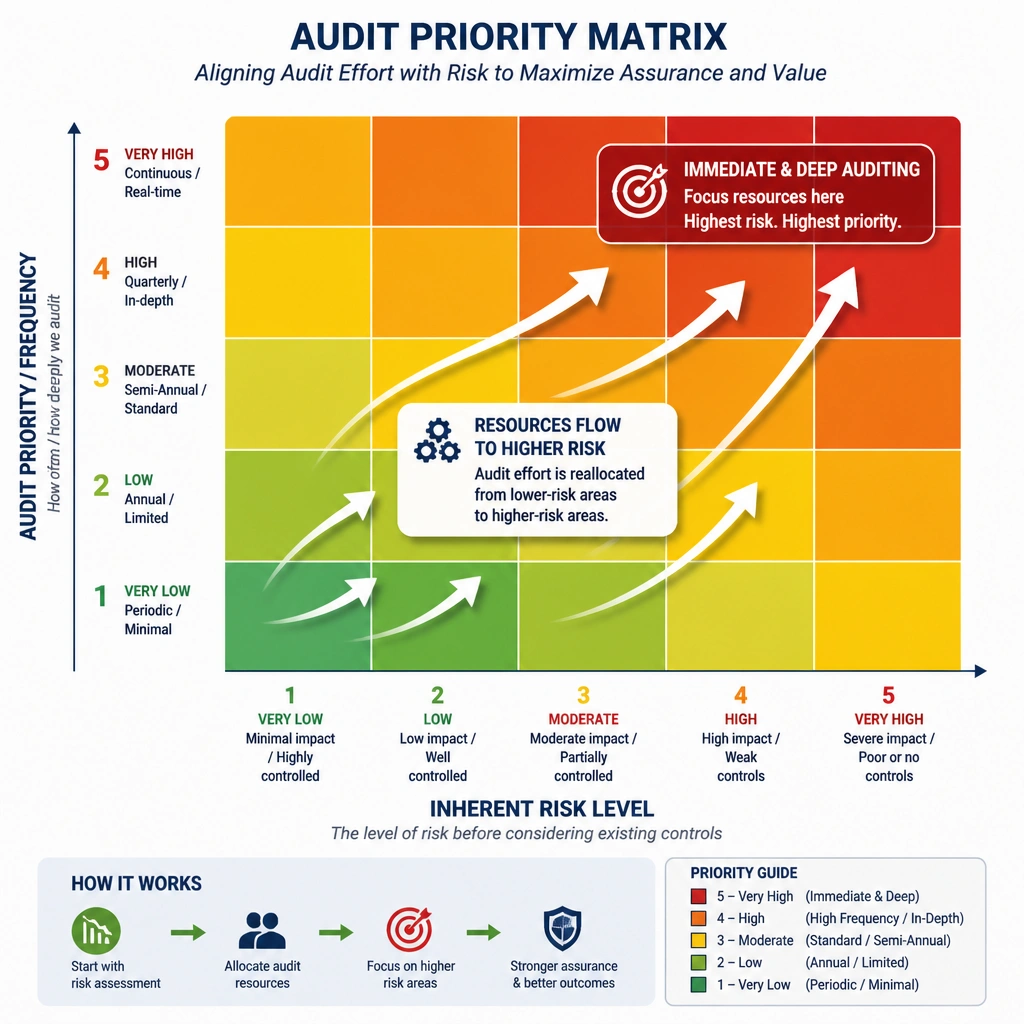
Here's the deal: you can't audit everything all the time. If you try, you'll run out of money, exhaust your staff, and probably miss the actual problems anyway. That's why we use a risk-based audit plan. Think of it like a police patrol—you don't put the same number of patrol cars in a quiet residential cul-de-sac as you do in a busy downtown district on a Saturday night. You focus your auditing muscle on the areas that have the highest chance of non-compliance and the biggest potential fallout. It's smart auditing.
Full explanation below image
Full Explanation
A risk-based audit plan is an operational strategy designed to maximize the efficacy of an organization's internal auditing and monitoring efforts. Instead of deploying resources uniformly or strictly chronologically across the company, the compliance and internal audit teams assess the inherent risks of various operations (e.g., third-party relationships, billing practices, or regulatory changes) and prioritize audit engagements accordingly. This methodology ensures that high-risk areas—those with a high likelihood and severe potential consequences of non-compliance—are scrutinized frequently and in-depth, while low-risk areas receive less intensive monitoring. Option A is incorrect because a rotational, one-size-fits-all approach ignores the varying risk profiles of different business units, leading to inefficient resource use. Option B is incorrect because reducing audit frequency to avoid operational disruption compromises risk detection and fails to demonstrate program diligence to regulators. Option C is incorrect because compliance audits must address operational, environmental, safety, and legal risks, not just financial and accounting records. By focusing resources on high-exposure targets, a risk-based audit plan optimizes risk mitigation and supports continuous improvement.