When assessing the effectiveness of a corporate compliance program, regulatory authorities closely evaluate whether the compliance function has sufficient resources. Why is adequate resourcing critical to the success of the compliance department?
Select an answer to reveal the explanation.
Short Explanation and Infographic
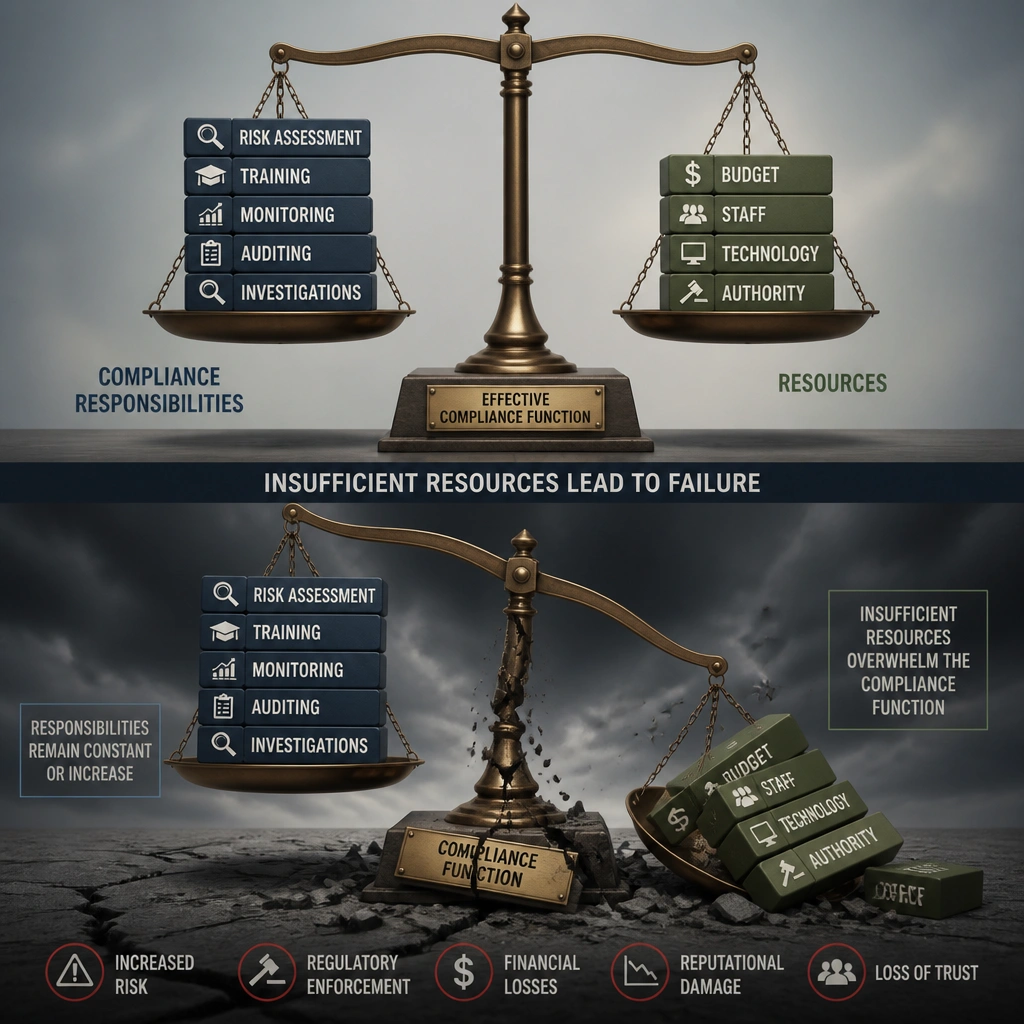
Imagine your boss walks in and says, 'Hey, you're now in charge of compliance for our 10,000-employee global tech firm. Here's a budget of fifty bucks and a part-time intern.' How's that going to turn out? Not very well! You can't run a real compliance program on pocket change and wishful thinking. If you don't have the budget, the tools, and the people, you can't monitor transactions, you can't run training, and you certainly can't investigate red flags. Regulatory agencies like the DOJ look at this very closely. They want to see if you have the muscle—the resources—to actually do the job, or if compliance is just a paper shield. Adequate funding means you can actually manage and monitor risk effectively. Don't skimp on compliance resources!
Full explanation below image
Full Explanation
The adequacy of resources allocated to a compliance program is a key indicator of an organization's genuine commitment to ethical conduct. Regulatory frameworks, such as the U.S. Department of Justice (DOJ) Evaluation of Corporate Compliance Programs, emphasize that a compliance department must be structured and resourced to have sufficient stature and authority within the company. Option C is correct because without adequate funding, technology, and qualified personnel, a compliance department cannot fulfill its core duties. These duties include implementing policies, updating code of conduct standards, conducting risk-based training, deploying monitoring and auditing tools, managing hotlines, and conducting thorough investigations. Adequate resources ensure the program is active, responsive, and capable of scaling alongside the company's growth. Option A is incorrect because compliance resourcing does not replace management oversight. In fact, executive leadership and the board of directors retain ultimate fiduciary and oversight responsibility for the compliance program; they must actively supervise and engage with the compliance officer. Option B is incorrect because compliance does not need to be the largest department in the company. The size of the compliance team should be proportional to the organization's size, risk profile, and complexity, rather than being artificially inflated. Option D is incorrect because no corporate function has an unlimited budget or headcount. Compliance departments must justify their resource needs based on documented risk assessments and operational requirements, operating within reasonable corporate budgeting principles.