What is the primary advantage of establishing a rigorous and independent internal investigation process within an organization?
Select an answer to reveal the explanation.
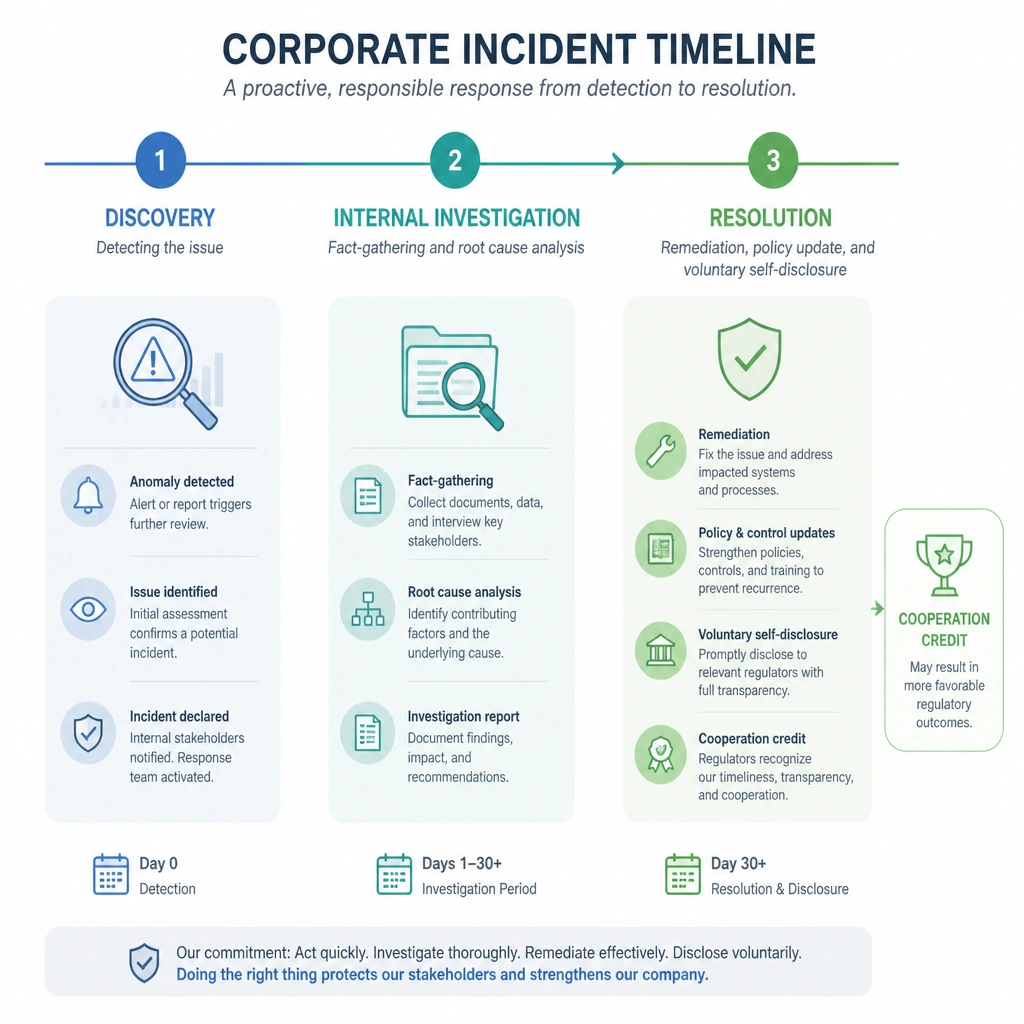
Short Explanation and Infographic
Imagine your boss walks in and says, 'A whistleblower claims we are paying bribes to get contracts in South America.' You need to find out the truth, and fast. That's where a solid internal investigation process comes in. It's not about finding someone to blame; it's about uncovering the cold, hard facts. When you do a thorough, independent investigation, you figure out exactly what happened, fix the underlying problem, and—here's a big one—you position the company to tell the regulators, 'Hey, we found this, we fixed it, and we are cooperating.' That cooperation credit can save the company millions in fines and keep people out of jail. Trust me, a weak investigation is worse than no investigation at all.
Full explanation below image
Full Explanation
A robust internal investigation process is vital for managing corporate risk and maintaining compliance. When potential misconduct is reported, the organization must act quickly to investigate the matter in an objective and thorough manner. Option B is correct because an effective investigation process allows the organization to establish the facts of what occurred, identify the root causes of the failure, and implement appropriate corrective actions (such as discipline, process changes, or training). Furthermore, under regulatory guidelines (such as the DOJ's cooperation policy), companies that conduct thorough internal investigations, voluntarily self-disclose findings, and cooperate fully with authorities can receive substantial reductions in fines, avoid criminal prosecution, or prevent the imposition of an external compliance monitor. Option A is incorrect because no internal process can guarantee immunity from civil lawsuits. Shareholders, customers, or employees can still file suit regardless of the quality of the internal investigation. Option C is incorrect because investigations should not be reserved only for major crimes. Investigating minor infractions or policy breaches helps prevent them from escalating into severe, systemic violations. Option D is incorrect because the purpose of an investigation is to find the truth, not to act as a scapegoating mechanism. Attempting to blame employees unfairly to shield the organization is unethical, damages culture, and will be viewed by regulators as a sign of an ineffective and bad-faith compliance program.