An internal compliance investigation reveals that a company's regional logistics office in South America has repeatedly ignored travel and entertainment policies, failing to document interactions with customs officials properly. What is the most appropriate and effective corrective action?
Select an answer to reveal the explanation.
Short Explanation and Infographic
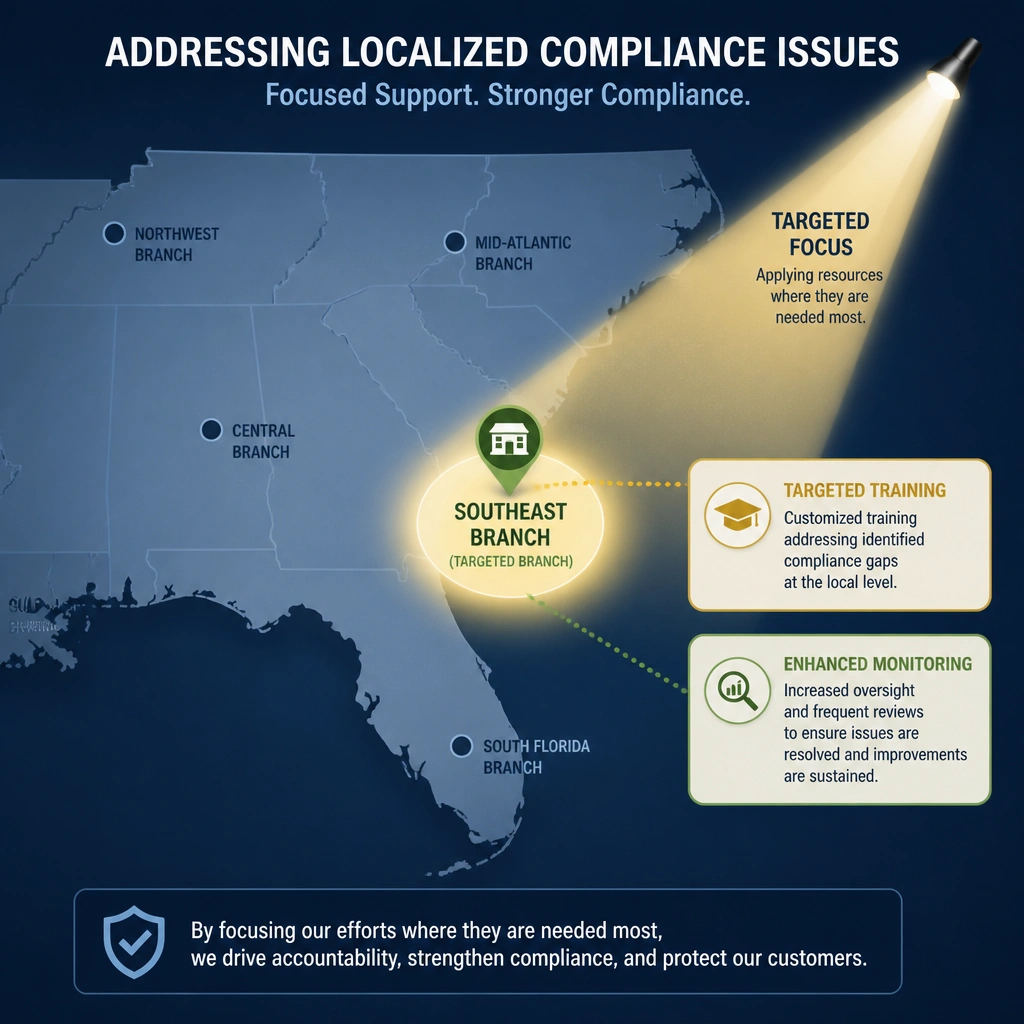
Okay, let's say you find out one of your regional offices is constantly breaking the travel and entertainment policy. They aren't documenting who they're taking out to dinner, and it's a huge red flag. What do you do? You don't just fire everyone in the office—that's a disaster for business operations. And you definitely don't look the other way. You step in with targeted training and double down on monitoring that unit. Think of it like segmenting a noisy subnet on your network—you isolate it, clean up the bad traffic, and keep a close eye on it until it behaves. Got it? Sweet.
Full explanation below image
Full Explanation
When an internal investigation identifies recurring non-compliance within a specific business unit, the compliance department must implement corrective actions that are proportionate, effective, and targeted. Under the U.S. Sentencing Guidelines for Organizations and international compliance frameworks, corrective action must address both the individual misconduct and the underlying root causes, such as lack of awareness or poor supervision. Option B is correct because implementing targeted training and enhanced monitoring for the offending unit address the specific gaps. The training ensures that employees understand the rules and the reasons behind them (why documenting customs interactions is critical under anti-bribery laws), while additional monitoring provides the oversight needed to ensure compliance and detect early signs of regression. Option A is incorrect because mass termination is an extreme, disruptive action that fails to identify the root cause, destroys morale, and may penalize innocent employees. Option C is incorrect because public shaming on an intranet violates employee privacy rights, damages the trust required for a speak-up culture, and can create significant legal liabilities for the company. Option D is incorrect because ignoring violations or granting unapproved, informal exemptions undermines the integrity of the entire compliance program and creates severe regulatory risk, particularly if regulators discover the company was aware of the repeated violations but took no action.