During an internal compliance investigation into alleged bid-rigging, the investigation team decides to conduct electronic data analysis on corporate communications. What is the primary purpose of utilizing this investigative technique?
Select an answer to reveal the explanation.
Short Explanation and Infographic
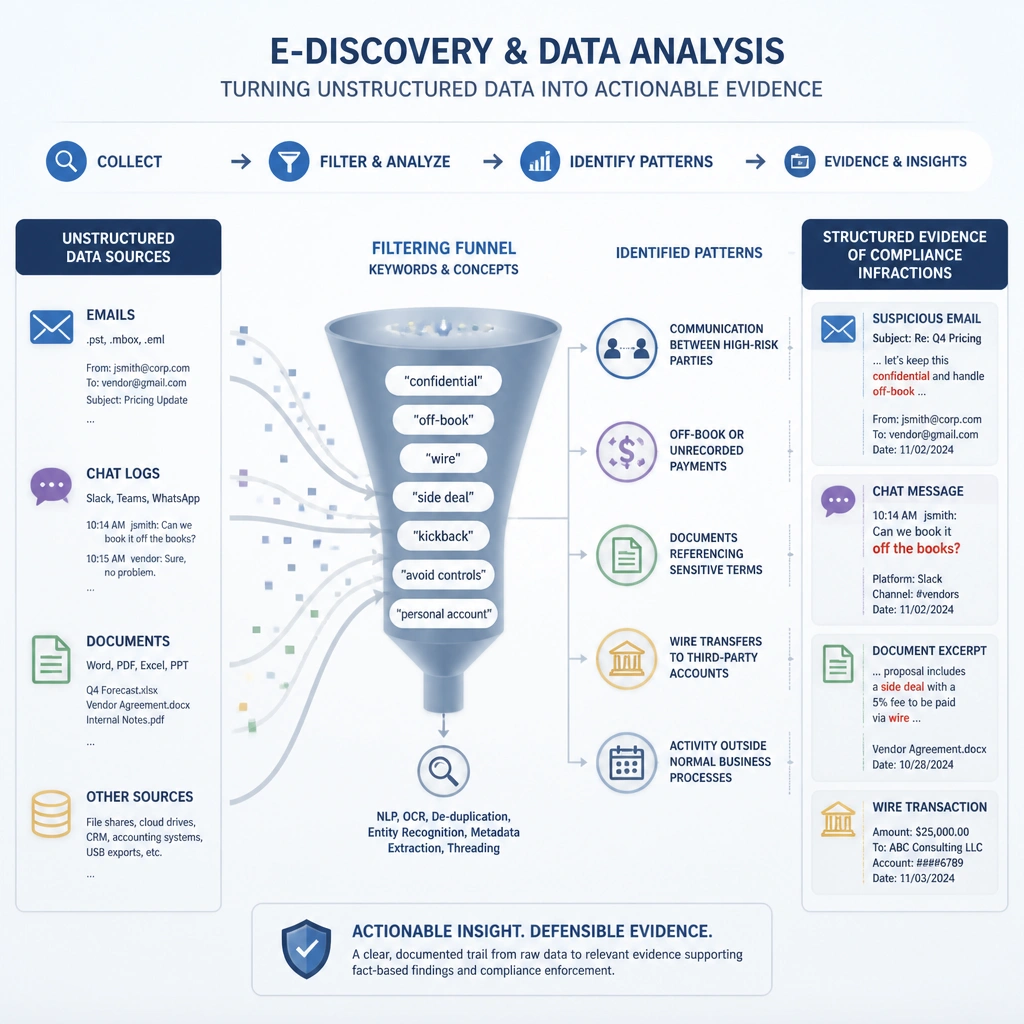
Imagine your boss walks in and tells you there's a rumor that three managers are rigging bids with a supplier. You can't just ask them, 'Hey, are you doing illegal stuff?' and expect a straight answer! Instead, you have to follow the digital breadcrumbs. That's where data analysis comes in. You run searches across emails, chats, and files looking for key terms, weird communication patterns, or off-book agreements. It's like finding a needle in a digital haystack. You're looking for the hard evidence that tells you exactly who said what, and when. Pay close attention here: electronic records don't lie, which makes this one of your absolute best tools in an investigation.
Full explanation below image
Full Explanation
During an internal compliance investigation, data analysis—specifically e-discovery and digital forensics—is employed to systematically search through unstructured and structured data, such as emails, instant messages, and financial logs. The main goal is to identify specific keywords, code words, and communication patterns that suggest collusion, fraudulent activities, or other forms of misconduct. This structured search allows investigators to establish timelines, identify involved parties, recover deleted communications, and obtain objective evidence that confirms or refutes the allegations. Option A is incorrect because marketing metrics are irrelevant to internal investigations and do not use investigative data analysis. Option B is incorrect because tracking general attendance is an HR operational function, not the target of communication-focused investigative forensics. Option C is the correct answer because keyword and communication pattern analysis is the standard method for locating evidence of misconduct within digital archives. Option D is incorrect because the goal of an internal investigation is to find the objective truth and identify systemic issues, not to target a single individual arbitrarily.