As a data center administrator managing a large-scale AI infrastructure pool hosting mixed workloads (large language model training, real-time API inference, and ETL pipelines), which two operational practices are critical to maximize GPU resource utilization while preventing unexpected service interruptions? (Select two)
Select all correct answers, then click Submit.
Short Explanation and Infographic
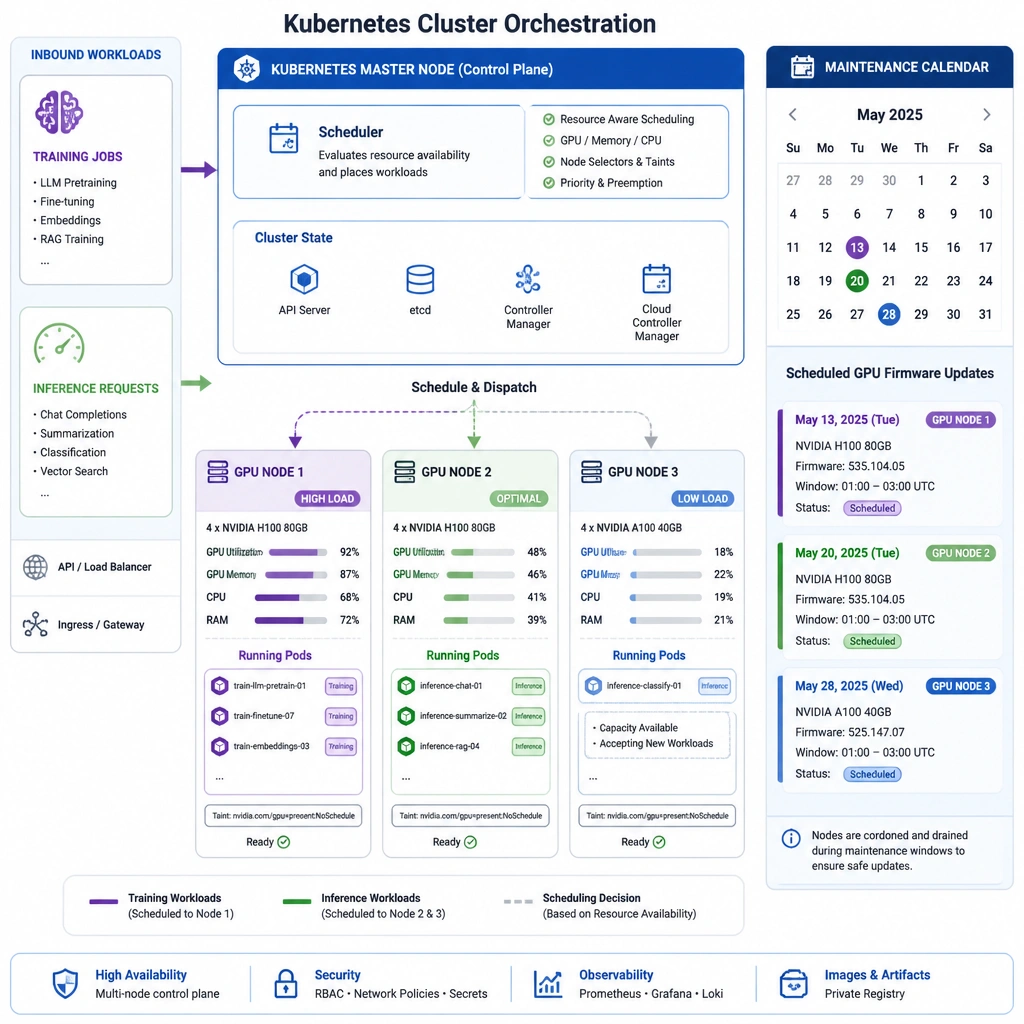
Here's the deal: managing a busy AI data center is like directing traffic at a massive airport. If you let every plane take off whenever they want — or run all your huge training jobs during peak business hours — you'll end up with a total network gridlock and crashes. That's why you need automated scheduling! Tools like Kubernetes with GPU-aware scheduling act like air traffic controllers, checking which GPUs are free and placing workloads where they fit best. The second piece is keeping your gear healthy. Trust me on this, regularly updating your GPU firmware, drivers, and packages prevents those nasty, hard-to-debug crashes that happen when old code hits new API calls. Keep things scheduled, keep things updated, and your cluster will run like a clock.
Full explanation below image
Full Explanation
Running a shared AI data center requires balancing high-throughput batch workloads (like training) with low-latency service workloads (like inference). - Automated scheduling ensures that jobs are queued and dispatched based on actual GPU availability, memory requirements, and priority levels. This prevents resource starvation, optimizes cluster utilization, and maintains high availability. - Regular driver and firmware updates are critical for infrastructure stability. GPU drivers and microcode updates resolve known bugs, address security vulnerabilities, and introduce optimizations for newer CUDA libraries, preventing crashes and runtime errors. - Scheduling training during peak hours will overload the cluster, degrade performance for latency-sensitive inference services, and increase resource contention. - Avoiding virtualization entirely reduces flexibility and cluster management efficiency; containerization (e.g., Docker, Apptainer) has minimal overhead and is industry-standard for AI orchestrators. - Silencing all warnings is dangerous as it hides warning-level indicators of hardware degradation or memory leaks that precede catastrophic failures.