When designing an annual compliance training curriculum, which of the following practices represents a major pitfall that can significantly reduce the program's effectiveness?
Select an answer to reveal the explanation.
Short Explanation and Infographic
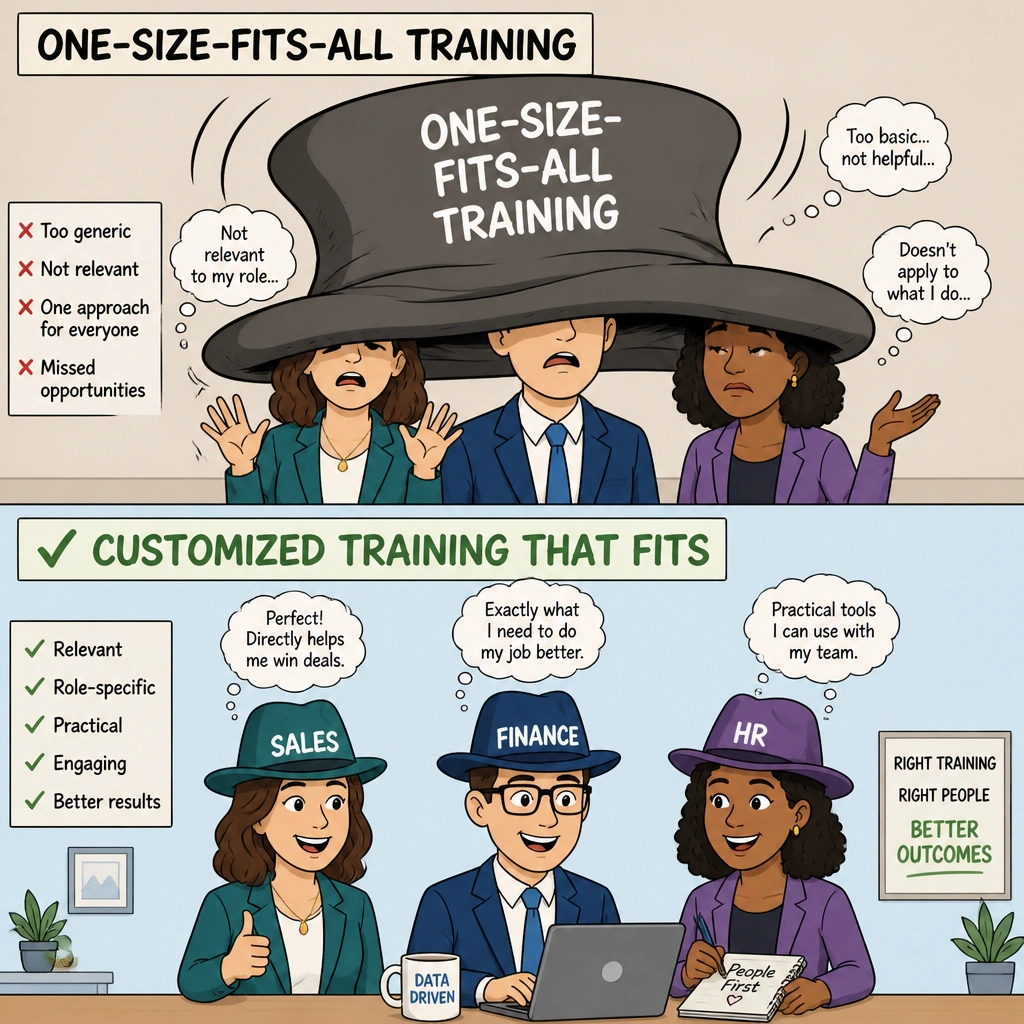
Pay close attention here: if you send the exact same compliance slide deck to your receptionist, your warehouse crew, and your international sales team, you are wasting everyone's time. This is the classic "one-size-fits-all" trap. Your sales team needs to know the ins and outs of anti-bribery laws when dealing with foreign officials, while your warehouse team needs to focus on safety protocols and cargo security. Making everyone sit through identical, generic modules leads to what I call "click-through fatigue" where employees just tune out. You want to tailor the message to the role so they actually pay attention.
Full explanation below image
Full Explanation
Compliance training is most effective when it is relevant to the day-to-day responsibilities of the employees receiving it. A major mistake in compliance program administration is deploying a "one-size-fits-all" training model. While certain foundational topics—such as the Code of Conduct or general harassment policies—may apply globally, forcing all employees to undergo identical detailed training on highly specialized regulatory topics (e.g., antitrust, import/export controls, or insider trading) is counterproductive. It dilutes the impact of the training, drains organizational resources, and fosters employee disengagement. Best practices and regulatory guidance from authorities like the U.S. Department of Justice (DOJ) emphasize that training should be risk-based and tailored to the specific audiences based on their job functions and exposure to risk.
Option C is correct because a uniform, non-targeted approach is a significant pitfall that fails to address the unique risk profiles of different employee groups.
Option A is incorrect because developing specialized modules for high-risk roles is a highly recommended best practice, not a pitfall. It ensures that employees with higher risk exposure receive the deep-dive training they need.
Option B is incorrect because adapting content to address specific business risks identified during risk assessments is a key compliance standard. It ensures that the training program is aligned with actual organizational vulnerabilities.
Option D is incorrect because using interactive case studies and engaging scenarios is an effective instructional design technique that improves retention and understanding, rather than a pitfall.