Under the Federal Sentencing Guidelines for Organizations (FSGO), which component is defined as a core, foundational element of an effective compliance and ethics program?
Select an answer to reveal the explanation.
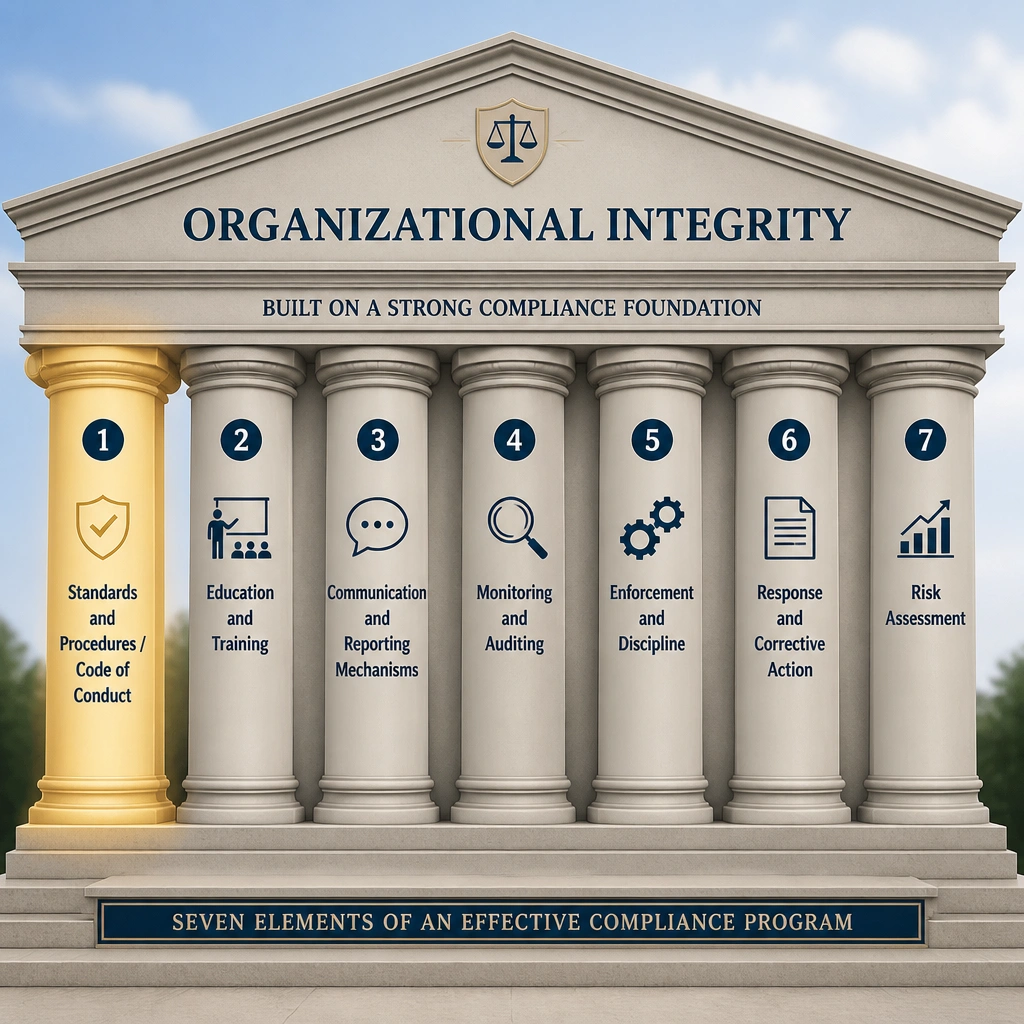
Short Explanation and Infographic
Here's the deal: you can't hold your team accountable if you haven't written down the rules first! The U.S. Sentencing Guidelines are very clear about this. The absolute bedrock of any solid compliance program is having written standards and procedures—usually starting with a code of conduct. It's like the rulebook for a board game. Without it, everyone is just guessing. You don't need fancy spy gear or a massive PR campaign; you need clear, accessible guidelines that tell your people what's okay and what's not. Pay close attention here, because this is always the starting line on the exam and in the real world.
Full explanation below image
Full Explanation
The Federal Sentencing Guidelines for Organizations (FSGO) outline seven key elements that define an effective compliance and ethics program. These elements are designed to prevent and detect criminal conduct and encourage organizations to establish a strong ethical culture. Option C is correct because the very first element of the FSGO mandates that an organization must establish standards and procedures to prevent and detect criminal conduct. This is typically implemented through a corporate Code of Conduct and specific supporting policies that translate laws into actionable operational guidance for employees. Having written standards ensures that all personnel are aware of the legal boundaries and expectations governing their work. Option A is incorrect because public-facing social media relations strategies do not address internal compliance controls, ethics, or regulatory requirements. They are marketing and public relations initiatives rather than internal compliance safeguards. Option B is incorrect because while certain tasks (like external hotline hosting or specialized forensic audits) can be outsourced, the compliance function itself must have internal leadership (a designated high-level officer with direct oversight and authority) and cannot be entirely handed off to a third party. Option D is incorrect because the FSGO emphasizes a culture of compliance, training, and systematic controls, not the deployment of expensive, invasive surveillance systems. While monitoring is required, it must be balanced and targeted rather than blanket surveillance, which can damage employee trust and undermine the compliance culture. Additionally, the guidelines emphasize self-reporting and internal mechanisms over heavy-handed corporate espionage.