What is the primary objective of implementing a formal anti-retaliation policy within an organization's compliance and ethics framework?
Select an answer to reveal the explanation.
Short Explanation and Infographic
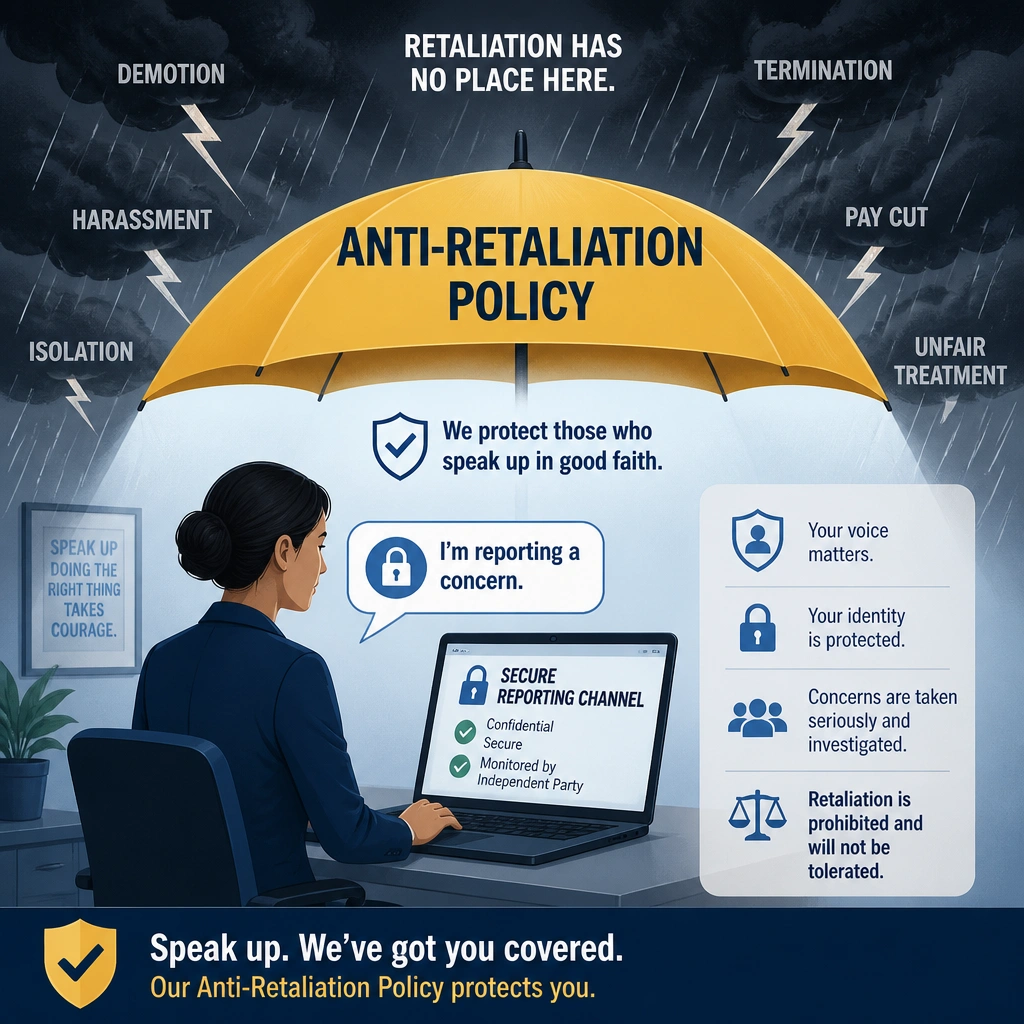
If your employees are terrified that they'll get fired, demoted, or treated like outcasts for speaking up, guess what? They won't speak up. And that's how small issues turn into giant, company-killing scandals. That's why you need a rock-solid anti-retaliation policy. Think of it as a protective shield for the whistleblowers. If someone flags a concern in good faith, you've got to make it clear that the company has their back and won't tolerate any payback from managers or coworkers. This is how you build trust, and trust is the secret sauce of compliance.
Full explanation below image
Full Explanation
An anti-retaliation (or non-retaliation) policy is a cornerstone of a healthy corporate compliance culture. Its primary purpose is to safeguard employees who report suspected legal or ethical violations in good faith from any retaliatory actions, such as termination, demotion, harassment, or marginalization. Option B is correct because without strong, enforced protections against retaliation, employees will not utilize reporting channels, leading to undetected compliance failures. Regulators like the DOJ and SEC view anti-retaliation policies and training as critical indicators of whether an organization's reporting system is truly accessible and trusted by employees. When employees feel safe, they act as the organization's eyes and ears, allowing management to address issues internally before they escalate. Option A is incorrect because restricting communication among employees is counterproductive to transparency and may violate labor laws (such as National Labor Relations Act protections regarding workplace conditions and the right to discuss employment terms). Option C is incorrect because compliance programs are designed to address and correct violations, not encourage employees to ignore them. Ignoring minor violations undermines the program's credibility and allows small risks to grow. Option D is incorrect because the policy is meant to protect, not punish, employees who report misconduct in good faith. Punishing whistleblowers is a violation of the policy and, in many cases, federal and state laws (such as Sarbanes-Oxley and Dodd-Frank) and can lead to severe criminal and civil penalties for the organization.