An organization receives a whistleblowing report alleging that a procurement manager is accepting kickbacks. Which of the following actions represents a critical first step in a professional internal investigation?
Select an answer to reveal the explanation.
Short Explanation and Infographic
Here's the deal: when a compliance issue pops up, you don't just go running down the hallway screaming or pointing fingers. That's a great way to get sued or destroy evidence. You've got to treat an internal investigation with the utmost respect and care. That means keeping things quiet—confidentiality is your absolute shield here—and conducting methodical interviews with everyone involved. If you start broadcasting details or delaying the process, you're going to ruin the integrity of the investigation. Trust me, I've seen how fast things can go sideways if you don't stick to a tight, confidential plan.
Full explanation below image
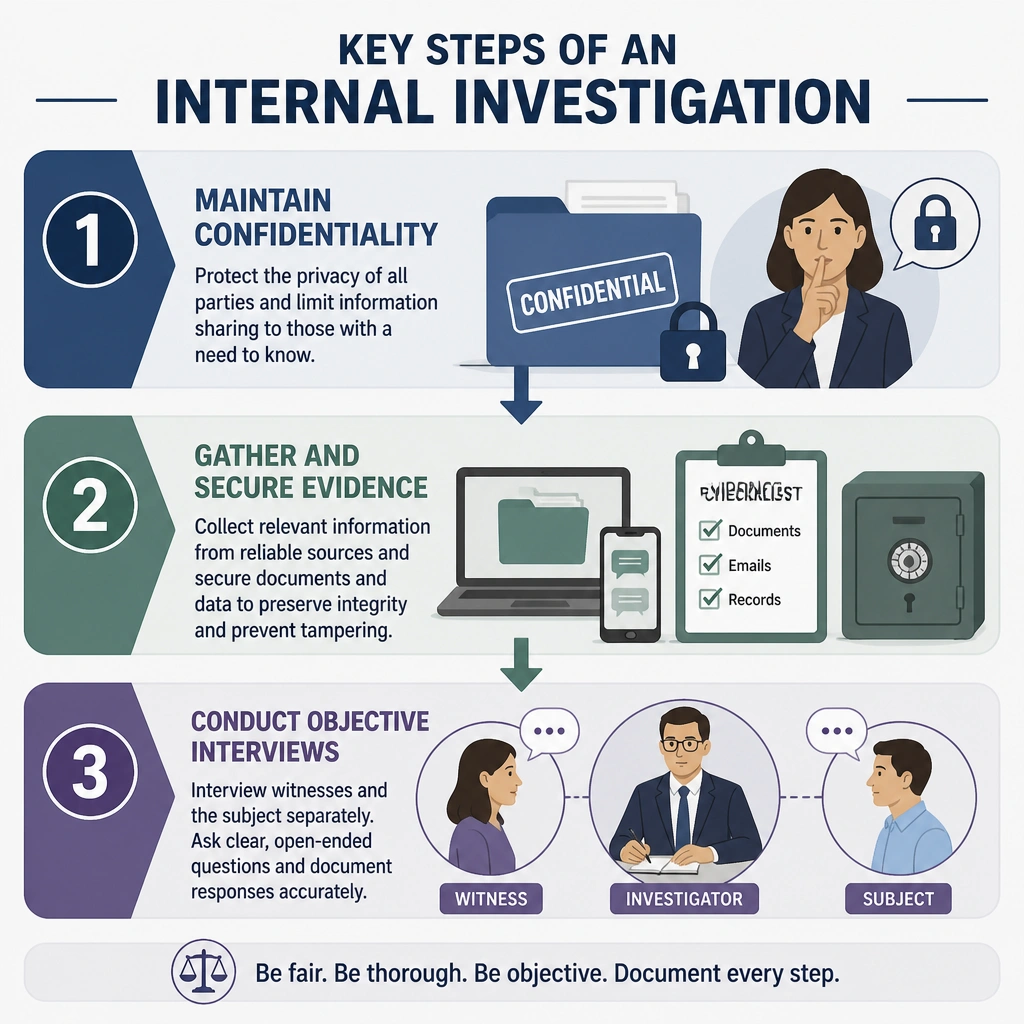
Full Explanation
An effective internal investigation is a cornerstone of a credible compliance program. When allegations of misconduct arise, the organization must act promptly, objectively, and confidentially. Establishing a clear plan and maintaining confidentiality are crucial to protect the integrity of the investigation, prevent the destruction of evidence, and shield whistleblowers and accused parties from retaliation or premature reputational harm. A structured interviewing process—starting with the reporter, moving to neutral witnesses, and concluding with the subject—ensures that facts are gathered systematically and without bias.
Let's break down the options to see why B is the only correct answer. B is correct because establishing strict confidentiality protocols and interviewing witnesses in a structured, objective sequence is the standard best practice for internal investigations. This approach ensures that witnesses are not coached, evidence is preserved, and the rights of all parties are respected.
Distractor A is incorrect because publicizing details of an ongoing investigation violates confidentiality, exposes the company to massive legal liability, and can compromise witness testimony or lead to defamation claims. A compliance department must never share investigation details publicly unless there is a regulatory reporting requirement, and even then, it is done through official channels.
Distractor C is incorrect because halting all department operations is highly disruptive and premature. Investigations should minimize business disruption while maintaining objective inquiry. Only in extreme cases of immediate safety or ongoing severe financial fraud should limited suspensions occur, but never a complete departmental shutdown.
Distractor D is incorrect because confronting the subject first or delaying the gathering of electronic and documentary evidence can lead to evidence tampering or collusion, undermining the entire process. Gathering facts and documents first establishes a baseline of evidence before interviews begin.