When a multinational corporation plans to engage a foreign commercial agent to assist with regulatory approvals, what is the primary objective of performing third-party due diligence?
Select an answer to reveal the explanation.
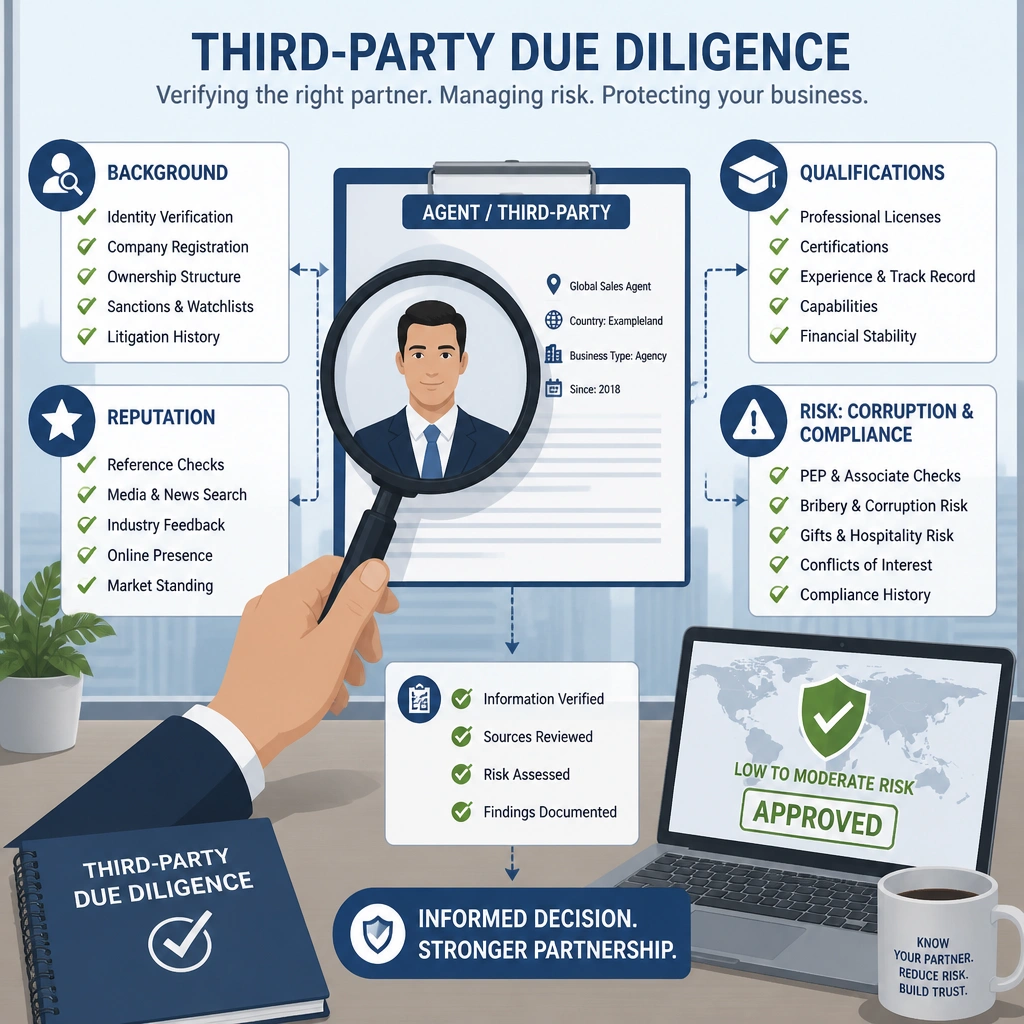
Short Explanation and Infographic
Check this out: when you're doing business internationally, hiring a third-party agent can be a massive risk. You can't just hire someone off the street, close your eyes, and hope for the best. If that agent pays a bribe to get you a contract, guess who the government is coming after? That's right, you! Third-party due diligence is all about digging into their reputation, their track record, and identifying any red flags for corruption. You need to know who you're dealing with before you sign anything. Trust me, ignoring this is a recipe for disaster.
Full explanation below image
Full Explanation
Third-party agents, such as distributors, consultants, and customs brokers, represent one of the highest areas of corruption risk for international businesses, particularly under laws like the Foreign Corrupt Practices Act (FCPA) and the UK Bribery Act. The primary purpose of third-party due diligence is to assess and mitigate these risks by evaluating the agent's reputation, qualifications, beneficial ownership, and history of regulatory compliance. This process helps identify red flags, such as close relationships with foreign officials, requests for unusual payment structures, or a history of unethical conduct.
Let's examine why C is the correct choice and why the other options fall short. C is correct because conducting due diligence ensures that the company understands the agent's background and evaluates potential exposure to corruption risks before establishing a business relationship.
Distractor A is incorrect because due diligence is a compliance risk-assessment tool, not a procurement pricing negotiation. While pricing is part of commercial onboarding, it does not address compliance risks.
Distractor B is incorrect because a company cannot contractually outsource its compliance responsibilities; regulatory bodies hold corporations liable for the corrupt actions of third parties acting on their behalf, regardless of indemnity clauses. Contracts can mitigate risk but do not replace due diligence.
Distractor D is incorrect because onboarding an agent without prior screening defeats the purpose of compliance oversight and exposes the company to immediate liability. Fast-tracking onboarding without due diligence violates basic internal control standards.