Which of the following foundational elements is most critical for fostering and maintaining a sustainable ethical culture within an organization?
Select an answer to reveal the explanation.
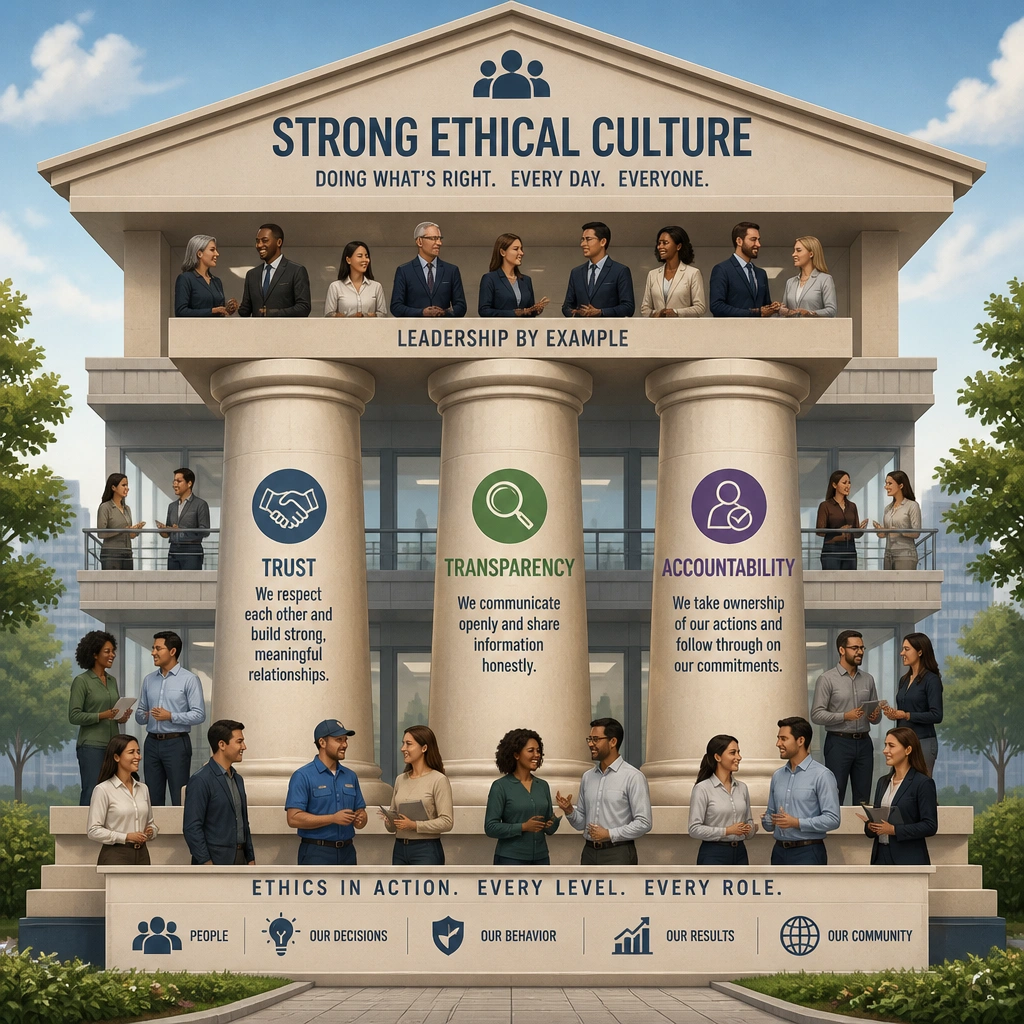
Short Explanation and Infographic
Think of it like this: if you build a house on sand, it's going to collapse the moment a storm hits. An ethical culture is the same way. You can't just build it on a mountain of rules and threats of punishment. A real, lasting ethical culture is built on trust, transparency, and accountability at every single level of the company. People need to feel safe speaking up when they see something wrong, and they need to know that senior management is held to the same high standards as everyone else.
Full explanation below image
Full Explanation
An organization's ethical culture is defined by the shared values, beliefs, and behaviors that determine how employees make decisions. According to compliance best practices, a strong ethical culture relies on trust, open communication (transparency), and consistent accountability. When employees trust that their concerns will be heard without fear of retaliation (psychological safety) and see that rules are applied fairly to everyone, they are much more likely to behave ethically.
Let's examine why C is the correct choice. C is correct because trust, transparency, and accountability are the bedrock of any successful compliance program. They encourage employees to act in accordance with the spirit of the law, not just the letter of the law, and make them feel comfortable reporting issues early.
Distractor A is incorrect because rigid hierarchical decision-making can discourage feedback, create information silos, and prevent lower-level employees from raising compliance concerns out of fear or feeling disconnected from corporate leadership.
Distractor B is incorrect because a compliance program that relies solely on rules and fear of punishment (a compliance-only focus) is less effective than a culture-driven program. Fear-based programs often lead to employees hiding mistakes rather than reporting them.
Distractor D is incorrect because avoiding difficult conversations prevents the resolution of complex ethical dilemmas. It allows small compliance risks to fester and grow into massive systemic violations.