A multinational manufacturing company is reviewing its compliance program to align with global standards. The compliance officer insists on establishing a systematic cadence for evaluating internal and external compliance risks and adjusting policies accordingly. Why is this component considered a fundamental element of an effective compliance and ethics program?
Select an answer to reveal the explanation.
Short Explanation and Infographic
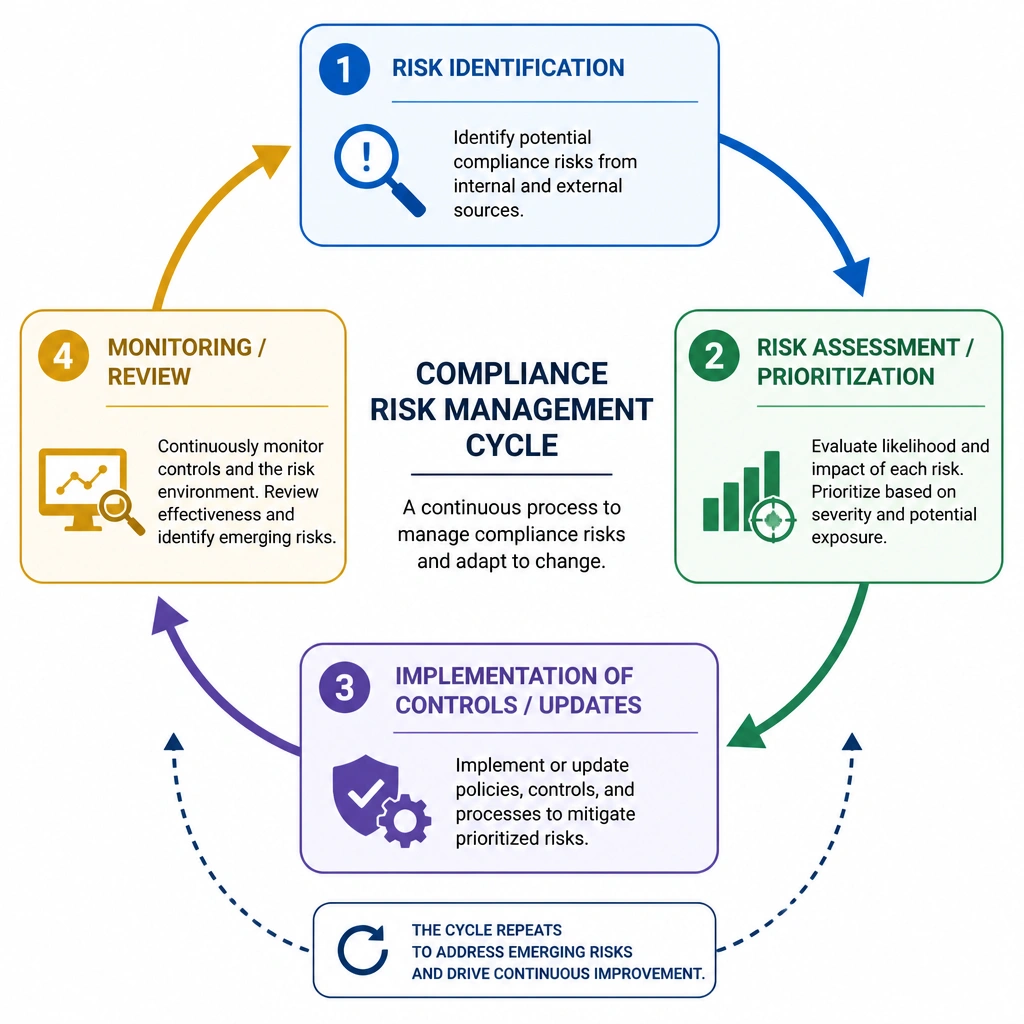
Check this out: a compliance program isn't a "set it and forget it" kind of deal. Think of it like a network firewall. If you configure it once and never update the rules or scan for new threats, the bad guys are going to walk right in. In the real world, risks change constantly. You might expand into a new country, launch a new product, or face new laws. If you aren't doing regular risk assessments, you're flying blind! By auditing where your vulnerabilities are and updating your controls, you keep the program alive and effective. The other options? Having no code of conduct or punishing whistleblowers is a fast track to a regulatory disaster, and being purely reactive means you're only putting out fires instead of preventing them. Trust me, staying proactive is the only way to protect your organization. Got it? Let's keep rolling!
Full explanation below image
Full Explanation
An effective compliance and ethics program must be dynamic, structured, and proactive. According to the U.S. Federal Sentencing Guidelines for Organizations (FSGO) and international standards such as ISO 37301, a hallmark of an effective compliance program is the continuous assessment of risk. Organizations operate in dynamic environments where regulatory requirements, business operations, and external threats constantly evolve. Periodic risk assessments allow an organization to systematically identify, analyze, and prioritize its compliance risks, ensuring that resources are allocated to the areas of greatest exposure.
Let’s break down why the options stand out: - Option D is correct because regular risk assessments and program updates ensure that policies, procedures, and controls remain relevant, aligned with current laws, and capable of addressing emerging risk areas. - Option A is incorrect because a purely reactive approach is insufficient. Regulator guidance, including that from the Department of Justice (DOJ), emphasizes that programs must be designed to prevent and detect misconduct proactively, rather than merely responding after a violation has occurred. - Option B is incorrect because a formal code of conduct is the foundational document of any compliance program. It establishes the organization’s values, expectations, and ethical standards; its absence indicates a fundamental failure in program design. - Option C is incorrect because retaliating against or sanctioning employees who report concerns destroys the trust necessary for a healthy compliance culture. A core requirement of an effective program is providing a safe, non-retaliatory reporting mechanism (e.g., a hotline) so that potential issues can be identified and remediated early.
Ultimately, keeping a compliance program effective requires continuous improvement, monitoring, and updating based on the specific risks the business faces in its daily operations.