An auditor is evaluating a multinational corporation's compliance framework to determine its actual effectiveness. Which of the following findings provides the strongest evidence that the compliance program is effective?
Select an answer to reveal the explanation.
Short Explanation and Infographic
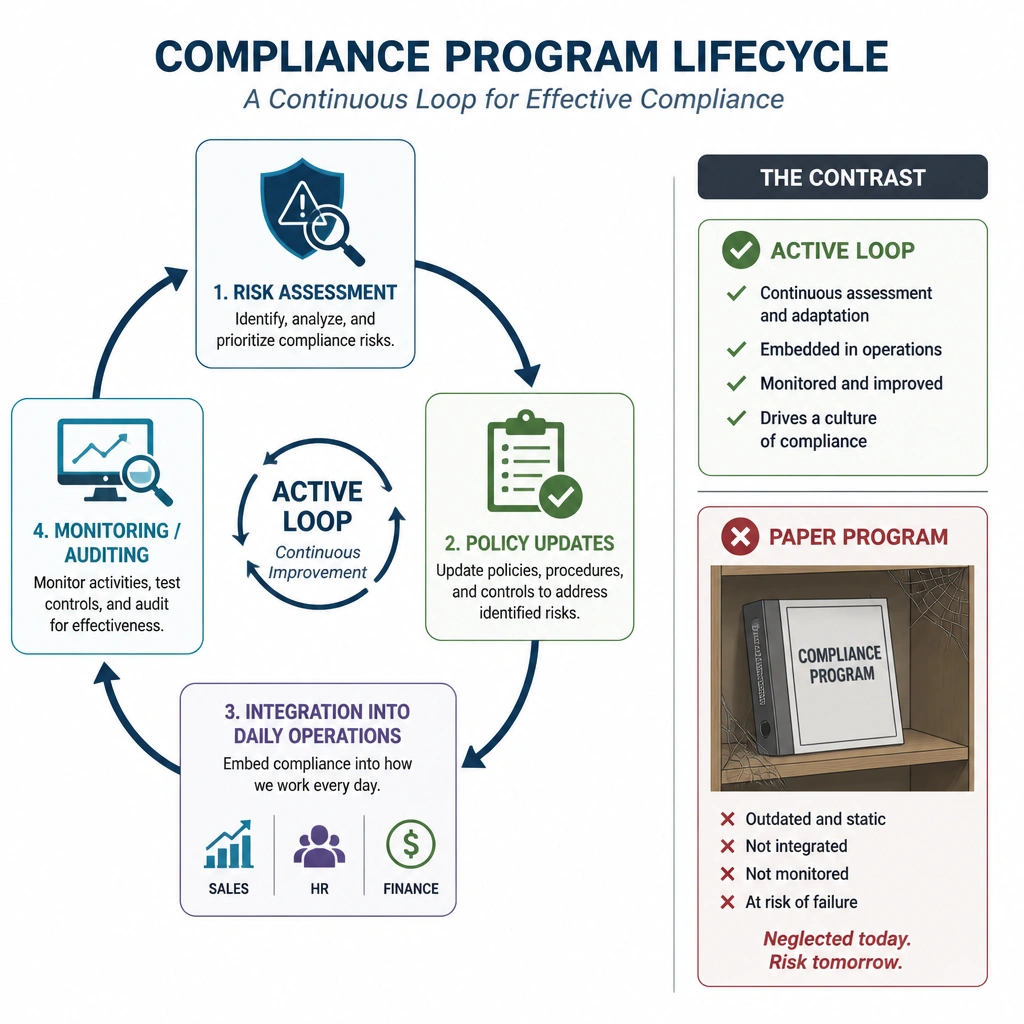
Here's the deal: a lot of folks think a clean record or a massive budget means you've got a killer compliance program. But check this out—if your program is just sitting on a shelf gathering dust, it's not doing anyone any good. The regulators want to see a living, breathing program that you actually review, tweak, and bake right into your day-to-day operations. If it's not part of the business workflow, it's just a "paper program," and trust me, that won't save you when things go sideways. Got it? Sweet. Let's keep rolling.
Full explanation below image
Full Explanation
The effectiveness of a compliance program is not determined by static metrics or isolated resources, but by how well it is integrated into the organization's daily business operations and its ability to adapt to changing environments. Under the Federal Sentencing Guidelines for Organizations (FSGO) and Department of Justice (DOJ) evaluation guidelines, a key hallmark of an effective program is continuous improvement and operational integration. Option C is correct because a program that undergoes regular reviews and updates is capable of addressing new risks, while integration into daily operations ensures that compliance is a proactive part of decision-making rather than a reactive afterthought. Option A is incorrect because the absence of reported violations does not guarantee an effective program; it may instead indicate a failure to detect misconduct or a lack of reporting channels. Option B is incorrect because outsourcing compliance to an external law firm does not embed ethical culture or compliance standards into the internal business operations and employees' daily habits. Option D is incorrect because a large budget or headcount does not automatically translate to an effective program if those resources are poorly managed or if the program remains segregated from the core business units.