A regulatory audit reveals that although a manufacturing company has a secure compliance reporting hotline, over 80% of factory floor employees do not know how to access it or that it even exists. This scenario represents a failure in which essential element of an effective compliance program?
Select an answer to reveal the explanation.
Short Explanation and Infographic
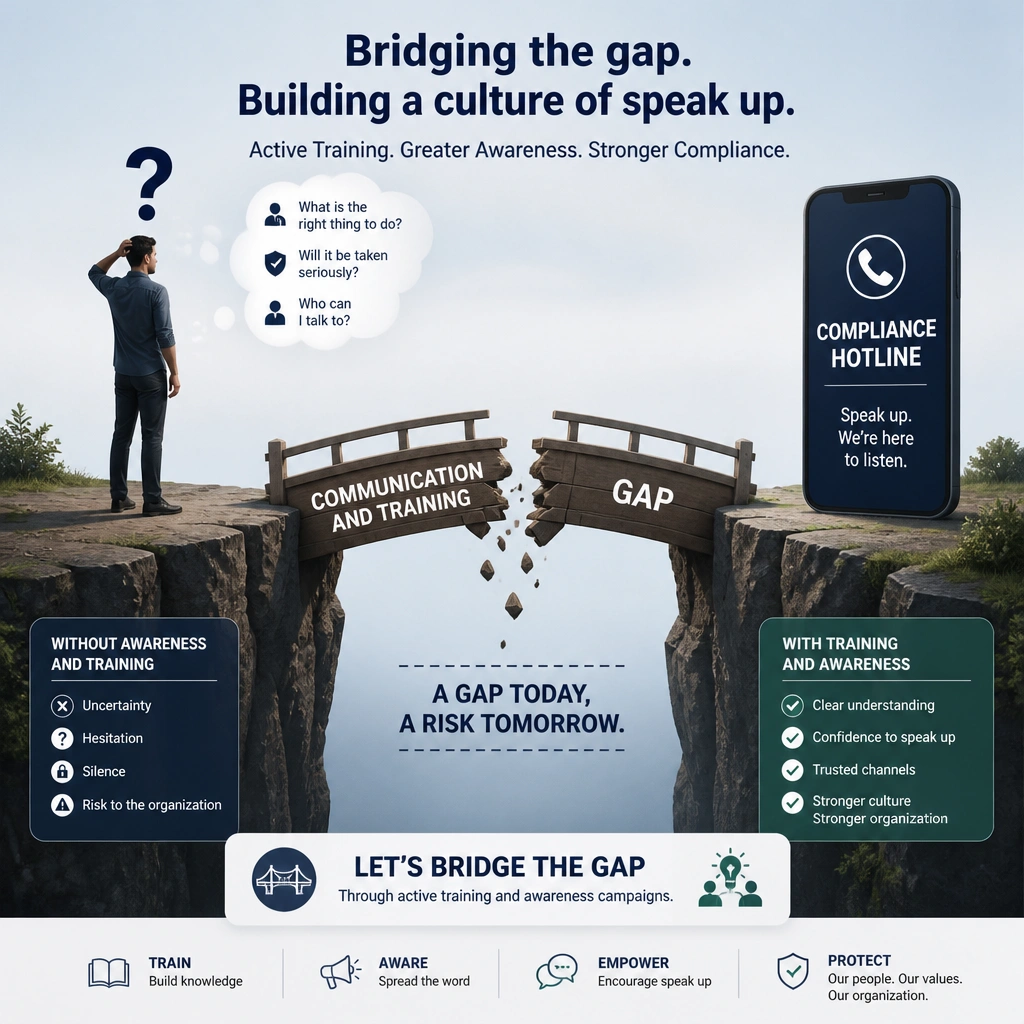
Here's the deal: you can build the most advanced, secure, and state-of-the-art reporting hotline in the entire world, but if your team doesn't know it exists or has no clue how to use it, it's completely useless! It's like putting a fire extinguisher in a hidden closet and not telling anyone where it is. If your employees don't know about the hotline, they can't report issues, which means you're operating in the dark. That's why this is a classic failure in communication and training. The correct answer is D. It's not a failure of discipline (Option A), risk assessment (Option B), or auditing (Option C)—those are different parts of the machine. If the word isn't out, your communication strategy is broken. You've got to train your people on how to use these channels and remind them constantly.
Full explanation below image
Full Explanation
The correct answer is D. An effective compliance program must ensure that all employees are aware of and understand how to use reporting mechanisms. Under the US Sentencing Guidelines (USSG) and the DOJ's Evaluation of Corporate Compliance Programs guidelines, 'Communication and Training' is a core element. This element requires organizations to actively publicize their reporting channels (such as hotlines, web portals, and ombudsperson programs) and train employees on how to identify misconduct and raise concerns. If employees are unaware of the hotline's existence or how to use it, the reporting channel is functionally non-existent, leaving the organization vulnerable to undetected violations.
Let's analyze why the other options are incorrect: - Option A is incorrect because disciplinary measures relate to how the company enforces compliance standards and penalizes infractions after misconduct has been identified. This is separate from whether employees know how to report issues in the first place. - Option B is incorrect because risk assessment involves identifying, analyzing, and prioritizing the specific regulatory and legal risks that the company faces. While a lack of reports might skew a risk assessment, the root failure of employee ignorance is a communication issue. - Option C is incorrect because monitoring and auditing systems are designed to detect errors, fraud, and process gaps through automated controls and independent reviews. Although auditing might uncover the fact that the hotline is underutilized, the underlying issue remains a communication breakdown.
To prevent this issue, compliance departments should integrate hotline awareness into onboarding, annual training, breakroom posters, and executive communications.