A compliance professional is explaining the control structure of a compliance program to senior leadership. How should they describe the fundamental difference between "monitoring" and "auditing"?
Select an answer to reveal the explanation.
Short Explanation and Infographic
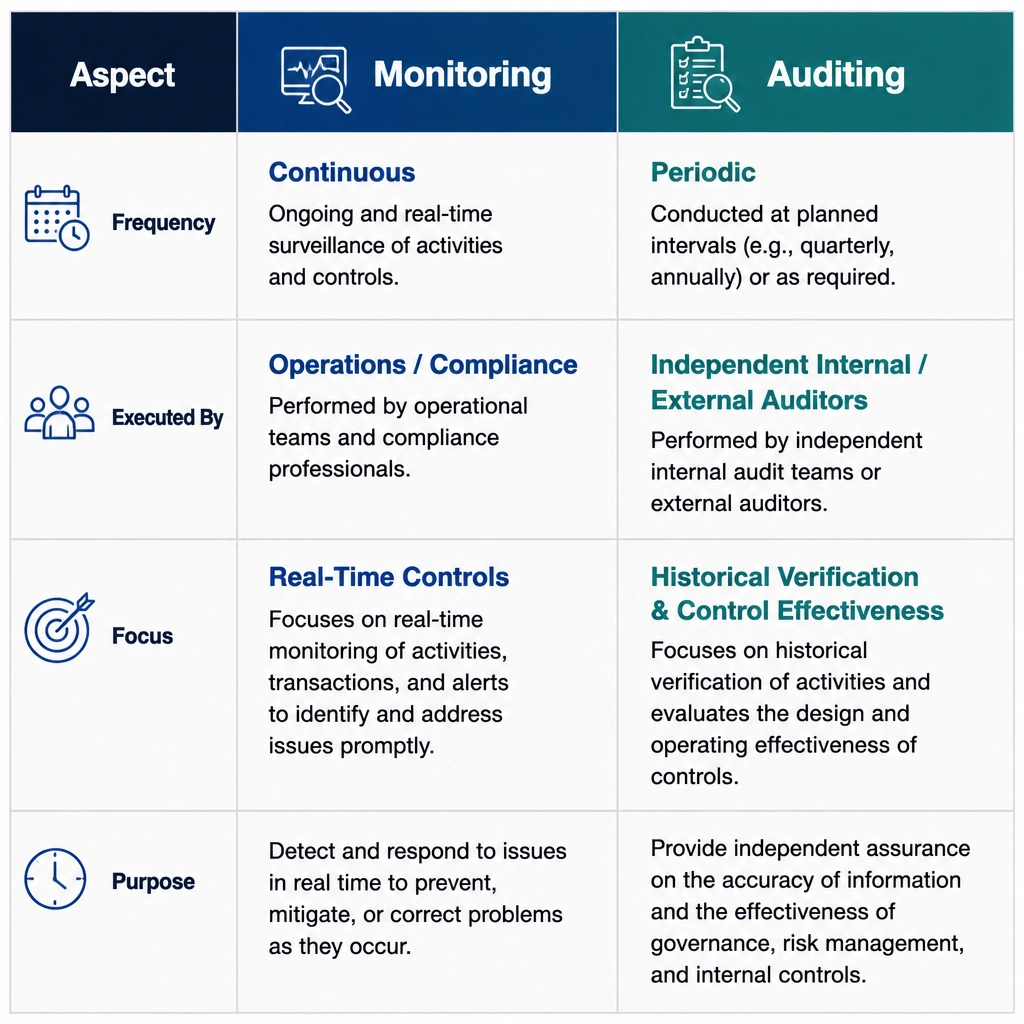
Pay close attention here, because this one bites people on the exam and in production all the time. People use 'monitoring' and 'auditing' like they're the same thing, but they're not. Think of monitoring like the dashboard in your car—it's checking your speed, fuel, and engine temp in real time as you drive down the road. Auditing, on the other hand, is like taking the car to a licensed mechanic for a yearly state inspection. The inspector is independent, and they check to see if the whole system is actually working safely. The correct answer is B. Monitoring is ongoing and part of daily business operations. Auditing is a periodic, objective test to make sure those controls are doing their job. Don't let the distractors confuse you—monitoring isn't reactive (Option A), external parties aren't the sole monitors (Option C), and they are definitely not interchangeable (Option D)!
Full explanation below image
Full Explanation
The correct answer is B. Although monitoring and auditing are both essential components of compliance oversight, they serve distinct operational functions. Monitoring is an ongoing, management-led process designed to ensure that compliance controls are operating effectively on a day-to-day basis. It occurs in real time or near-real time as part of normal operations (e.g., automated transaction screenings, supervisor reviews, or system logs). Auditing, conversely, is a periodic, formal, and objective review conducted by an independent party (such as internal audit or external inspectors) to verify that the compliance controls and the monitoring processes themselves are functioning as intended.
Let's evaluate the incorrect options: - Option A is incorrect because monitoring is proactive, helping managers identify and correct errors in real time before they escalate. Auditing can be both proactive (evaluating systemic design) and reactive (investigating historical data), but neither is strictly one or the other. - Option C is incorrect because monitoring is typically performed internally by operational staff and compliance teams, while auditing can be performed either internally by an independent internal audit department or externally by third-party auditors. - Option D is incorrect because treating these terms as interchangeable is a fundamental misunderstanding of internal controls and governance frameworks (such as the COSO framework).
Regulators look for evidence of both ongoing monitoring (to show active oversight) and periodic auditing (to show independent validation of the program's health).