To build a robust compliance structure, a corporation implements a direct reporting channel between the Chief Compliance Officer (CCO) and the governing board of directors. What is the fundamental purpose of establishing this direct reporting relationship?
Select an answer to reveal the explanation.
Short Explanation and Infographic
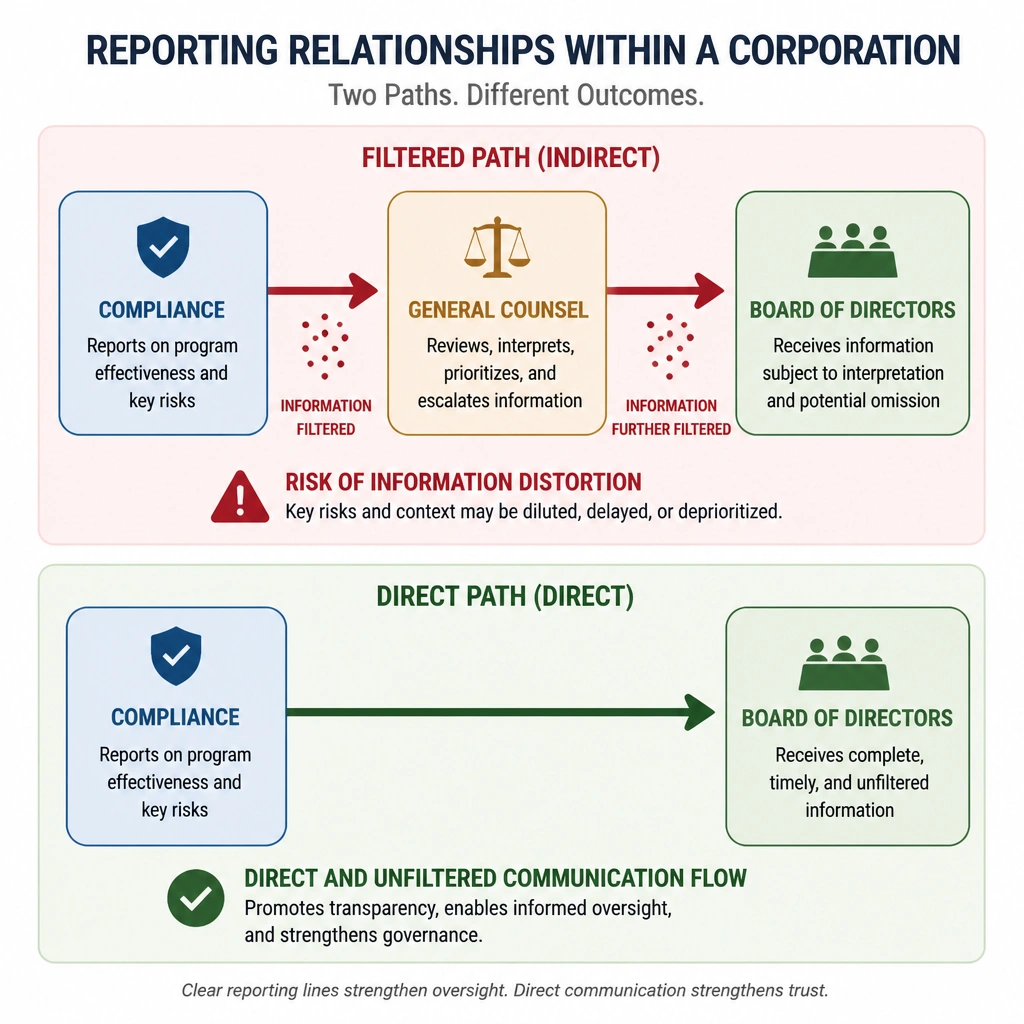
Check this out: if your compliance officer has to go through the CEO or general counsel before talking to the board, guess what happens? Bad news gets watered down or completely buried. In the real world, the board has the ultimate fiduciary duty to oversee the company. They need the raw, unfiltered truth about compliance risks and how the program is actually doing, not a sugar-coated version. If your boss walks in and asks why the CCO needs a direct line to the board, this is exactly why. You want transparency, not a filter.
Full explanation below image
Full Explanation
A direct and unfiltered reporting relationship between the Chief Compliance Officer (CCO) and the board of directors is a core tenet of an effective compliance program. Under the US Federal Sentencing Guidelines for Organizations (FSGO) and Department of Justice (DOJ) guidance, governing authorities must exercise reasonable oversight of the compliance program. To fulfill this oversight responsibility, the board requires timely, accurate, and candid information regarding operational risks, systemic failures, and program effectiveness. If the compliance officer reports solely to a business executive (such as the CEO or Chief Legal Officer), a structural conflict of interest can arise. Executives may be incentivized to delay or downplay negative compliance disclosures to protect short-term corporate performance. A direct line to the board bypasses potential gatekeepers, ensuring that critical compliance issues are escalated without interference.
- Correct Answer is C because direct access ensures the board receives unadulterated intelligence regarding the program's efficiency and organization-wide risks. - Distractor A is incorrect because day-to-day operations are the responsibility of the compliance staff and management, not the governing board, which focuses on oversight and governance. - Distractor B is incorrect because direct access does not insulate the board from liability; rather, active oversight and monitoring are what help demonstrate due diligence to regulators. - Distractor D is incorrect because while the board may have input or oversight regarding the hiring and termination of the CCO to preserve independence, establishing direct reporting is primarily about communication flow and risk management, not bypass-based HR administration.