An anonymous hotline report alleges that a high-level executive is involved in a severe conflict of interest. What is the most appropriate initial action for the compliance department to take?
Select an answer to reveal the explanation.
Short Explanation and Infographic
Check this out: when an anonymous tip drops onto your desk about a big-shot executive, you don't panic, and you definitely don't run around blasting it to the company or confronting them in the hallway. That's a fast track to defamation lawsuits or destroying someone's career over a rumor. But you also can't just ignore it because there's no name attached. Here's the play: you start a quiet, confidential preliminary investigation. You look at the facts, see if the story holds water, and decide if a full-blown investigation is warranted. Keep it under wraps, stay objective, and follow the evidence.
Full explanation below image
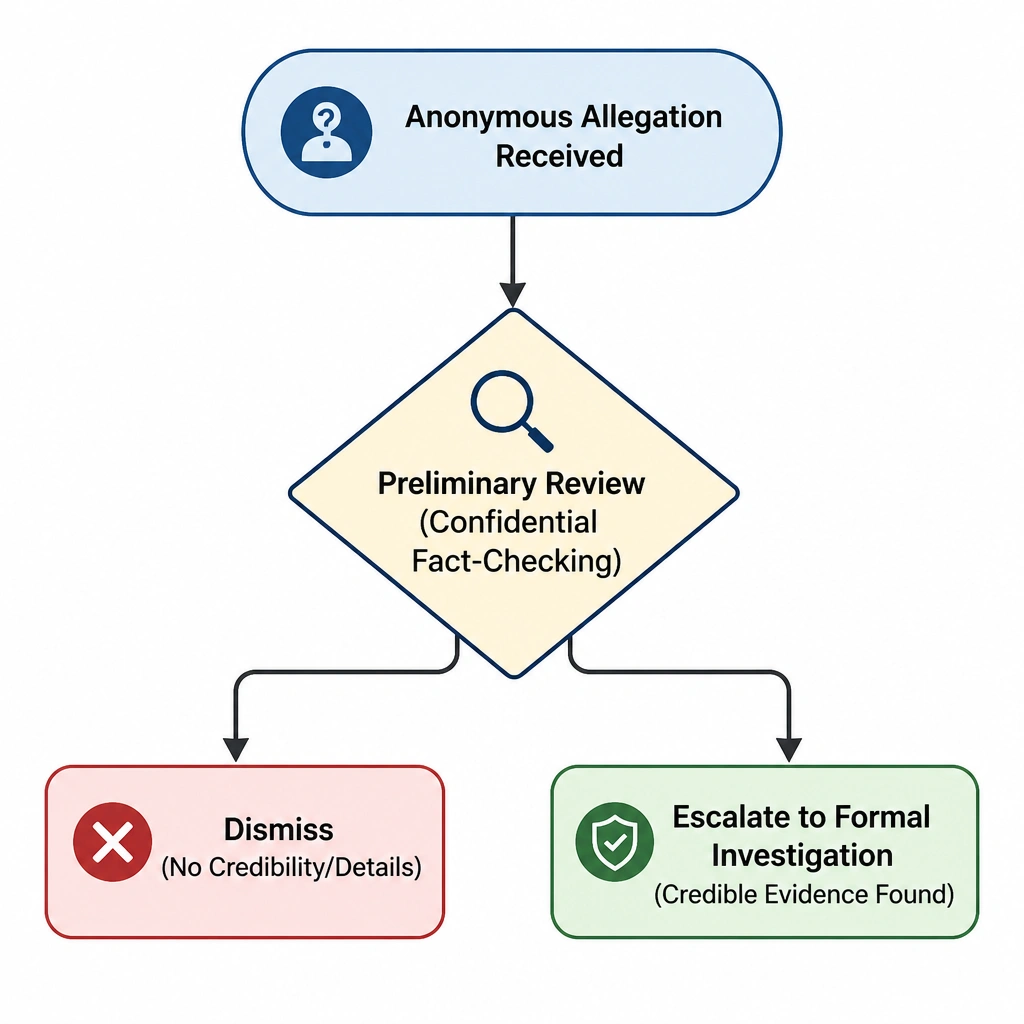
Full Explanation
When a compliance department receives an allegation of misconduct—even from an anonymous source—it has an obligation to evaluate the information. The immediate first step is to conduct a preliminary, confidential assessment or investigation. The goal of this phase is to determine whether the allegation is credible, specific, and contains enough detail to warrant a formal, comprehensive investigation. Maintaining strict confidentiality during this stage is essential to protect the integrity of the process, safeguard potential evidence, and protect the reputation of the accused individual from unsubstantiated claims.
- Correct Answer is C because a confidential, preliminary inquiry allows the compliance officer to verify facts and determine if there is a plausible basis to proceed without causing unnecessary disruption or compromising evidence. - Distractor A is incorrect because ignoring anonymous tips violates regulatory expectations (like those from the DOJ and FSGO), which mandate that companies provide anonymous reporting channels and take all reports seriously. - Distractor B is incorrect because publicizing the tip violates confidentiality, creates potential liability for defamation, and could tip off others who might destroy evidence. - Distractor D is incorrect because confronting the executive publicly before conducting a preliminary review is premature, violates standard investigative protocols, and can lead to retaliation, defensiveness, or the destruction of crucial records.