According to the Federal Sentencing Guidelines for Organizations (FSGO), fostering an organizational culture of ethical conduct is critical. What is a primary indicator that an organization has established a strong, healthy ethical culture?
Select an answer to reveal the explanation.
Short Explanation and Infographic
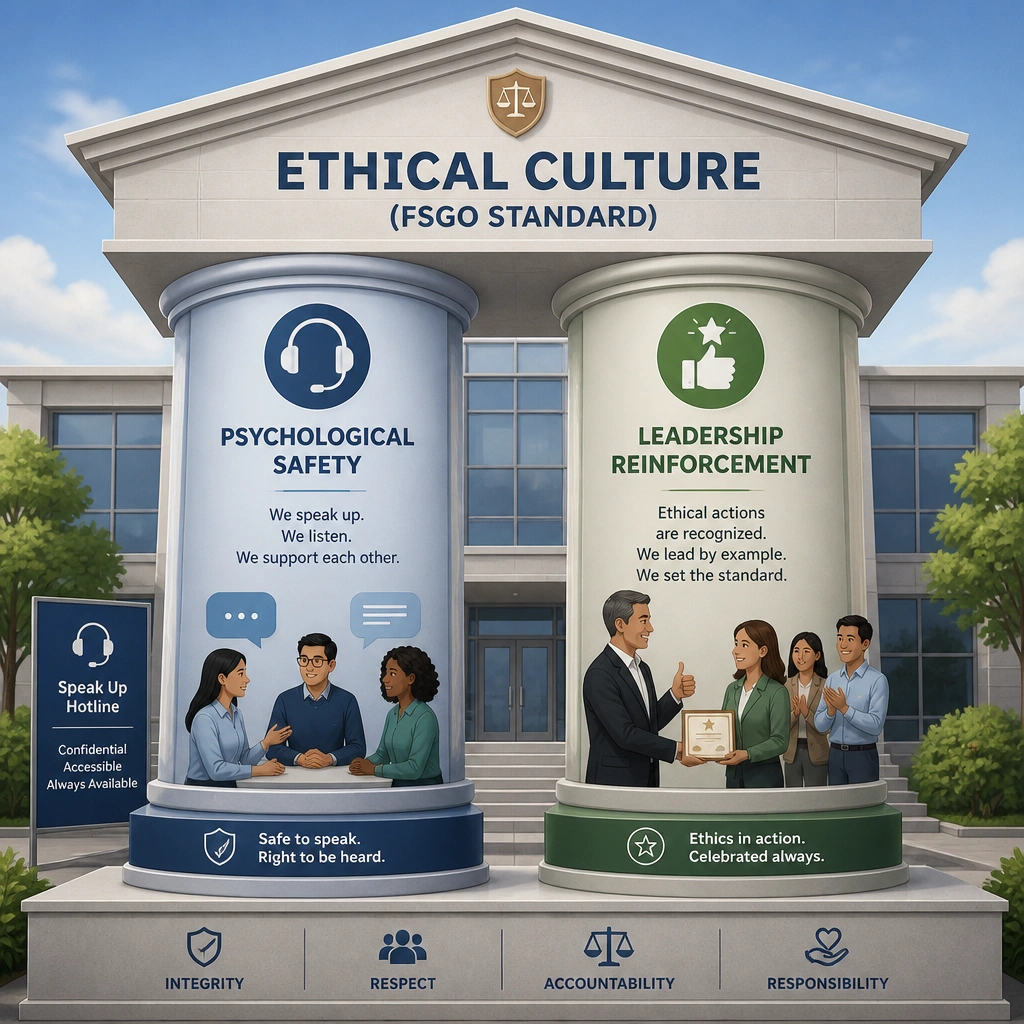
Trust me on this: you can hire fifty compliance officers and buy the fanciest software in the world, but if your employees are terrified of retaliation, your ethical culture is broken. A real ethical culture means people feel safe speaking up when they see something sketchy. When your boss walks in and asks how we know if our compliance program is actually working, you point to your reporting hotline. Are people using it without fear of losing their jobs? Is the company celebrating integrity? That's what the FSGO is looking for — a living, breathing culture, not just a bunch of rules on paper.
Full explanation below image
Full Explanation
Under the Federal Sentencing Guidelines for Organizations (FSGO), organizations must not only implement compliance procedures but also promote an organizational culture that encourages ethical conduct and a commitment to compliance with the law. The effectiveness of this culture is best demonstrated by how employees behave and interact with the compliance program. A key indicator of a healthy ethical culture is 'psychological safety'—specifically, the willingness of employees to report concerns or raise questions about potential misconduct without fear of retaliation. In addition, when leadership actively recognizes and reinforces ethical decisions, it signals that integrity is valued over short-term business gains.
- Correct Answer is B because an environment where employees feel secure speaking up and where ethical actions are celebrated is the hallmark of an active, effective ethical culture. - Distractor A is incorrect because the size or budget of a compliance department is a measure of resources, not culture. A large team does not automatically translate to a compliant workforce if employees fear retaliation. - Distractor C is incorrect because low employee turnover can be driven by market conditions, compensation, or inertia; it does not guarantee that the organization has high ethical standards. - Distractor D is incorrect because standardized bonuses do not foster or indicate ethical behavior, and may even fail to reward ethical leadership.