A multinational enterprise structures its sales commission program to reward representatives solely on gross sales revenue, with no compliance-based performance metrics or clawback provisions. What is the primary compliance risk associated with this compensation structure?
Select an answer to reveal the explanation.
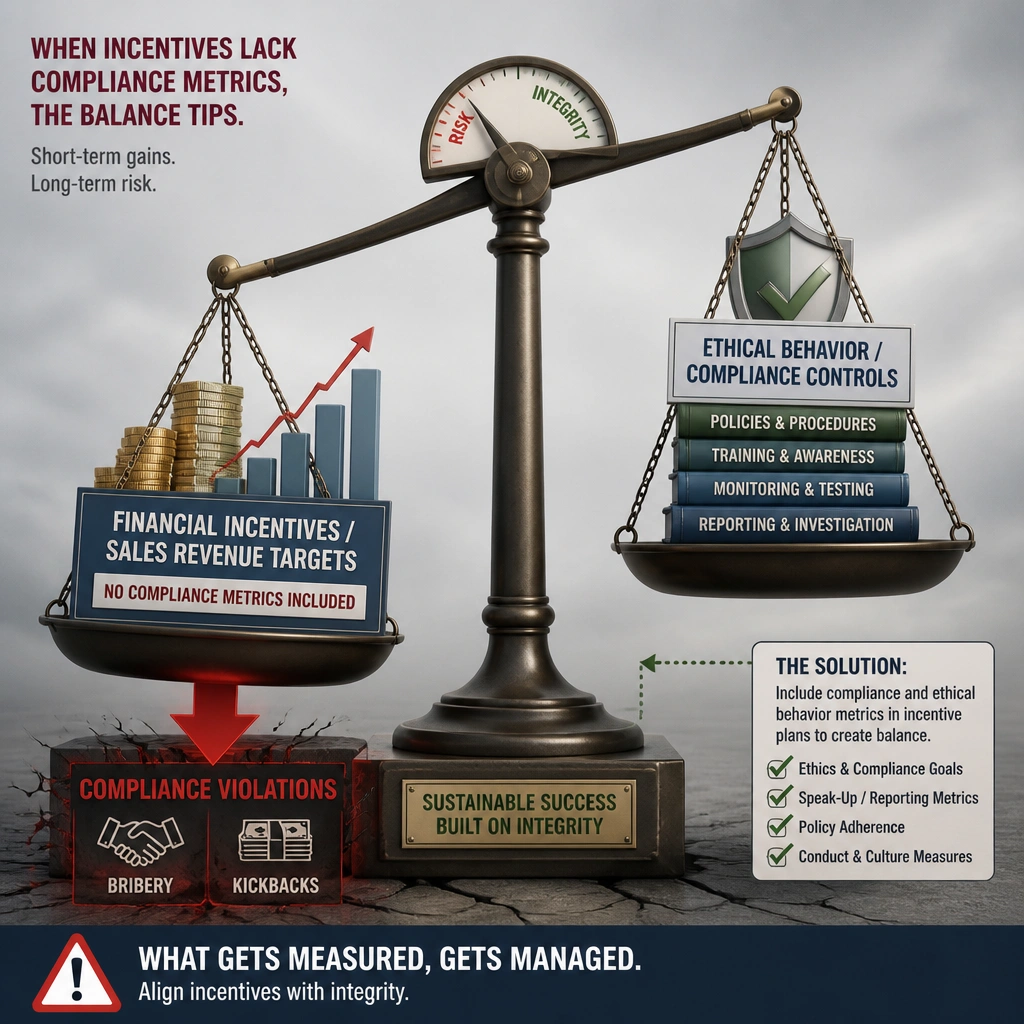
Short Explanation and Infographic
Here's the deal: human behavior follows incentives. If you tell your sales team, 'I don't care how you do it, just bring in the cash, and we'll pay you a fat commission,' guess what's going to happen? Some reps are going to take the path of least resistance. They'll start paying bribes, offering kickbacks under the table, or cutting shady deals just to hit their numbers. That's why compensating people solely on revenue is a compliance nightmare. It's not about the sales team getting too big (choice A) or losing motivation (choice B)—in fact, they'll be highly motivated, but for all the wrong reasons! You must align compensation with compliance to keep people on the straight and narrow.
Full explanation below image
Full Explanation
Compensation structures and incentives are key drivers of corporate culture and behavior. Regulatory authorities, such as the US Department of Justice (DOJ) and the Securities and Exchange Commission (SEC), place significant emphasis on whether corporate incentives encourage ethical behavior or incentivize misconduct. When a sales team is compensated solely on revenue metrics without regard to compliance, it creates a high-pressure environment where employees may prioritize short-term financial gains over legal and ethical boundaries. This incentive misalignment frequently leads to high-risk behaviors, such as bribery, corruption, falsifying records, or violating antitrust laws, to secure deals and maximize commissions. Options A, B, and C do not represent the primary compliance or legal risks associated with this compensation structure; incentives based solely on revenue typically increase motivation to sell but strip away the guardrails that prevent regulatory and legal infractions.