An organization establishes a comprehensive policy detailing monetary thresholds, pre-approval workflows, and registry requirements for giving or receiving business gifts and entertainment. What is the primary compliance objective of this policy?
Select an answer to reveal the explanation.
Short Explanation and Infographic
Think of it like this: a vendor invites you to a luxury suite at the Super Bowl, all expenses paid. Sounds awesome, right? But the next week, that same vendor bids on a multi-million dollar contract with your company. Can you make an unbiased decision? Probably not. That's why we have gift and entertainment policies. They aren't there to make sure everyone gets a gift (choice D) or to ban you from ever talking to customers (choice C). The goal is to make sure business decisions are made on merit—like quality and price—not because someone bought you a fancy dinner or a set of golf clubs. Keep it clean, and keep decisions objective.
Full explanation below image
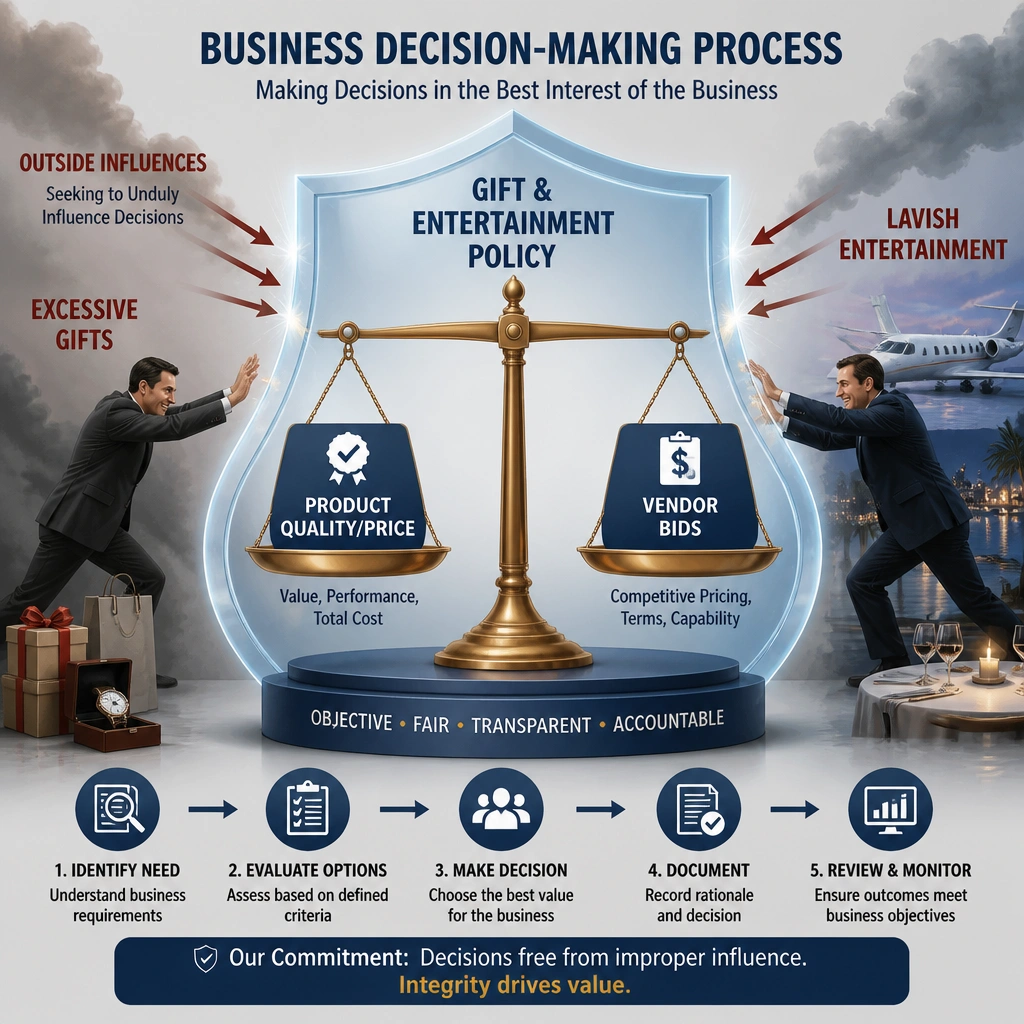
Full Explanation
The primary objective of a gift and entertainment policy is to protect the integrity of an organization's business decisions. In compliance and anti-corruption frameworks (such as the UK Bribery Act and the US Foreign Corrupt Practices Act), gifts, meals, travel, and entertainment can be construed as bribes if they are intended to obtain or retain business or secure an improper advantage. By establishing clear thresholds, pre-approval mechanisms, and registration procedures, the policy ensures that business courtesies remain transparent, reasonable, and proportionate, thereby preventing them from improperly influencing the judgment of employees or external partners. Option A is incorrect because compliance policies do not aim to solicit or standardize gift volumes. Option C is incorrect because most policies permit reasonable, customary business entertainment that is transparent and proportional, rather than imposing a blanket ban on all customer relationships. Option D is incorrect because the policy is designed to mitigate bribery and conflict of interest risks, not to ensure equal distribution of gifts among employees.