A company's marketing team publishes an advertising campaign containing unsubstantiated and false performance claims about a primary product. From a compliance perspective, what is the most significant risk associated with this action?
Select an answer to reveal the explanation.
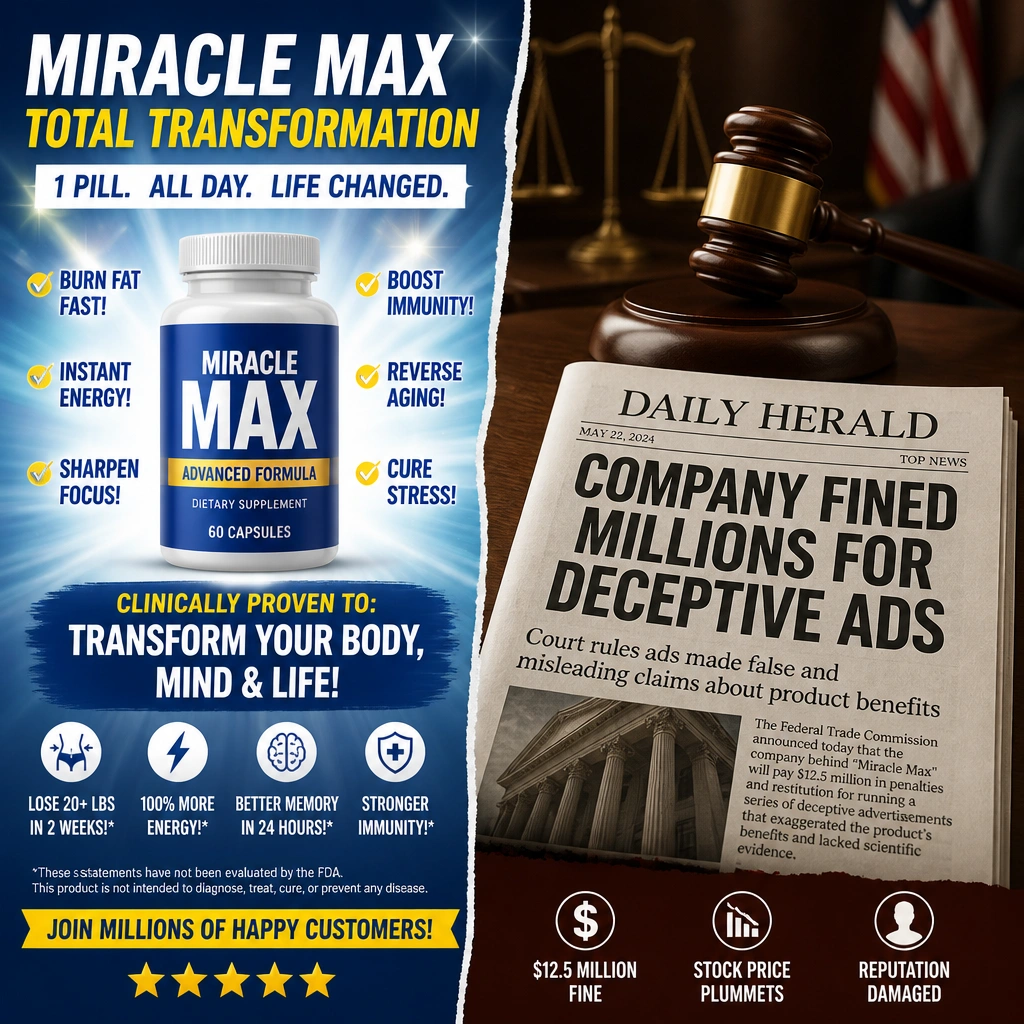
Short Explanation and Infographic
We all know marketing departments love to make their products sound like the best thing since sliced bread. But if they cross the line from enthusiastic selling into outright lying, watch out! Making false or unsubstantiated claims in your ads isn't just bad form—it's highly illegal. Regulatory bodies like the FTC (Federal Trade Commission) and state attorneys general take a very dim view of deceptive advertising. The company could find itself hit with massive fines, forced to run embarrassing corrective ads, and sued by angry customers in class-action lawsuits. And let’s not forget the reputational damage—once your customers realize you lied to them, good luck winning their trust back. Remember, compliance must review marketing materials before they go live!
Full explanation below image
Full Explanation
The correct answer is C. False, misleading, or deceptive advertising is highly regulated under consumer protection laws globally (such as the FTC Act in the U.S.). The risks associated with making false claims extend beyond simple project failure. They include regulatory investigations and enforcement actions that can result in cease-and-desist orders, mandatory corrective advertising, and multi-million dollar civil penalties. Additionally, companies face class-action litigation from misled consumers and competitors suing under false advertising statutes (like the Lanham Act). Finally, the long-term impact of brand erosion and loss of customer trust can far outweigh the short-term sales gains of a deceptive campaign.
Option A is incorrect because exceeding a department budget is a financial and operational management issue, not the primary legal or compliance risk of deceptive advertising. Option B is incorrect because failing to reach a target demographic is a business/strategic failure rather than a legal compliance violation. Option D is incorrect because winning industry awards is a secondary creative goal and carries no legal or regulatory compliance significance.