After detecting that a high-level executive has been charging personal vacations to the corporate expense account, the Board of Directors initiates a targeted forensic investigation to quantify the financial loss and implement disciplinary actions. This investigation, along with the subsequent remediation steps, represents which type of compliance control?
Select an answer to reveal the explanation.
Short Explanation and Infographic
Here's the deal: when someone is caught misusing company money, the damage is already done. We aren't trying to prevent it anymore (that ship has sailed), and we aren't just detecting it (we already know it happened). Now, we're in cleanup mode. An investigation, followed by disciplinary action or recovering funds, is a classic corrective control. It's all about fixing the problem and making sure it doesn't happen again. Trust me, you'll see this concept on the exam, so make sure you can tell the difference between preventing, detecting, and correcting!
Full explanation below image
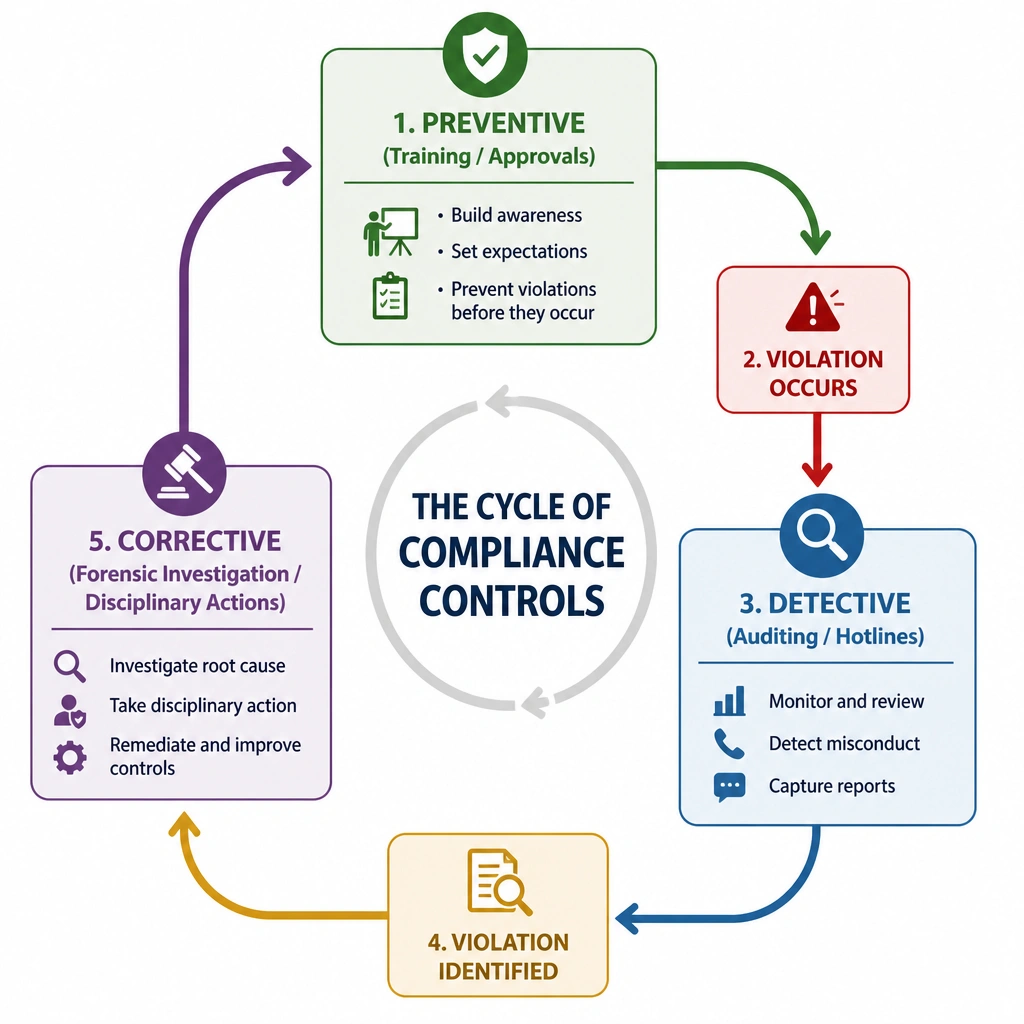
Full Explanation
Compliance controls are categorized by their timing and function relative to a violation. Preventive controls are designed to stop violations before they occur (e.g., policy training, system access restrictions). Detective controls are designed to identify violations after they have occurred but before major damage is done (e.g., reconciliations, whistleblower hotlines, routine audits). Corrective controls are designed to remediate the effects of a violation, discipline the wrongdoers, and implement measures to prevent future occurrences. An investigation launched in response to a known violation of company policy (such as executive misuse of funds) is a corrective control. The investigation seeks to uncover the full scope of the misconduct, determine the root cause, and enable the organization to take disciplinary or legal action, retrieve the funds, and patch control gaps. Directive controls define expected behavior through policies and codes of conduct, but they do not actively remediate or prevent violations on their own.