An organization is planning to establish a joint venture with a foreign business entity. To protect the organization from potential legal and reputational exposure, what is the most critical element of the due diligence process?
Select an answer to reveal the explanation.
Short Explanation and Infographic
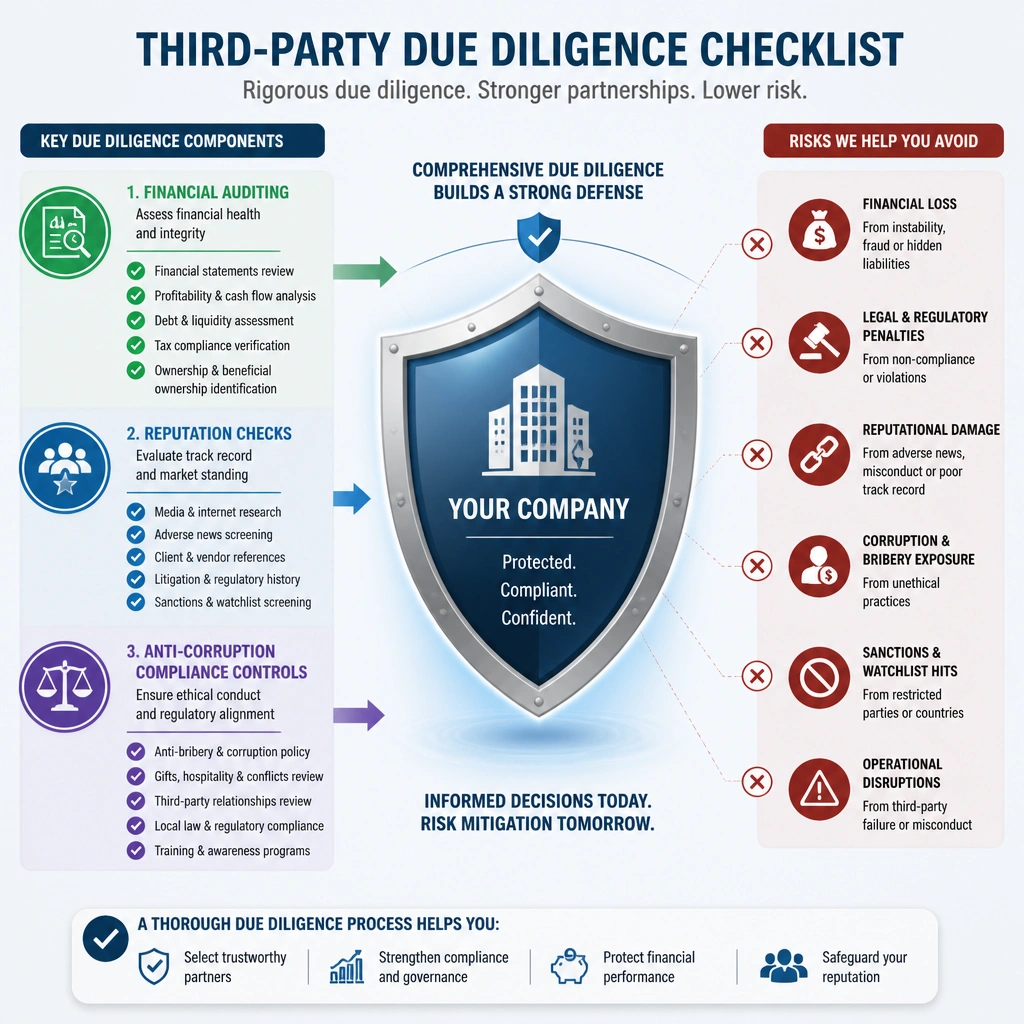
Think of this like marrying into a family you've never met. You wouldn't just take their word that they're great people, right? Of course not! When your company is about to jump into a joint venture with a foreign partner, you have to do your homework. Here's the deal: if they have a history of paying bribes or their books are cooked, guess who inherits that liability? You do! That's why you can't just check the CEO's resume or rely on a signed promise. You need a deep dive into their financials, their local reputation, and their anti-corruption controls. Trust me on this, a little digging upfront prevents a massive disaster down the road. Got it? Sweet. Let's keep rolling!
Full explanation below image
Full Explanation
In international business transactions, particularly joint ventures with foreign entities, due diligence serves as the primary mechanism to identify and mitigate compliance, legal, and reputational risks. Under frameworks like the Foreign Corrupt Practices Act (FCPA) and the UK Bribery Act, companies can be held liable for the corrupt activities of their partners, agents, and joint venture entities. Therefore, executing a comprehensive due diligence process is non-negotiable. This process must go beyond superficial assessments and look deeply into the partner’s ownership structure, commercial reputation, relationship with government officials, financial health, and the maturity of their compliance programs. Evaluating local market share is a commercial consideration rather than a risk-mitigating compliance step. Limiting the background check to the CEO is far too narrow, as corruption can occur at any level of an organization. Similarly, obtaining a signed declaration is insufficient on its own; a signed statement without verification is merely a paper exercise and will not protect a company from liability if the partner is actively engaging in illicit activities. Only a thorough, risk-based investigation of the partner's financial history, background, and internal control environment satisfies the standard of due care.